Fresno · Health access · Immigration enforcement
Published
When the Waiting Room Goes Quiet
Immigration enforcement, fear, and the medical care Fresno does not see — why one empty morning is only the visible edge of a larger problem
By Kanwar Partap Singh Gill, MD · Fresno, California · physician perspective and public-health analysis · sources checked November 2, 2026 · source register
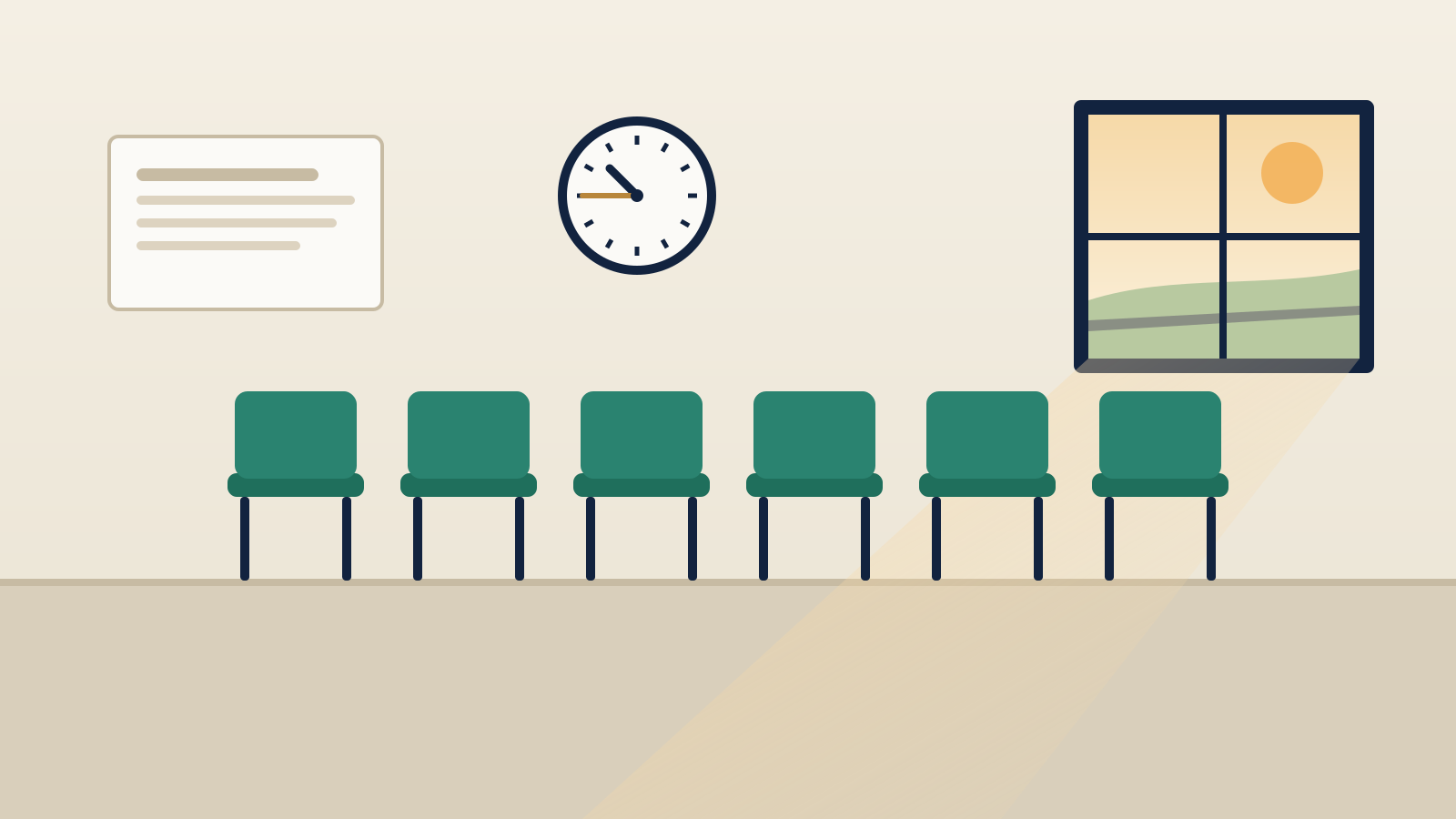
1. Five patients
On Monday morning, November 2, 2026, the waiting area was unusually quiet. On an ordinary morning I see between twelve and sixteen patients. This morning I saw five.
When I looked for an explanation, the same three words were moving from phone to phone and person to person: “ICE is in Fresno.”
That sentence needs a boundary, and I want to draw it before anyone else does. I have not verified that a specific immigration-enforcement operation took place in Fresno on November 2, and I could find no official confirmation or denial of one for that day. I do not know why each person who might have come in stayed away. Five against an ordinary twelve to sixteen is my own count of the patients I saw; it is not a clinic-wide audit, a calculated no-show rate, or a measurement of anything in Fresno as a whole. It says nothing about anyone’s immigration status, and I will not pretend that it does.
Even inside those limits, the morning poses a medical question that does not depend on the answer to the rumor: what happens to health when people become more afraid of the drive to an appointment than of postponing the appointment itself?
A clinic can have its doors open, its appointments available and its physicians ready, and still be inaccessible to a frightened family. Fear can interrupt care before anyone reaches the front desk. That interruption does not appear on any bill, in any claim, or in any official statistic. It appears as an empty chair, and an empty chair does not explain itself.
2. What Fresno has lived through since October 5
The words people repeated on November 2 did not arise from nothing. They arrived after four weeks in which the Valley’s official record, its local press and its own elected representatives described something unusual.
The documented record
- October 1. CalMatters reported the arrest of a Fresno man, Luis Arreguin, by immigration agents on his way to work. Advocates counted at least 100 people detained over the following days, and a monitor described the number of detainee vans at the Fresno ICE office rising from about two a day to ten or fifteen. A DHS spokesperson declined to discuss operations: “For operational security and the safety of our officers, ICE will not disclose or discuss law enforcement operations.” [S01]
- October 5–8. A local faith-based watch network reported sightings and detentions in Fresno, including — in its account — farmworkers riding in a transport van from Selma to jobs in Bakersfield. By October 8, the Valley Watch Network estimated about 70 people detained in Fresno and Madera that week, and the mayor of Kerman reported residents detained on two consecutive days. DHS neither confirmed nor denied an operation. [S02, S03]
- October 9. Fresno Mayor Jerry Dyer called the disruption “unnecessary” and “unacceptable.” The Nisei Farmers League estimated about 100 detentions, with arrests reported at a packing operation, construction sites, gas stations and roadsides. Rep. Jim Costa said: “There’s no oversight. There’s no guardrails.” Rep. Tom McClintock defended the enforcement. [S04, S05]
- October 22. The Fresno County Sheriff’s Office said its deputies “do not conduct immigration enforcement,” that it receives no notice of DHS or ICE operations, and that deputies were being harassed after being mistaken for federal agents. [S07]
- October 27. Twelve members of California’s congressional delegation, including Rep. Costa and Senators Padilla and Schiff, made public a letter to the Acting ICE Director, dated October 23, about “increased enforcement activity in the San Joaquin Valley beginning October 5, 2026.” They asked for the purpose, duration and arrest criteria of the operations; a county-by-county count of detentions since October 5, including criminal history; and information on detainees’ access to counsel and medical care — by October 30. I found no public response. Costa told ABC30: “I have never seen the level of fear in our communities.” [S10, S11]
- November 2. Fresnoland reported that the watch network now counts “more than 200” people detained in the area since early October — a figure the network itself describes as incomplete, and which no government body has confirmed. [S12]
What remains unverified
There is no official, public count of people detained in Fresno County since October 5. The figures above are estimates by advocates and agricultural organizations, and they should be read that way. A name for the operation has circulated through a single anonymously sourced report; DHS has not confirmed it. And the rumor I heard on November 2 is, as of this writing, exactly that. [S12]
The record also contains a warning in the other direction. On October 12, officials at the Big Fresno Fair said there had been “no confirmed sightings of ICE” at the fair and attributed the reports to “false information and AI-generated images.” [S08] Both things are true at once in Fresno this autumn: documented enforcement has occurred, and false or fabricated reports have circulated. A family deciding whether to leave the house cannot easily tell them apart. That is precisely the problem.
3. A city rearranging its life around fear
The empty chairs in a medical waiting area are part of a larger pattern that Fresno institutions have been documenting in their own words.
- Schools. Mendota Unified reported 130 more students absent than the week before, in the first week of reported enforcement. [S13]
- Worship. St. Anthony Mary Claret, a parish that draws up to 5,000 people to Sunday Masses, reported at least 500 fewer worshippers, donations down 10 to 15 percent, and youth religious classes cancelled. Attendance is down at a Fresno gurdwara as well. Bishop Joseph Brennan said that “at least three of our parishioners have been detained.” [S14, S15]
- Commerce and public life. A vendor at a long-running Fresno swap meet told KVPR, “there are no customers.” A city councilmember described “very few people out in the streets.” The Fresno Chaffee Zoo cancelled its Día de los Muertos event, saying the decision reflected a desire “to stand in solidarity with the community and ensure their safety.” [S14, S06, S09]
None of these institutions is a hospital. That is the point. When people stop going to Mass, to the gurdwara, to the swap meet and to school, they are not making a series of unrelated choices. They are shrinking their lives to reduce exposure. A medical appointment — especially a routine one — is one of the easiest things to remove from a shrinking life, because its cost is deferred and invisible, while the feared cost of the trip feels immediate and total.
The Central Valley had seen the medical version of this pattern before. In July 2025, United Health Centers of the San Joaquin Valley reported roughly a ten percent drop in appointments and rising no-show rates after enforcement intensified in early June. In December 2025, CalMatters reported that UCSF-Fresno’s rural mobile clinics had fallen from an average of 34 patients per outing in 2024 to about 22 — a decline of roughly 36 percent — while a Saint Agnes mobile unit reported visits down 15 to 20 percent. Clinicians described both enforcement fear and distrust about sharing personal information. Dr. Kenny Banh put it plainly: “People don’t disappear because you changed policy.” [S17, S16] Those are operational figures reported by administrators and clinicians, not controlled studies, and they do not isolate a single cause. But they establish that the problem predates this morning, and that it is measurable when someone chooses to measure it.
4. Working people, not a criminal class
I have practised family medicine in the San Joaquin Valley since 2010. The people who fill Valley waiting rooms are, overwhelmingly, people who work: in fields, orchards and packing houses, in warehouses and on construction sites, in kitchens, in other people’s homes, and in the care of children and elders. That is my professional experience, not a statistic, and it is not a statement about any individual’s immigration status. But the public record supports the broader point.
The Valley’s economy is built on this work. Fresno County produced a record $9.03 billion in gross agricultural value in 2024, the highest of any county in the United States, and roughly one in nine jobs in the county is tied to agriculture. [S42] The U.S. Department of Agriculture estimates that, in 2020–22, 42 percent of hired crop workers nationally held no work authorization — and that the share is highest in California. The Department of Labor’s California survey found that about half of the state’s crop workers were authorized to work. [S40, S41] The Valley cannot pick, pack or ship its harvest without the people now afraid to drive to a clinic.
They pay into the system they are afraid to use. The Institute on Taxation and Economic Policy estimates that undocumented immigrants in California paid about $8.5 billion in state and local taxes in 2022. [S43] That is a modeled estimate, and reasonable people debate the fiscal arithmetic of immigration as a whole. It is not reasonable to describe these households as people who contribute nothing.
Their children are, overwhelmingly, Americans. The Migration Policy Institute estimates that about 1.29 million California children live with at least one unauthorized immigrant parent; nationally, 5.3 million of the 6.3 million children in that situation are U.S. citizens. [S44] When a parent is afraid to drive, the appointment that is missed is very often a citizen child’s.
Most people held in immigration detention have no criminal conviction. Using government data current to July 11, 2026, TRAC reports that 70.6 percent of people held in ICE detention — 46,436 of 65,765 — had no criminal conviction. [S34] DHS frames its record differently, as section 8 sets out, and the two figures measure different things. But the data do not support the image of enforcement aimed narrowly at dangerous criminals while ordinary working families go about their lives undisturbed. In Fresno this autumn, the reported arrests were of a man on his way to work, of workers in a van on their way to a job, and of people at gas stations and construction sites. [S01, S02, S04]
Being present in the United States without authorization is, by itself, a civil matter; unlawful entry can be a federal misdemeanor. Neither is what most people mean by the word “criminal.” Whatever one’s view of immigration policy — and the next sections give the government’s view its due — a public-health system cannot function if the people it serves have been taught to treat every trip outside the house as a risk to the family. Hard-working people are reorganizing their lives around that fear. Their health is part of what they are giving up.
5. Why a rumor can empty a waiting room
People deciding whether to leave home do not decide with the information available to a court, a reporter or an enforcement agency. They decide with a text from a cousin, a voice note, a post with a photograph of uncertain origin, or an account of something that happened two streets away.
When a person believes a trip could cost them their family’s security, uncertainty itself becomes decisive. A follow-up visit feels postponable. The feared consequence feels irreversible. Under those conditions, staying home is not irrational; it is a rational response to an asymmetric risk, made with poor information.
That is how a chilling effect works. Anticipated consequences discourage people from using a service even when no officer has approached them, the clinic or anyone they know. It explains why a rumor that turns out to be false can still empty a waiting room, and why a confirmed operation in one neighborhood can suppress care across a whole county.
The answer is not to repeat unverified reports as fact, which spreads fear further, and it is not to dismiss frightened people, which destroys the trust a clinical relationship depends on. The answer is accurate information about rights and services, delivered by people patients already trust — and a health system that keeps a route back into care open while the uncertainty is being resolved.
6. What research shows beyond one waiting room
The research below uses different populations, places and methods. None of it measures Fresno on November 2. Taken together, it shows that the pattern I saw has been measured elsewhere, repeatedly, with the same direction of effect.
Immigrant families report avoiding care
The KFF/New York Times 2025 Survey of Immigrants, a nationally representative survey of 1,805 immigrant adults conducted in August–October 2025, found that 14 percent said they or a family member had avoided medical care since January 2025 because of immigration-related concerns. Among respondents classified as likely undocumented, the figure was 48 percent — a subgroup of 151 respondents with a margin of error of about ±10 points. Status was inferred, and answers were self-reported. [S18]
Some patients who eventually arrive have already delayed
An October 2026 study in JAMA Network Open surveyed 345 adults at three emergency departments in San Francisco and Houston. Fear of seeking emergency care was reported by 34 percent of Spanish-speaking Latino respondents, compared with 4.6 percent of English-speaking Latino and 3.2 percent of English-speaking non-Latino respondents. Of the 39 people who reported fear, 16 said they had delayed coming in, with a median delay of 2.5 days; among the twelve Spanish-speaking patients who delayed, the median was five days. The study did not measure immigration status and could not count people who never arrived. [S19]
California emergency departments saw fewer visits — and sicker patients
A second October 2026 JAMA Network Open study examined three Los Angeles County safety-net hospitals after enforcement intensified in June 2025. Relative to U.S.-born patients, emergency visits by foreign-born patients fell by more than 20 percent in the first four weeks and remained about 10 percent lower by October, while the share of visits ending in hospital admission rose — by 4.75 percentage points among Mexico-born patients and 5.1 points among those born in Central or South America. Fewer visits and a higher admission rate are what one would expect if people were waiting until they were sicker. Country of birth is not immigration status, and the study did not control for acuity, so that interpretation remains an inference. [S20]
Children’s care changed
At one pediatric emergency department in Washington, D.C., visits by Spanish-preferring patients fell by an estimated 37.6 percent after the federal deployment that began on August 11, 2025, while visits by English-preferring patients rose; no comparable decline occurred in 2024. [S21] In Minneapolis–St. Paul, a 2026 study in Pediatrics found missed general-pediatric appointments among Hispanic/Latiné patients of 31.3 percent during an enforcement surge, against 20.7 percent in prior years — 34.1 percent against 18.9 percent among Spanish-speaking families — and a 51 percent rise in requests to reschedule well-child visits. [S22] Well-child visits are where vaccinations, growth, development and early warning signs are caught.
Care does not always disappear — sometimes it moves
Honesty requires including the evidence that complicates the picture. An August 2026 JAMA Health Forum study of 367,114 visits in one California public safety-net system found no clinically significant change in total visits among patients the authors classified as likely undocumented (by language and the absence of a Social Security number), together with month-specific declines in in-person completion and greater use of telehealth. [S23] In that system, with its own protections, care partly shifted rather than vanished. That matters for the response: a completed telephone visit is care; a patient who has lost contact entirely is not.
The longer record
Earlier studies reach the same direction over longer horizons. A 2021 Health Affairs study linking 2011–2016 survey data to ICE detainer activity found that more enforcement was associated with Hispanic adults being less likely to report a regular source of care or an annual checkup, with parallel findings among adults with diabetes. [S24] A 2021 PLOS ONE study of North Carolina birth records from 2004–2006 found that after a county joined a local immigration-enforcement program, births to the most-exposed group showed lower mean birth weight (about 59 grams), more small-for-gestational-age infants and more inadequate prenatal care — in a population whose infants were overwhelmingly U.S. citizens. [S25] And a 2024 study in PNAS using national survey data from 2011–2018 linked measures of deportation threat to psychological distress among Latino noncitizens and, through public salience of the issue, among Latino U.S. citizens. [S26]
None of these studies proves why any individual stayed home on November 2. All of them make it unreasonable to assume that a quiet clinic is a healthy community.
7. Why the problem is bigger than it looks
1. The people who never book are invisible
A scheduling system can count a booked appointment that was missed. It cannot count the person who felt chest tightness, or found a lump, or ran out of insulin, and decided not to call. A clinic can report a modest no-show rate while losing contact with the people most in need. Foregone care leaves no record — and what leaves no record is easily mistaken for something that did not happen.
2. One person’s fear interrupts another person’s care
A child’s appointment depends on an adult who can drive, take time off and speak to the care team. An elderly parent’s depends on a son or daughter. When that adult is afraid to travel, a citizen child or a citizen grandparent loses care too. A patient’s own status therefore cannot define the boundary of the problem — and no one should infer anyone’s status from a missed appointment, a language preference, a surname or an insurance category.
3. Interrupted chronic care compounds
Consider ordinary situations, offered as illustrations rather than as descriptions of anyone absent this morning: a person with diabetes due for a medication adjustment; someone awaiting follow-up of an abnormal result; a patient with worsening blood pressure or heart failure; a pregnancy that needs its next visit. Some appointments can safely wait. Others cannot. A missed diabetic review can become an emergency-room visit for hyperglycemia; a missed prenatal visit can mean a complication found late. The Los Angeles finding — fewer visits, more admissions — is what accumulation looks like in the data.
4. Coverage is shrinking at the same time
Fear is not acting alone. California froze new enrollment of undocumented adults 19 and older in full-scope Medi-Cal on January 1, 2026; people already enrolled keep coverage but have only a three-month window to re-enroll if it lapses. [S29] The state has scheduled the end of non-emergency dental coverage for adults with unsatisfactory immigration status for July 1, 2027, and monthly premiums of $30 for those aged 19 to 59 from the same date, with a proposed increase to $50 still to be decided. [S30] The California Health Care Foundation reports that enrollees with unsatisfactory immigration status fell by about 244,000 — roughly 15 percent — between June 2025 and March 2026, including about 44,000 children. That decline overlaps the enrollment freeze, so it cannot be attributed to fear alone. [S27] A UCLA analysis of a separate 71,000-person decline found that about a third was unexplained by broader trends or direct arrests and “consistent with” a chilling effect — a descriptive finding the authors say is not causal. [S28] A family that is both afraid and losing coverage has two reasons to stop coming, and each makes the other harder to reverse.
5. Fear about information keeps people out of the system
Many patients ask, in one form or another, what happens to the information they give at registration. That question became sharper in 2025, when federal officials directed the transfer of Medicaid enrollee data, including California’s, to the Department of Homeland Security. California and other states sued. As of the parties’ October 16, 2026 status report in that case, court-ordered restrictions on sharing and using plaintiff states’ Medicaid data for immigration enforcement remain in place while the court resolves the scope of its injunction. [S39] The precise answer matters, and section 9 sets it out. But a family that has read the headlines about data transfers will not easily be reassured by a sentence on a form.
6. Fear itself is a health burden
Chronic fear is not merely a reason to miss care; it affects sleep, blood pressure, glucose control, mood and the capacity to follow complex treatment. The PNAS findings are consistent with what clinicians see. [S26] The clinical response is to make room for patients to describe that fear and its effects without assuming that everyone shares the same experience — and without converting a political circumstance into a psychiatric diagnosis.
7. A quieter clinic is not a healthier community
Fewer completed visits leave work undone: pending results still need follow-up, referrals still need coordination, prescriptions still run out. A clinic that depends partly on completed visits may also feel financial strain if the pattern persists; how much is a question for local financial data, not invented figures. The essential question is whether an apparent fall in demand reflects better health, care obtained elsewhere, or care that is not happening at all. Only the third is a crisis, and it is the one existing statistics are least able to see.
8. The government’s case, stated at full strength
An argument that cannot state its opponent’s position fairly does not deserve to persuade anyone. Here is the federal government’s case in its own words.
When DHS rescinded the 2021 “protected areas” guidance on January 20, 2025, it said the change would empower officers to “catch criminal aliens — including murders [sic] and rapists — who have illegally come into our country,” and that “Criminals will no longer be able to hide in America’s schools and churches to avoid arrest.” [S31] ICE’s guidance of January 31, 2025 still lists hospitals among protected areas, but allows supervisors to authorize enforcement actions there case by case. [S32] In February 2026, DHS stated that “Nearly 70% of ICE arrests are of illegal aliens charged or convicted of a crime in the U.S.” and that “We won’t let anything slow us down from arresting and removing criminals from American neighborhoods.” [S33] In Fresno, DHS has declined to discuss its operations for “operational security,” and Rep. McClintock has defended the enforcement. [S01, S05] The broader argument, made by supporters of current policy, is that immigration law is federal law, that its enforcement is not an act of cruelty but of sovereignty, and that exempting large categories of places or people invites systematic evasion.
Two responses follow from the record. First, the government’s figure and TRAC’s figure measure different things — arrests involving a charge or a conviction, against detainees with a conviction — and DHS did not publish the data behind its claim. The two can be reconciled only with data the public does not have, which is exactly what the Valley’s congressional delegation asked ICE to provide by October 30. [S33, S34, S10]
Second, and more important for a physician: the medical argument does not depend on winning the immigration argument. One can accept the government’s authority to enforce immigration law and still recognize that the way enforcement is conducted — its visibility, its unpredictability, its reach into workplaces and roadsides, and the information environment around it — has health consequences for citizens and non-citizens alike. Those consequences are not counted in any arrest statistic. A responsible public policy would count them.
9. What the law does — and does not — promise patients
Patients deserve accurate answers, not reassuring slogans. Here is what the law provides as of today, and where its limits lie. This is general information, not legal advice.
Federal policy changed in 2025
The 2021 federal guidance that discouraged enforcement at hospitals and clinics was rescinded on January 20, 2025. Current ICE guidance treats hospitals as protected areas but permits enforcement with supervisory approval. The lawfulness of the change is the subject of pending litigation. [S31, S32, S35]
California law protects patients inside health facilities — within limits
SB 81, effective September 20, 2025, requires health-care entities that receive public funding to designate treatment areas, and areas where patients discuss protected health information, as nonpublic, and to deny access to those areas for immigration-enforcement purposes unless the person presents a valid judicial warrant or court order that specifically grants access. It also makes a patient’s immigration status and place of birth “medical information” under California’s Confidentiality of Medical Information Act and bars providers from disclosing medical information for immigration enforcement except as compelled by a court order or a judicial warrant. [S36] The Attorney General’s September 2026 guidance explains that an ICE administrative warrant “is not signed by a court judge or magistrate” and “does not authorize access to nonpublic areas of a healthcare facility under California law.” [S35]
These protections are real, and they have limits. They do not cover public areas such as lobbies and parking lots; they cannot override valid federal authority; and they do not promise that a person will never be approached on the way to or from care.
HIPAA permits some disclosures; it does not require them
Federal privacy rules permit, but do not require, certain disclosures to law enforcement under defined conditions. Where California law is stricter, as it now is for immigration enforcement, providers can and must follow the stricter rule. Any promise that information can “never” be disclosed under any circumstances is unreliable; a promise that it will be protected as California law requires is accurate. [S37, S36]
Medicaid data: what the courts have said
In California v. HHS, a federal court first enjoined DHS from using Medicaid data from the plaintiff states for immigration enforcement (August 2025), later allowed limited sharing of basic information about people not lawfully residing in the United States (December 2025), then imposed an interim freeze on sharing plaintiff states’ Medicaid data with DHS or ICE pending clarification (May 2026), and in September 2026 confirmed that data on citizens, lawful permanent residents and visa holders is barred while prior restrictions remain in place. As of the October 16, 2026 joint status report, the parties had not agreed on final language and the restrictions continue. This can change, and patients and clinics should check current status rather than rely on any single headline. [S39]
Emergency care is a right
Under EMTALA, a hospital emergency department cannot deny a medical screening examination or stabilizing treatment for an emergency medical condition because a person lacks insurance, cannot pay, or is not a U.S. citizen. That is not a promise of free care or of protection from enforcement; it is a guarantee of emergency evaluation and stabilization. [S38]
10. What clinics and health systems can do now
These recommendations are for health-care organizations generally. They are not a description of, or a claim about, the policies or conduct of any particular clinic.
Keep a route back into care open
A missed visit should prompt a question about support, not an assumption about motive. “Was anything making it hard to get to your appointment?” is a better opening than any guess. Outreach should follow the patient’s communication preferences and the organization’s privacy procedures; a voicemail should never reveal sensitive circumstances to whoever answers the phone. No patient should have to disclose immigration status to explain a practical barrier.
Triage by clinical risk
Care teams can review missed visits and outstanding tasks for time-sensitive needs: concerning symptoms, important abnormal results, interrupted medications such as insulin or anticoagulants, pregnancy, and recent hospital discharge. A rescheduling call is most useful when it also answers whether the person can safely wait.
Offer an appropriate alternative where one exists
Telephone and video visits can address some problems, and the California evidence suggests they can preserve continuity. They cannot replace every examination, test or procedure, and they need a plan for prescriptions, interpreters and in-person follow-up. The goal is a completed course of care appropriate to the problem, with responsibility for the next step made explicit.
Give staff a consistent process
Every organization covered by SB 81 should already have designated nonpublic areas, procedures for requests from enforcement agencies, immediate notice to designated management or counsel, and staff training. [S36, S35] Staff need to know exactly whom to call. Patients need an honest explanation of what the organization will and will not do, including the limits.
Measure disruption without building a registry of status
A useful review compares equivalent sessions over time and separates scheduled visits, advance cancellations, missed appointments, walk-ins, remote encounters and care completed later, while accounting for staffing, holidays and ordinary variation. Where patients volunteer the reason for a barrier, collect the minimum necessary, protect it as medical information, and publish only aggregates. Language, ethnicity and surname must never be treated as evidence of documentation status. Asking whether people can obtain care does not require making their legal status the object of the inquiry.
11. What patients and families can do
- In an emergency, go. Severe difficulty breathing, chest pain, signs of stroke, major bleeding, a seizure, or a pregnancy emergency: call 911 or go to an emergency department. Emergency evaluation and stabilization do not depend on insurance or citizenship. [S38]
- For a missed appointment, call your care team. Ask how soon you need to be seen, whether a phone or video visit is appropriate, and how to get prescriptions refilled. Do not stop insulin, blood-pressure, seizure, heart or psychiatric medicines without speaking to a clinician.
- Check before you believe. Verify reports of enforcement through a trusted local source before cancelling care. Rumors in Fresno this autumn have included both real events and fabricated images. [S08]
- Know the rules inside the building. In California, treatment areas of publicly funded health facilities are nonpublic, and immigration agents need a judicial warrant or court order to enter them. Your immigration status and place of birth are protected medical information. [S36, S35]
- Keep your coverage. If you have Medi-Cal, respond to renewal notices. Under the 2026 freeze, a lapse can be hard to reverse. [S29]
| Organization | Telephone | Role |
|---|---|---|
| Valley Watch Network | (559) 206-0151 | Listed by the City of Fresno for reporting or verifying enforcement sightings and for referrals. Not a medical-advice line. |
| Centro La Familia Advocacy Services | (559) 237-2961 | Community assistance; immigration-service inquiries and referrals. |
| UFW Foundation, Fresno office | (559) 496-0700 | Immigration services and community support; confirm eligibility and availability with the organization. |
Listings come from the City of Fresno and the organizations’ own pages. They do not imply affiliation, endorsement or guaranteed representation. For medical needs, begin with your own care team. [S45, S46]
Evidence ledger
| Category | What this article relies on |
|---|---|
| Established by official or primary records | The October 27 congressional letter and its requests; the Sheriff’s statement; school and parish figures as stated by those institutions; SB 81 and the Confidentiality of Medical Information Act; HIPAA’s permissive structure; EMTALA; the Medi-Cal enrollment freeze, dental and premium schedule; the court orders in California v. HHS; DHS’s own statements; the published studies as described, with their limits. |
| Reported, not officially confirmed | Detention counts in the Fresno area (advocates’ and agricultural organizations’ estimates); individual arrests as reported by news organizations; the name of the federal operation; clinic-administrator figures from 2025. |
| My own observation | Five patients seen on the morning of November 2, against an ordinary twelve to sixteen; the words circulating that morning. |
| Analysis and inference | That the morning is consistent with a chilling effect; that fewer visits plus more admissions suggests delayed care; that foregone care is undercounted; that the combined effect of fear and coverage loss is larger than either alone. |
| Not established | An enforcement operation in Fresno on November 2; the reason any individual stayed home; any person’s immigration status; any patient’s outcome; the policies or conduct of any particular clinic. |
The patients we do not see
The five patients I saw this morning deserved, and received, the same attention as on any other day. The quiet waiting area left a question about the others: the people who needed care and did not come.
I cannot answer that question by assigning them a status, a motive or an outcome. I can say what medicine owes them. It owes them accurate information instead of rumor and instead of false reassurance. It owes them a route back into care that does not require them to explain their legal circumstances. It owes them a health system that counts what it is losing, rather than mistaking empty chairs for good health.
And it owes the public a plain statement of what is happening in this Valley. Hard-working people — the people who harvest, pack and ship the food this county is famous for, whose children are overwhelmingly American, and most of whom have committed no crime — are rearranging their lives around fear. They are skipping Mass, keeping children home, avoiding the swap meet and postponing the doctor. Whatever one believes about immigration law, that last choice has consequences that will arrive later, in emergency rooms and hospital wards, in complications that were preventable and diseases found too late.
Counting completed visits is useful. Finding out what happened to the care that never reached the waiting room is the more important work — and it is work this community, and this profession, should not leave undone.
Source register
Each bracketed citation in the text links here. A source supports the specific statement it is cited for, within the limitation stated. Sources were checked on 2 November 2026; advocacy counts and news reports are labelled as such.
- S01 — CalMatters (Wendy Fry), “Fresno immigration arrests,” 9 October 2026 ↩ back to text
Type: News report
Use and limitation: Arrest of Luis Arreguin on 1 October; advocates’ count of at least 100 detained over three days; monitor’s account of detainee vans at the Fresno ICE office; DHS declined to discuss operations. Advocate counts are not official figures.
https://calmatters.org/justice/2026/10/fresno-immigration-arrests/
- S02 — Fresnoland, “Immigration sightings in Fresno,” 6 October 2026 ↩ back to text
Type: News report relaying an advocacy network’s reports
Use and limitation: Faith in the Valley’s reported sightings and detentions on 5–6 October, including farmworkers in a transport van from Selma; federal officials had not confirmed them.
https://fresnoland.org/2026/10/06/immigration-sightings-in-fresno/
- S03 — Fresnoland, “Fresno ICE raids,” 8 October 2026 ↩ back to text
Type: News report
Use and limitation: About 70 detained in Fresno and Madera that week (Valley Watch Network estimate); Kerman mayor’s account; DHS neither confirmed nor denied the operation. Estimates are unofficial.
- S04 — KVPR, “‘Is that really what we voted for?’ Fresno-area leaders react to disruption amid ICE raids,” 9 October 2026 ↩ back to text
Type: News report with official statements
Use and limitation: Mayor Jerry Dyer’s statement; Nisei Farmers League estimate of about 100 detained; reported detention locations.
- S05 — ABC30, “Valley leaders clash as reports of ICE activity grow,” 9 October 2026 ↩ back to text
Type: News report
Use and limitation: Rep. Jim Costa’s criticism and Rep. Tom McClintock’s defense of the enforcement.
https://abc30.com/post/valley-leaders-clash-reports-ice-activity-grow/19923240/
- S06 — Los Angeles Times (Mejia and Vives), Central Valley enforcement report, 14 October 2026 (syndicated) ↩ back to text
Type: News report
Use and limitation: Councilmember quote on empty streets; DHS’s denial of profiling; California Farm Bureau statement on the state’s share of the national farm workforce.
- S07 — GV Wire, “Fresno County sheriff says deputies are being harassed, mistaken for ICE agents,” 22 October 2026 ↩ back to text
Type: News report with official statement
Use and limitation: Sheriff’s Office: deputies do not conduct immigration enforcement and receive no notice of DHS or ICE operations.
- S08 — ABC30, “Big Fresno Fair officials say rumored ICE activity is based on false information, AI images,” 12 October 2026 ↩ back to text
Type: News report with official statement
Use and limitation: A documented instance of a rumor officials attributed to false information and AI-generated images.
- S09 — ABC30, “Fresno Chaffee Zoo cancels Día de los Muertos,” 20 October 2026 ↩ back to text
Type: News report with institutional statement
Use and limitation: Cancellation of a public community event, citing community safety.
https://abc30.com/post/fresno-chaffee-zoo-cancels-da-de-los-muertos-community-safety/19960166/
- S10 — Office of Rep. Jim Costa, press release and letter to the Acting ICE Director, 27 October 2026 (letter dated 23 October) ↩ back to text
Type: Official congressional statement
Use and limitation: Twelve members of Congress requested the purpose, duration and arrest criteria of operations “beginning October 5, 2026,” county-by-county detention counts with criminal history, and information on access to counsel and medical care, by 30 October. No public response was located.
- S11 — ABC30, “California lawmakers seek answers on ICE enforcement operations in the Central Valley,” 27 October 2026 ↩ back to text
Type: News report
Use and limitation: Rep. Costa: “I have never seen the level of fear in our communities.”
- S12 — Fresnoland (Gisselle Medina), “Fresno-area ICE raids,” 2 November 2026 ↩ back to text
Type: News report relaying advocacy counts
Use and limitation: Watch-network count of more than 200 detained since early October, described by the network as incomplete; references an operation name reported only through an anonymous source. Not an official count.
- S13 — ABC30, “Reported ICE activity sparks protests, increased school absences in the Valley,” 8 October 2026 ↩ back to text
Type: News report with district statement
Use and limitation: Mendota Unified: 130 more students absent than the prior week.
- S14 — KVPR, “‘We really miss them’: As ICE agents patrol Fresno streets, business and worship is down,” 30 October 2026 ↩ back to text
Type: News report
Use and limitation: Mass attendance, donations and religious classes at St. Anthony Mary Claret; lower attendance at a Fresno gurdwara; a swap-meet vendor’s account.
- S15 — ABC30, “Fresno bishop calls for support amid fears of ICE activity,” 16 October 2026 ↩ back to text
Type: News report with official statement
Use and limitation: Bishop Joseph Brennan: at least three parishioners detained.
https://abc30.com/post/fresno-bishop-calls-support-amid-fears-ice-activity/19942317/
- S16 — CalMatters (Larry Valenzuela), farmworker mobile clinics, 1 December 2025 ↩ back to text
Type: News report quoting clinic data
Use and limitation: UCSF-Fresno mobile clinics fell from an average of 34 patients per outing in 2024 to about 22 (about 36%); a Saint Agnes mobile unit reported a 15–20% drop. Operational figures; causes not isolated.
https://calmatters.org/economy/2025/12/immigrant-farmworker-medical-clinic/
- S17 — Fresno Bee (Peña and Ortiz-Briones), Fresno-area medical clinics, 21 July 2025 (syndicated) ↩ back to text
Type: News report quoting a health-center executive
Use and limitation: United Health Centers of the San Joaquin Valley reported about a 10% drop in appointments and higher no-show rates after early June 2025. Administrator’s figure, not an audited study.
https://www.aol.com/fresno-area-medical-clinics-see-120000576.html
- S18 — KFF/New York Times 2025 Survey of Immigrants: Health and Health Care Experiences (Pillai, Artiga et al.), 18 November 2025 ↩ back to text
Type: Nationally representative survey
Use and limitation: n = 1,805 immigrant adults; “likely undocumented” is an inferred category (unweighted n = 151, ±10 points); self-reported. National, not Fresno-specific.
- S19 — Miraftab-Salo O, et al. “Perceptions of Safety and Fear of Seeking Emergency Care After 2025 Anti-Immigrant Policies.” JAMA Netw Open. 2026;9(10):e2636728 ↩ back to text
Type: Peer-reviewed cross-sectional survey (research letter)
Use and limitation: 345 adults at three emergency departments in San Francisco and Houston; immigration status not measured; convenience sample.
- S20 — Axeen S, Kaplan C, Ro A, et al. “Emergency Department Visits After Heightened Immigration Enforcement in Los Angeles County.” JAMA Netw Open. 2026;9(10):e2636734 ↩ back to text
Type: Peer-reviewed difference-in-differences study
Use and limitation: Three Los Angeles County safety-net hospitals, June 2024–October 2025; country of birth is not immigration status; acuity not controlled.
- S21 — Rolin AI, et al. “Federal Immigration Enforcement Deployment and Emergency Department Utilization Among Children.” JAMA Netw Open. 2026;9(10):e2638552 ↩ back to text
Type: Peer-reviewed interrupted time series
Use and limitation: 21,822 visits at one Washington, D.C., pediatric emergency department, June–September 2025 vs 2024; language is not a proxy for status; care sought elsewhere not captured.
- S22 — Jayawardena ADL, et al. Pediatrics. 2026;158(3):e2026076315 ↩ back to text
Type: Peer-reviewed study
Use and limitation: Missed general-pediatric appointments in Minneapolis–St. Paul during an enforcement surge, compared with prior years.
- S23 — Borchers R, Sergi F, Rodriguez R, et al. “Changes in Outpatient and Telehealth Visits Among Undocumented Patients.” JAMA Health Forum. 2026;7(8):e262749 ↩ back to text
Type: Peer-reviewed cross-sectional brief report
Use and limitation: 367,114 visits in one California public safety-net system, January–June 2024 vs 2025; status inferred from language and Social Security number; association only.
- S24 — Friedman AS, Venkataramani AS. “Chilling Effects: US Immigration Enforcement And Health Care Seeking Among Hispanic Adults.” Health Aff. 2021;40(7):1056–1065 ↩ back to text
Type: Peer-reviewed quasi-experimental study
Use and limitation: BRFSS 2011–2016 linked to state ICE detainer activity; historical; findings stated at the level of the published abstract.
- S25 — Tome R, Rangel MA, Gibson-Davis CM, Bellows L. “Heightened immigration enforcement impacts US citizens’ birth outcomes.” PLoS One. 2021;16(2):e0245020 ↩ back to text
Type: Peer-reviewed difference-in-differences study
Use and limitation: North Carolina birth records, 2004–2006, around Mecklenburg County’s 287(g) program; parental education used as an exposure proxy.
- S26 — Johnson AL, Levesque C, Lewis NA, Asad AL. “Deportation threat predicts Latino US citizens and noncitizens’ psychological distress, 2011 to 2018.” PNAS. 2024;121(9):e2306554121 ↩ back to text
Type: Peer-reviewed study
Use and limitation: National Health Interview Survey, more than 770,000 adults; cannot separate noncitizens by legal status.
- S27 — California Health Care Foundation, “What data tell us about 730,000 Californians who have left Medi-Cal,” 24 July 2026 ↩ back to text
Type: Analysis of state enrollment data
Use and limitation: Medi-Cal enrollment June 2025–March 2026, including enrollees with unsatisfactory immigration status; overlaps the 2026 enrollment freeze, so the decline cannot be attributed to fear alone.
- S28 — UCLA Latino Policy and Politics Institute (Ong PM et al.), Medi-Cal enrollment decline research brief, 22 June 2026 ↩ back to text
Type: Research brief (not peer-reviewed)
Use and limitation: Descriptive decomposition of a 71,000-person decline in Medi-Cal expansion enrollment, June–December 2025; the authors state it is not causal.
https://latino.ucla.edu/research/medi-cal-enrollment-decline-ice/
- S29 — California Department of Health Care Services, Medi-Cal changes (enrollment freeze for undocumented adults 19+, effective 1 January 2026) ↩ back to text
Type: Official state program information
Use and limitation: Freeze applies to new full-scope enrollment of otherwise eligible undocumented adults 19 and over; current enrollees keep coverage, with a three-month re-enrollment window if coverage lapses.
- S30 — California Department of Health Care Services, FY 2026–27 Budget Act Highlights, July 2026 ↩ back to text
Type: Official state budget summary
Use and limitation: Dental benefits for adults 19+ with unsatisfactory immigration status delayed to 1 July 2027; $30 monthly premiums (ages 19–59) from 1 July 2027, with a proposed increase to $50 subject to the 2027–28 May Revision.
https://www.dhcs.ca.gov/wp-content/uploads/2026/07/DHCS-FY-2026-27-Budget-Act-Highlights.pdf
- S31 — Department of Homeland Security, spokesperson statement on directives ending “protected areas” guidance, 21 January 2025 (copy reproduced by AILA) ↩ back to text
Type: Official federal statement
Use and limitation: States the government’s rationale for rescinding the 2021 protected-areas guidelines.
https://aila.org/aila-files/CC979344-BA8E-46CE-9EC2-0E15DC8BE394/25012466.pdf
- S32 — ICE, “Common Sense Enforcement Actions in or Near Protected Areas,” 31 January 2025 ↩ back to text
Type: Official agency guidance
Use and limitation: Lists hospitals among protected areas while allowing supervisory authorization of enforcement actions case by case.
https://ice.gov/doclib/foia/policy/CommonSenseEnforcementActInNearProtectedAreas.pdf
- S33 — Department of Homeland Security, “ICE Arrests Gang Members, Rapists, and Violent Assailants on Presidents’ Day,” 17 February 2026 (distributed copy) ↩ back to text
Type: Official federal press release
Use and limitation: States that “nearly 70%” of ICE arrests involve people charged with or convicted of a crime; the underlying data were not published with the claim.
https://pubt.io/view/248015359205A1AC3C816A3807A51C4274683E08
- S34 — TRAC Immigration, Quick Facts on ICE detention (data as of 11 July 2026) ↩ back to text
Type: Independent analysis of government data
Use and limitation: Share of people held in ICE detention with no criminal conviction; measures convictions among people detained, not charges among people arrested.
- S35 — California Attorney General, “Promoting Safe and Secure Healthcare Access for All: Guidance and Model Policies,” September 2026 ↩ back to text
Type: Official state guidance
Use and limitation: Based on law as of 1 July 2026; distinguishes ICE administrative warrants from judicial warrants; model policies for health facilities.
https://oag.ca.gov/system/files/media/healthcare-guidance.pdf
- S36 — California SB 81 (Arreguín), Chapter 123, Statutes of 2025 — health facilities and immigration enforcement (chaptered text) ↩ back to text
Type: State statute
Use and limitation: Effective 20 September 2025 (urgency); Health & Safety Code §§ 24250–24256 and Civil Code §§ 56.05, 56.10. Does not reach public areas; federal supremacy limits apply.
- S37 — 45 C.F.R. § 164.512(f) and HHS guidance on disclosures to law enforcement ↩ back to text
Type: Federal regulation and agency guidance
Use and limitation: HIPAA permits, but does not require, specified law-enforcement disclosures; stricter state law can govern.
- S38 — Centers for Medicare & Medicaid Services, “Emergency room rights” (EMTALA) ↩ back to text
Type: Official federal guidance
Use and limitation: Screening and stabilizing treatment for emergency medical conditions regardless of insurance, ability to pay or citizenship. Not a promise of free care or of protection from enforcement.
https://www.cms.gov/priorities/your-patient-rights/emergency-room-rights
- S39 — California v. U.S. Department of Health and Human Services, No. 3:25-cv-05536-VC (N.D. Cal.) — docket and orders (ECF 98, 148, 170, 196, 201) ↩ back to text
Type: Federal court record
Use and limitation: Preliminary injunction and later orders restricting use of Medicaid data from plaintiff states for immigration enforcement; as of the 16 October 2026 joint status report, the restrictions remain in place and the case is pending.
https://storage.courtlistener.com/recap/gov.uscourts.cand.452203/
- S40 — USDA Economic Research Service, “Farm Labor” (updated 18 November 2025) ↩ back to text
Type: Official federal analysis
Use and limitation: For 2020–22, 42% of hired crop workers lacked work authorization; the share is highest in California.
- S41 — U.S. Department of Labor, National Agricultural Workers Survey, Research Report 15 (California, 2015–2019) ↩ back to text
Type: Official federal survey
Use and limitation: About half of California crop workers were authorized to work (49%); excludes H-2A workers.
https://www.dol.gov/sites/dolgov/files/ETA/naws/pdfs/NAWS%20Research%20Report%2015.pdf
- S42 — CDFA Planting Seeds, “One in nine jobs: new report reveals massive economic footprint of Fresno County farms,” 7 November 2025 ↩ back to text
Type: State agency republication of a county economic report
Use and limitation: Fresno County’s 2024 gross agricultural value of $9.03 billion; about 1 in 9 jobs tied to agriculture.
- S43 — Institute on Taxation and Economic Policy, “Tax Payments by Undocumented Immigrants” (2024), state data ↩ back to text
Type: Independent research estimate
Use and limitation: California undocumented immigrants paid about $8.5 billion in state and local taxes in 2022. A modeled estimate.
- S44 — Migration Policy Institute (Gelatt, Ruiz Soto, Bachmeier), “Changing Origins, Rising Numbers,” October 2025 ↩ back to text
Type: Independent demographic estimate
Use and limitation: Mid-2023 estimates: 2.91 million unauthorized immigrants in California; 1.29 million California children living with at least one unauthorized parent; nationally, 5.3 million of 6.3 million such children are U.S. citizens.
- S45 — City of Fresno, Council District 5, Immigration resources ↩ back to text
Type: Official city resource page
Use and limitation: Lists Valley Watch Network (559-206-0151) for reporting or verifying sightings, and Centro La Familia Advocacy Services (559-237-2961). Checked 2 November 2026.
https://www.fresno.gov/citycouncil/district-5/immigration-resources/
- S46 — UFW Foundation, Locations (Fresno office) ↩ back to text
Type: Organization page
Use and limitation: Fresno office, 732 N. Van Ness Ave., 559-496-0700. Checked 2 November 2026.
Editorial note. This article combines the author’s first-hand account of one morning with official statements, news reporting, published research and public law, each attributed in the source register. It does not verify an enforcement operation in Fresno on November 2, 2026, or attribute any individual’s absence to immigration enforcement. It names no patient and no employing institution, describes no patient’s circumstances, and is written in the author’s individual capacity. General medical and legal information does not replace advice about an individual situation. Sources checked 2 November 2026.