Physician essay · Clinical AI · Record integrity
Published
UNFAITHFUL: Clinical Judgment’s Illicit Affair With Artificial Intelligence
A 2002 thriller about betrayal offers an unsettling metaphor for a new medical problem: records that sound authoritative but no longer faithfully describe the encounter
By Kanwar Partap Singh Gill, MD · companion essay in the Healthcare AI Accountability series · Sources checked through November 4, 2026 · source notes
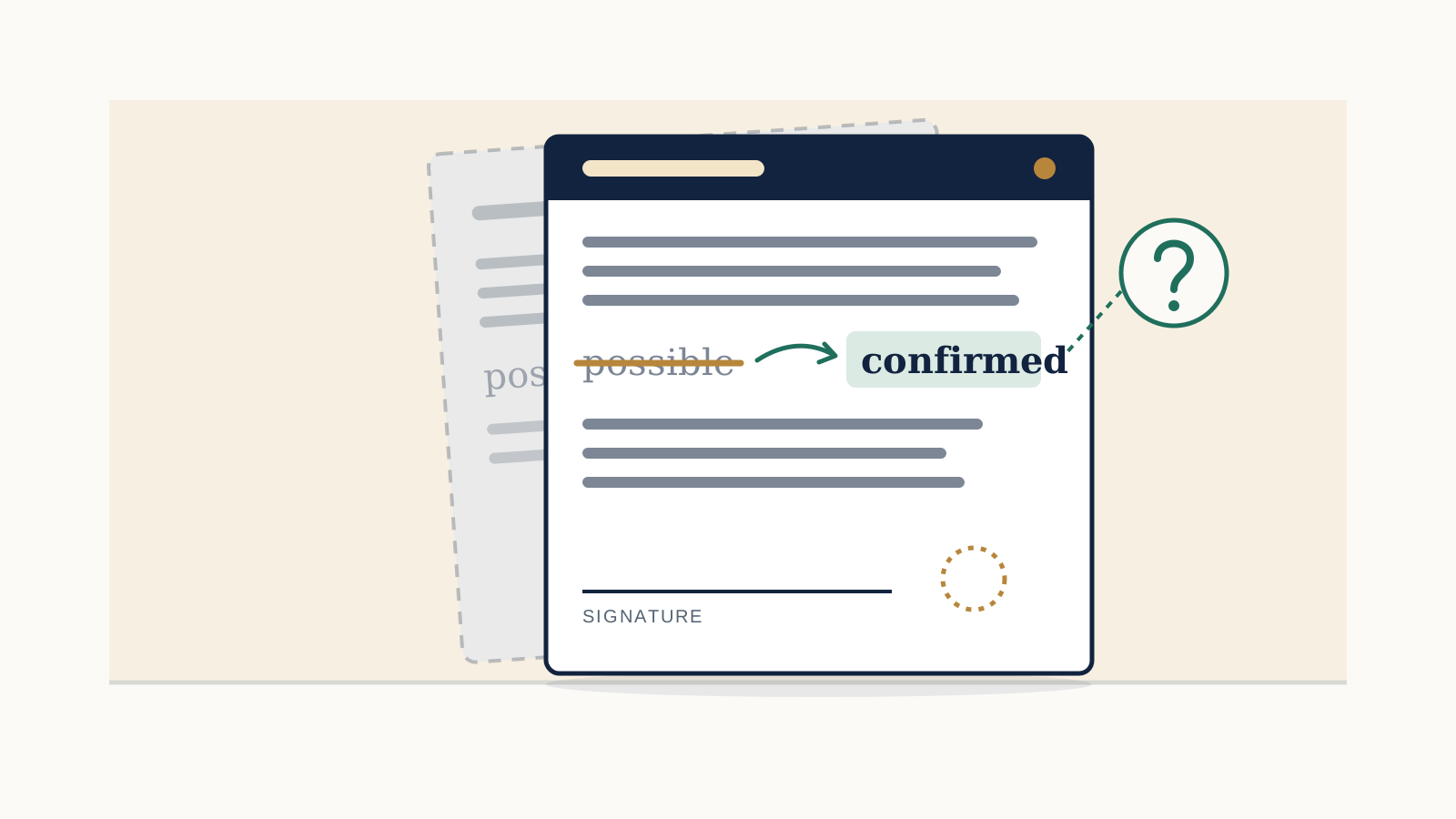
The first betrayal can be a very small word.
Possible disappears. Consider becomes start. Discussed becomes diagnosed.
No alarm sounds. The grammar improves. The paragraphs grow smoother. The medical record acquires the reassuring tone of someone who knows exactly what happened.
Except that someone may not have been the clinician.
In Adrian Lyne’s 2002 film Unfaithful, an affair disturbs an apparently settled marriage and exposes the distance between the life being lived and the account of that life others are allowed to believe. The film’s subject is intimate betrayal; the analogy here is documentary betrayal. [1]
A medical record can develop a similar double life. One version belongs to the encounter. Another appears in the chart.
This is not an accusation of adultery, intentional falsification or unlawful conduct by any clinician, institution or software company. Artificial intelligence has no romantic intentions. “Illicit affair” is a metaphor for an unacknowledged transfer of clinical authorship — not a claim that using AI is illicit.
The question is whether clinical judgment remains faithful to the patient and to the evidence when a persuasive machine begins composing the story.
The seduction begins with relief
The attraction is understandable. A clinician wants to listen rather than type. A patient wants a face rather than the back of a monitor. An ambient scribe offers an appealing bargain: conduct the encounter, let the software prepare a draft, and spend less of the evening reconstructing the day.
There is evidence of benefit, not merely advertising. In a randomized trial at UCLA, 238 outpatient physicians in 14 specialties were assigned to Microsoft’s DAX Copilot, to Nabla, or to usual care between November 2024 and January 2025. Nabla users reduced the primary outcome, time spent writing notes, compared with control; DAX users showed no significant change on that measure. Secondary survey measures of burnout, task load and work exhaustion suggested improvement with either scribe — findings the authors say need confirmation in larger, multicenter trials — and clinicians reported clinically significant inaccuracies “occasionally.” These results concern the tools and workflow studied, not every later feature or implementation. [2]
An honest critique must begin there. Wanting relief from clerical work is not laziness. Accepting help is not abandoning judgment. AI-generated documentation can be useful.
But the original bargain deserves a boundary:
Help me document what I decided. Do not quietly decide what I must have meant.
The trouble begins when assistance changes character without that change receiving its own explanation, testing and clinical approval. A tool welcomed as a scribe may begin proposing the assessment. The clinician is then no longer only checking whether the story was recorded correctly; the clinician must also decide whether the story the software proposes should become true of the care.
When the scribe becomes an uninvited coauthor
Microsoft’s public documentation describes Dragon Copilot and DAX Copilot generating diagnoses for assessment-and-plan content from ambient recordings, comparing generated diagnoses with Epic encounter diagnoses, and realigning the associated plans. Its description includes extraction of diagnoses that were spoken and retrieval of information already in the encounter; it does not establish that every generated label is a novel diagnostic judgment. [3]
That qualification matters. A term need not have been spoken word for word to be accurate. Translating ordinary language into an equivalent medical term, or bringing forward an established diagnosis from authorized chart context, can be legitimate documentation.
The decisive question is different: does the output faithfully represent what was known, considered, decided and done?
Epic’s public data dictionary separately describes ambient-detected diagnoses, alternative candidates, ranking and grouping within a “Heard In Visit Recording” workflow. Those specifications show that this environment handles structured diagnostic candidates, not just paragraphs. They do not prove that a particular installation forces acceptance, preserves every rejection, or automatically updates downstream records. [4]
The components also matter. DAX or Dragon Copilot, Epic and the Haiku mobile app are not interchangeable names for one product. Microsoft’s integration documentation describes recording and note workflows within Epic’s mobile environment; feature availability and permissions shape what any given user can do. [5]
The metaphorical affair begins not when another tool enters the room, but when its contribution becomes indistinguishable from the clinician’s judgment.
A correct answer can still tell an untrue story
Imagine — as a hypothetical — an encounter in which a clinician discusses fatigue and several possible explanations. No diagnosis has been established. An AI draft presents one possibility as confirmed and attaches a plan.
A later test might even show that the suggested condition was present.
That would not make the original documentation faithful.
There are two separate questions. Was the medical conclusion correct? Was the account of the encounter true?
A record can faithfully document a mistaken clinical decision. Conversely, it can contain a plausible or ultimately correct conclusion while falsely implying that the clinician established it, discussed it, or acted on it during the visit.
The solution is not to suppress useful suggestions. It is to keep their status visible. A recommendation can be evaluated and adopted. A new decision can be documented as a new decision. What should not happen is the unexplained transformation of a candidate into a historical fact.
This is the difference between advice and impersonation at the level of the record — not a claim that software has acquired a human identity, but the danger of text speaking in the clinician’s voice about a decision the clinician did not make.
AI can help medicine discover an answer. It should not rewrite the history of how that answer was reached.
The small betrayals are the hardest to notice
Consider three hypothetical changes. They are illustrations, not reports about identified patients or measured product failure rates.
- A patient says, “I would rather wait before starting medication.” The note says the medication was started.
- A clinician says, “We may consider imaging if the symptoms persist.” The record says imaging was ordered.
- A parent describes a relative’s condition. The note assigns it to the patient.
Each version can sound clinically polished. Each can still change the meaning of the encounter.
Research makes this more than a literary concern. In a UC Davis pilot published in April 2026, physicians rated 356 drafts drawn from 7,545 notes generated by an ambient system the authors did not name. Omissions appeared in 18 percent of the rated drafts and hallucinations in 11.5 percent; 19 drafts, or 5.3 percent, contained errors the reviewers rated as posing serious or imminent risk if left uncorrected, while 94.7 percent were free of significant errors. The sample was selected, the severity ratings describe potential harm, and the drafts were subject to review: these are not patient-injury rates, prevalence figures for every note, or failure rates for any named product. [6]
The lesson is not that every AI note is dangerous. It is that a document can be mostly good and still be wrong at the precise point where the patient’s choice or the clinician’s decision matters most.
In relationships, betrayal is not measured by the percentage of sentences that remain honest. In documentation, the clinical importance of a changed sentence matters more than the proportion of words retained.
“But the clinician signs it” is a beginning, not an answer
Microsoft’s documentation states that Dragon Copilot is “designed to augment, never replace, clinical expertise,” and that all generated content must be reviewed and validated by the clinician before it becomes part of the medical record. That is a substantive safeguard, not something to dismiss. [7]
Yet an institution still has to ask whether its workflow makes that review workable. Can the clinician see the source of a disputed assertion? Can uncertainty be restored without fighting the interface? Does editing the paragraph also correct a structured diagnosis, or are those separate actions? Is there enough time to verify the content before the next patient?
These are evaluation questions, not claims about any installation. A signature records that approval occurred. It cannot, by itself, demonstrate how the approval was reached.
The familiar reassurance — a human remains in the loop — is incomplete unless the human has the information, the time and the practical control to do meaningful work. A person at the end of a process is not automatically an effective safety system. Nor is the presence of AI an excuse to stop reviewing.
Responsibility should remain personal where judgment is personal. It should not become exclusively personal where design, configuration and workload are controlled elsewhere.
Rejecting a suggestion is not rejecting the patient
One question raised in the companion investigation concerns a reported workflow in which unwanted diagnosis-and-plan suggestions must be handled one by one before a note can be signed. That remains an implementation-level question to be tested, not a verified finding about all DAX or Epic users. [8]
There is a useful counterexample. Microsoft’s separate diagnosis-specificity feature expressly lets a user accept, dismiss or ignore a suggestion. Different features must not be collapsed into one claim about a product. [9]
Still, the word reject deserves care. Discarding an unsolicited draft diagnosis may mean “this was not established in this encounter,” “this is a duplicate,” or “this belongs to someone else.” It does not necessarily mean “I evaluated this disease and ruled it out.”
For a later reviewer, those distinctions are essential. A software event label is not a complete account of clinical reasoning.
The reverse is equally true: a clinician cannot disregard meaningful clinical evidence merely because a machine surfaced it. The relevant questions are what the suggestion represented, what evidence was available, and what the clinician actually assessed.
The sound design principle is simple: make it possible to discard unfaithful text without manufacturing a false history of clinical refusal.
Two signatures do not create two encounters
Now consider a hypothetical supervisory workflow. A physician assistant evaluates a patient. AI prepares an assessment and plan. The PA reviews, edits and authenticates the note. A supervising physician later receives it for concurrence.
There may have been thoughtful clinical review at both stages. AI involvement does not make the PA’s work invalid, and it does not show that either clinician failed to exercise judgment.
But the workflow raises a question worth testing: did the second reviewer independently assess the reasoning, or rely on the apparent completeness of a record whose earlier uncertainties had already disappeared?
“I reviewed,” “I agree with the assessment and plan,” and “I personally examined the patient” are different statements. A safe attestation process makes clear which statement the reviewer is making and provides the information needed to make it truthfully. The exact obligations depend on applicable law, agreements and the actual attestation — not on an illustrative sequence.
A second signature cannot reconstruct an omitted discussion. It cannot turn an unperformed examination into a performed one. In this metaphor, the concern is not a conspiracy between practitioners. It is a chain of trust in which each person assumes someone else established the disputed fact.
The affair leaves paperwork
The most troubling record is not necessarily the first flawed draft. It is the later record that no longer shows where an assertion began.
Consider a foreseeable — not inevitable — sequence. An unsupported diagnosis survives review. A later clinician meets it in a summary. It is repeated. A later AI system receives the repeated statement as chart context and treats it as established history. The copies begin to look like corroboration, though they share one origin.
That is why “contaminated forever” is too absolute, while “difficult to unwind” is not. A record can be corrected. The important question is whether the correction reaches the places that relied on the error.
HIPAA gives patients qualified rights to request amendment of their records and, if a request is denied, to submit a statement of disagreement. That is not a promise that every copy in every system disappears. [10]
A sensible correction process therefore asks what was actually affected — the narrative, an encounter diagnosis, the problem list, instructions, an order, an outside message, a claim — and demonstrates rather than assumes which of those destinations received the assertion.
The patient should not have to prove that a polished sentence never belonged in their history.
Who is being seduced — and by what?
The clinician may be drawn by time. The administrator may be drawn by capacity. The vendor may be drawn by a broader market. Those interests can align: better documentation can support better care, more efficient processes can improve access, and financial sustainability is not itself a betrayal.
The commercial ambition reaches beyond replacing keystrokes. Microsoft’s October 2025 announcement described extending Dragon Copilot to nurses and to partner capabilities in areas including clinical intelligence, workflow automation and revenue-cycle management. These are disclosed goals — not evidence of a hidden plan, and not proof that any capability is active at any particular customer. [11]
The ethical question is what happens when the desired outputs diverge. If faster completion depends on less careful review, the apparent saving has been purchased by moving risk. If “more complete” documentation means adding unsupported certainty, completeness has become a misleading word. If expected time savings are spent on added appointments before net workload is measured, an institution is spending a benefit it has not yet shown. These are conditional risks, not allegations about any employer.
The practical test is to measure the whole task: generation, review, rejection, correction, reconciliation and final authentication. A machine that writes faster than a person may still leave the person with more verification work.
The scribe promised to give the clinician time back. That promise should be assessed after the chart is safe to sign — not when the first draft appears.
Regulators are asking who must explain the relationship
North Carolina’s Medical Board offers a revealing comparison. Its medical-records position statement asks licensees to ensure accuracy “particularly” where records are generated with dictation software or artificial intelligence, and states that a licensee who chooses to use AI accepts responsibility for responding appropriately to its recommendations: one who follows a recommendation should be prepared to give a rationale, and one who departs from it should document the rationale for the deviation. The statement was adopted in 2018 and amended several times since; its amendment history does not show when each AI sentence first appeared. It is professional guidance in another state, not California law, and it does not make a rejected suggestion proof of negligence. [12]
The difficult question is how such expectations apply to unsolicited draft content. Choosing to ask AI for treatment advice is not the same as deleting a diagnosis the system inserted while supposedly documenting a visit. Regulators should distinguish those events rather than treat every click as a considered clinical decision.
California’s framework taking effect on 1 January 2027 makes the boundary consequential in another way. AB 1979 (Chapter 854, Statutes of 2026) requires covered health facilities, clinics and physician offices to take reasonable steps so that licensees retain the ability to exercise independent professional judgment when care is informed by AI clinical decision support. Its exception covers “documentation and communication that does not involve the application of professional judgment.” The statute calls for function-by-function analysis — not a verdict based on the word scribe. [13]
SB 503 (Chapter 857) addresses developers’ and deployers’ reasonable-effort duties concerning biased impacts; its chaptered text contains no audit timetable. AB 1637 (Chapter 536) makes patient notes — defined to include diagnosis and treatment plans — the responsibility of the authoring physician and limits who may alter them, with stated exceptions for delegated scribes and assistants, physicians to whom care is transferred, and supervisors of trainees; it does not mention artificial intelligence. Neither statute is a blanket ban on AI documentation or an immunity for clinicians. [14] [15]
For patients, the underlying principle is simpler than the statutes: a recommendation should be recognizable as a recommendation, and a record should accurately describe what the clinician adopted.
The license remains human
The concern is not only who pays when something goes wrong. It is who must explain the record afterward.
For eligible health-center clinicians, the Federal Tort Claims Act addresses qualifying medical-injury claims, subject to statutory and scope requirements. HRSA describes FTCA coverage as comparable to an occurrence form of malpractice insurance, and states that eligibility for its protections does not depend on whether the covered individual still works at the health center when suit is filed. That is a liability pathway; it is not a professional-license defense, and the ability to reconstruct a record is a separate question again. [16]
That distinction matters when a physician’s name remains on a note long after a vendor, an interface or an employment relationship has changed. The right response is not defensive paperwork declaring that the computer wrote everything. It is a system able to show what information was available, what was generated, what was corrected, and what the clinician actually adopted.
A medical record should not leave its signatory responsible for a story whose creation can no longer be explained.
What a faithful relationship with AI would require
Medicine does not need technological abstinence. It needs explicit boundaries. The following are proposals, not a claim that each is required by statute.
- Distinguish recording from recommending. A diagnostic possibility should be presented for consideration, not quietly written as a decision that already occurred.
- Preserve uncertainty. “Possible,” “unlikely,” “declined,” “deferred” and “if symptoms persist” are not clutter. In a given encounter they may be the most important words in the plan.
- Make review practical. The person responsible for the final record should be able to inspect relevant context, correct content, understand downstream effects, and fall back to a supported alternative when the tool fails.
- Test what is actually deployed. A study of note-writing time cannot by itself establish the safety of a later diagnostic-recommendation feature. A new interface, model or integration needs an evaluation suited to the change.
- Treat correction as part of care. Repair the record transparently, identify the destinations it reached, and preserve the distinction between the original event and the later amendment.
The patient is the person who must not be betrayed
The film’s usefulness is not that clinical software resembles a lover. It is that trust depends on the relationship between what happened and what someone else is asked to believe happened.
In medicine, the patient is not merely a character in the record. The patient is the person who must live with its consequences.
An AI system may be an excellent assistant. It may surface an overlooked possibility. It may help a clinician make a better decision. None of those benefits requires pretending that a machine-generated inference was an established human decision all along.
A faithful medical record can contain uncertainty. It can acknowledge a changed opinion. It can document that a suggestion was considered and not adopted. Its integrity comes from those distinctions, not from sounding flawless.
The real illicit affair is not between medicine and technology. It is between clinical authority and unearned certainty — when the appearance of a complete record becomes more persuasive than the truth of the encounter.
Let AI help tell the story. Do not let it become an unreliable narrator speaking in the physician’s name.
Medicine does not need a more convincing story.
It needs a record that can be trusted.
Source notes
Numbered notes cited in the text, checked on 4 November 2026. Product documentation is evidence of a described capability, not independent evidence of safety. Legislative text was read through legislative reproductions, with enactment corroborated against official records; recheck the official chaptered text before relying on a statutory detail. No vendor, institution or regulator was contacted before publication.
- 1 — Unfaithful (2002), directed by Adrian Lyne — licensed film listing and synopsis ↩ back to text
Supports: Film identification and premise only
Limitation: The analogy is the author’s interpretation, not a clinical claim made by the film. Director corroborated by the Academy Museum program listing (https://www.academymuseum.org/programs/detail/unfaithful-019dd58d-916f-a50b-c633-78a0ffd1e907).
https://tv.apple.com/us/movie/unfaithful/umc.cmc.3uwafb0hip6yz1jjkyfi6ttwy
Checked 4 November 2026.
- 2 — Lukac et al., “Ambient AI Scribes in Clinical Practice: A Randomized Trial,” NEJM AI 2025;2(12), published online 26 November 2025 ↩ back to text
Supports: UCLA; 238 physicians, 14 specialties; DAX vs Nabla vs usual care, 4 Nov 2024–3 Jan 2025. Nabla reduced time-in-note (−9.5%); DAX did not change it significantly (−1.7%, P=0.66). Secondary burnout, task-load and work-exhaustion measures suggested improvement with either scribe; authors call for confirmation. Abstract re-read 4 November 2026.
Limitation: Single institution; studied versions; not a validation of later diagnosis-aware features.
https://pubmed.ncbi.nlm.nih.gov/41497288/
Checked 4 November 2026.
- 3 — Microsoft Learn — Intelligent diagnoses retrieval from Epic ↩ back to text
Supports: Vendor description of diagnosis generation for assessment and plan, comparison with Epic encounter diagnoses, and plan realignment.
Limitation: Vendor documentation, not independent clinical validation; retrieval, normalization and inference must be distinguished.
Checked 4 November 2026.
- 4 — Epic — DOCS_RCVD_DX EHI export specification ↩ back to text
Supports: Public fields for ambient-detected diagnoses, alternatives, ranking and “Heard In Visit Recording” grouping.
Limitation: A schema is not proof of a particular site’s behavior, complete audit history or downstream propagation.
https://open.epic.com/EHITables/GetTable/DOCS_RCVD_DX.htm
Checked 4 November 2026.
- 5 — Microsoft Support — DAX Copilot for Epic FAQs ↩ back to text
Supports: Recording through Epic mobile apps (Haiku, Canto); permissions and integration.
Limitation: Feature availability depends on configuration and release.
https://support.microsoft.com/en-us/dax-copilot/epic/dax-copilot-for-epic-faqs
Checked 4 November 2026.
- 6 — Taylor et al., “Quality of Clinical Notes Created by Ambient Listening Generative AI: Pragmatic Prospective Pilot Study,” JMIR Medical Informatics, 17 April 2026 ↩ back to text
Supports: UC Davis; 31 physicians; 356 rated drafts from 7,545 generated notes; omissions 18%; hallucinations 11.5%; 19 drafts (5.3%) with errors rated serious or imminent risk (severity 4–5); 94.7% free of significant errors; product not named.
Limitation: Selected sample; potential harm if uncorrected, not observed injury; not a rate for any named product.
https://medinform.jmir.org/2026/1/e86474
Checked 4 November 2026.
- 7 — Microsoft Learn — Dragon Copilot transparency white paper ↩ back to text
Supports: “Designed to augment, never replace, clinical expertise”; all generated content must be reviewed and validated by the clinician before it becomes part of the record. Re-read 4 November 2026.
Limitation: Vendor disclosure, not a customer-specific safety audit.
https://learn.microsoft.com/en-us/industry/healthcare/dragon-copilot/whitepapers/transparency
Checked 4 November 2026.
- 8 — KPSGILL — When the AI Scribe Starts Shaping the Medical Record, section 4 ↩ back to text
Supports: Existence and limits of a reported rejection-to-sign workflow, treated there as a question to test.
Limitation: Not independent proof of vendor behavior.
Checked 4 November 2026.
- 9 — Microsoft Support — Diagnosis specificity ↩ back to text
Supports: Suggestions can be accepted, dismissed or ignored.
Limitation: A separate feature; not equivalent to every diagnosis-aware workflow.
https://support.microsoft.com/en-us/dragon-copilot/physicians/diagnosis-specificity
Checked 4 November 2026.
- 10 — HHS — Your Medical Records (access and amendment); 45 CFR 164.526 ↩ back to text
Supports: Qualified rights to request amendment and to submit a statement of disagreement.
Limitation: Not an entitlement to erase all historical copies.
https://www.hhs.gov/hipaa/for-individuals/medical-records/index.html
Checked 4 November 2026.
- 11 — Microsoft — “Microsoft extends AI advancements in Dragon Copilot to nurses and partners to enhance patient care,” 16 October 2025 ↩ back to text
Supports: Disclosed partner, workflow-automation, clinical-intelligence and revenue-cycle objectives.
Limitation: Announced capabilities are not proof of activation at any customer.
Checked 4 November 2026.
- 12 — North Carolina Medical Board — Position Statement 3.2.1, Medical Records (Position Statement Compendium) ↩ back to text
Supports: Accuracy where records are generated with dictation software or AI; rationale when following an AI recommendation; documented rationale when departing from one. Adopted 2018 and amended since.
Limitation: Professional guidance in North Carolina; not California law and not a presumption that AI is correct. Amendment history does not date each AI sentence.
https://www.ncmedboard.org/images/uploads/other_pdfs/PositionStatementCompendium_072026.pdf
Checked 4 November 2026.
- 13 — California AB 1979 (2026), Chapter 854, Statutes of 2026 — approved 30 September 2026; adds Bus. & Prof. Code § 22758.5 ↩ back to text
Supports: Reasonable steps so licensees retain independent professional judgment when care is informed by AI clinical decision support; exception for “documentation and communication that does not involve the application of professional judgment.” Ordinary effective date 1 January 2027.
Limitation: Read through a legislative reproduction; verify against the official chaptered text before relying on detail.
https://calmatters.digitaldemocracy.org/bills/ca_202520260ab1979
Checked 4 November 2026.
- 14 — California SB 503 (2026), Chapter 857, Statutes of 2026 — approved 30 September 2026; adds Bus. & Prof. Code § 22758 ↩ back to text
Supports: Developer and deployer reasonable-effort duties concerning biased impacts.
Limitation: No phased reporting or mandatory audit timetable in the chaptered text reviewed.
https://calmatters.digitaldemocracy.org/bills/ca_202520260sb503
Checked 4 November 2026.
- 15 — California AB 1637 (2026), Chapter 536, Statutes of 2026 — approved 27 September 2026; adds Bus. & Prof. Code § 2266.1 ↩ back to text
Supports: Patient notes, including diagnosis and treatment plans, are the authoring physician’s responsibility; alteration limited to stated exceptions (delegated scribes or assistants; physicians receiving transferred care, who may add; supervisors of trainees).
Limitation: Does not mention AI; not a universal rule for PA-authored records.
https://calmatters.digitaldemocracy.org/bills/ca_202520260ab1637
Checked 4 November 2026.
- 16 — HRSA Bureau of Primary Health Care — FTCA Frequently Asked Questions ↩ back to text
Supports: FTCA coverage is comparable to occurrence-based malpractice insurance; eligibility does not depend on whether the covered individual still works at the health center when suit is filed. Re-read 4 November 2026 (page last reviewed May 2026).
Limitation: Medical-injury liability protection only; distinct from state licensing-board proceedings.
https://bphc.hrsa.gov/compliance/ftca/faq
Checked 4 November 2026.
Editorial scope. This is an interpretive physician essay grounded in public product materials, published research, law and the two preceding investigations. “Unfaithful” describes a loss of fidelity to an encounter, not necessarily deliberate deception. Clinical examples and supervisory sequences are hypothetical. No employer, colleague, patient or confidential communication is identified or used, and the essay is written in the author’s individual capacity. No universal mandatory-rejection feature, vendor misconduct, patient injury or unlawful practice is established here. The film comparison is cultural criticism; no dialogue, still, poster or endorsement is reproduced or implied. Published on the author’s instruction of 4 November 2026. Not individualized medical or legal advice.