Global · Edition of November 3, 2026 · Health regulation, medicine safety and access
Published
Global Health, Medicine and Everyday Life — What Changed by November 3, 2026
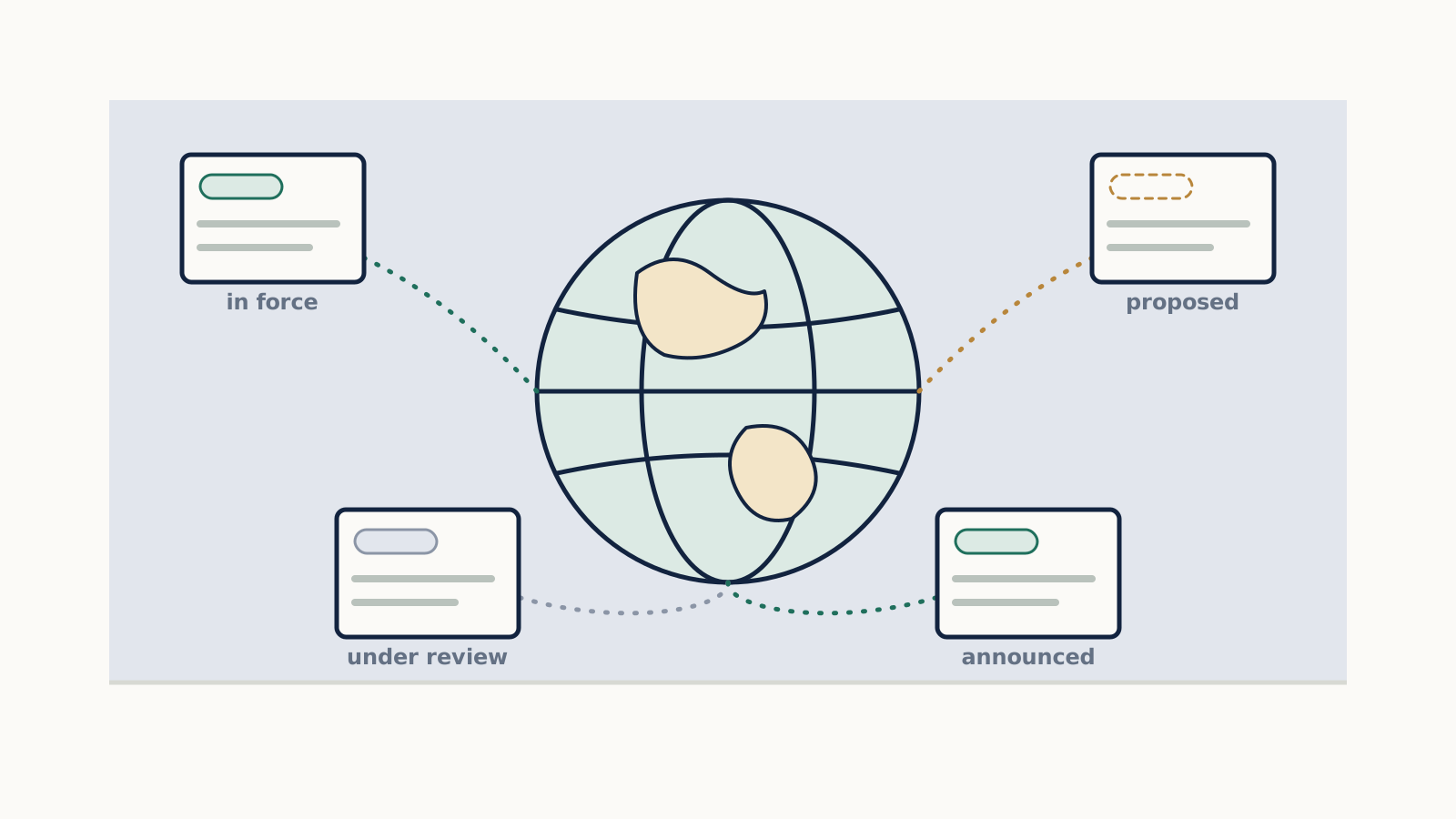
Medicine safety, treatment access, clinical AI, product quality, public money and the conditions that make care possible — each item labelled for what it is: in force, proposed, ordered, audited, reviewed or announced
By Kanwar Partap Singh Gill, MD · Editorial cutoff 7:30 p.m. Pacific, November 3, 2026 · Sources checked through November 3, 2026 · source register
All twenty-five items
- Transaction-review amendments are now in effect — not still approaching
- Medicaid medical-frailty litigation: the October order is narrower than “work requirements struck down”
- A maternal-health opportunity for the Central Valley: a provider deadline, not a patient cutoff
- MedSafetyWeek: you do not need to prove a medicine caused a problem to report it
- Europe’s latest medicine-safety reviews: a review is not a blanket ban
- New South Wales medicine-law changes take effect November 5 — a state rule, not national law
- A cinnamon recall shows why exact product identifiers matter
- Japan’s new AI principles keep human responsibility visible — but their scope matters
- Singapore’s clinical-AI collaborations: announcement, evaluation and deployment are different stages
- Background: AI at work needs a labor-governance lens as well as a technical one
- The hepatitis C treatment gap: insurance coverage is not the same as treatment received
- GLP-1 medicines across borders: approval, payment and safe use are separate questions
- New Zealand removes an HIV-treatment funding step without removing clinical responsibility
- Cell and gene therapies: quality must be demonstrated across the product’s lifecycle
- Provider Relief Fund audit: potential overpayments are not a fraud judgment
- Correctional Medicaid payments: audit findings stay tied to the state and period reviewed
- China’s revised medical-device manufacturing rules have entered into force
- India proposes a clearer accountable role at the point of drug-batch release
- Organ-procurement oversight: a final rule is not action against a particular organization
- Ebola: a new snapshot with its own data dates
- Canada’s men-and-boys health consultation adds an access question — not a new screening rule
- Long-term care in the Americas: a policy promise is not the same as a working care system
- Women’s health during disruption: keeping care reachable is part of the treatment pathway
- A healthy home is part of the care environment
- Displacement and access to care: an attributed update from Gaza
1. California: dates that changed the legal and access picture
Transaction-review amendments are now in effect — not still approaching
California’s health-care transaction calendar has crossed a consequential date. HCAI’s regulation register identifies November 2, 2026 as the effective date for amendments to the Office of Health Care Affordability’s material-change transaction and pre-transaction review regulations (California Code of Regulations, title 22, sections 97431–97442). Approval occurred on October 2. Those are different milestones. [S01]
Why it matters. A change in transaction-review procedure does not, by itself, establish that a particular management agreement violates corporate-practice restrictions, or that any transaction has been approved, rejected or investigated. Those conclusions require the applicable text, the transaction facts and the agency’s actual record. The right questions are which entity is covered, which transaction is involved, which version of the regulation applies, and what filing or review obligations follow. This site’s earlier notice of the November 2 date remains available, now marked as in effect.
Still to confirm. A detailed compliance table requires comparing the approved amendments with the previous text. Proposals to enforce spending targets are a separate track from these transaction-review amendments.
Medicaid medical-frailty litigation: the October order is narrower than “work requirements struck down”
An October 29 order in Commonwealth of Massachusetts et al. v. Oz et al., No. 1:26-cv-12962-RGS (D. Mass.), Document 148, vacated a specific part of the federal interim rule’s medical-frailty definition. It also enjoined application of that provision to the plaintiff states and barred penalties against those states for implementation errors or delays for six months following the order. It did not declare every Medicaid work requirement invalid. [S03]
California’s Department of Health Care Services discussed the development in its November 2 bulletin. Its linked documents need careful reading: the July 29 preliminary-injunction order is an earlier denial without prejudice, while the October document is the operative vacatur-and-enjoinment order described here. [S02, S04]
Why it matters. The useful question is not whether a headline sounds like a statewide exemption. It is which provision changed, which states and officials are covered, whether later orders affect implementation, and what eligibility instructions the responsible agency actually issues. A court ruling and an individual patient’s coverage determination are not interchangeable. The six-month protection against penalties for states is not a six-month extension of every beneficiary deadline.
Still to confirm. Any appeal, stay or amendment entered after October 29. The order reviewed is a copy hosted by a university litigation tracker, not a complete current docket.
A maternal-health opportunity for the Central Valley: a provider deadline, not a patient cutoff
DHCS’s November 2 bulletin invites eligible Medi-Cal-enrolled clinical perinatal providers in Fresno, Kern, Kings, Madera and Tulare counties to apply to participate in the Transforming Maternal Health model by November 18. This is a provider application deadline. It is not a date by which pregnant patients must enroll or lose benefits. [S02]
Why it matters. Between a program announcement and better care sit several separate stages: which providers apply, which are selected, what services become available, where and when, and how patients are referred. Until participating providers and start dates are confirmed, no one should assume that a new service is already operating. A practical question for patients is, “Does my pregnancy or postpartum team participate, and will anything change about how I reach them?” For practices, it is, “Who is responsible for reviewing eligibility and submitting the application?” The site’s women’s health guides, including pregnancy and postpartum care, remain the clinical reference; this is system information beside them.
Still to confirm. Application instructions, the exact closing time and any extension, directly with DHCS.
2. Medicine safety is a reporting system, not a rumor mill
MedSafetyWeek: you do not need to prove a medicine caused a problem to report it
MedSafetyWeek runs November 2–8, 2026. New Zealand’s Medsafe reports participation by more than 130 organizations across more than 120 countries and more than 60 languages. Its message is that a suspected side effect can be reported without certainty that the medicine caused it. The UK campaign uses the MHRA Yellow Card system; New Zealand directs reports through its own CARM channel. [S10, S11]
Why it matters. A report contributes a signal for investigation. It does not, on its own, prove causation or show how often a problem occurs among everyone who takes the medicine. Before reporting, it helps to note the medicine name, dose, dates, symptoms, other products used, and any packaging or batch information. Use the reporting route for your own country — in the United States, that is FDA’s MedWatch — and seek clinical advice about your own symptoms rather than wait for a reporting system to respond. A suspected effect, a confirmed adverse reaction and a recall are three different things.
Europe’s latest medicine-safety reviews: a review is not a blanket ban
EMA’s October 26–29 pharmacovigilance committee highlights describe a review of Deanxit, the flupentixol/melitracen combination, and a separate immunoglobulin safety review following hypersensitivity reports involving certain product batches. These are investigations of safety concerns, not a finding that every medicine in the relevant class is unsafe or that all products have been recalled. [S12]
Why it matters. An agency may investigate a suspected problem, request data, change product information, restrict use or announce a recall; each is a different status. A useful safety record names the product, active ingredient, affected batch where relevant, authority, type of action, publication date and whether a final conclusion exists. Anyone taking an affected medicine should not stop it on the strength of a headline; individual questions belong with the prescriber or pharmacist. This record will be updated when EMA issues a further decision, and this version will remain available.
Still to confirm. The exact product and batch scope before any consumer action is suggested.
New South Wales medicine-law changes take effect November 5 — a state rule, not national law
NSW Health identifies November 5, 2026 as the commencement date for its new medicines, poisons and therapeutic-goods framework. At the November 3 Pacific editorial cutoff, this remains an upcoming Australian state-level change. The official FAQ explains that certain prescriptions will no longer need a NSW Health approval number, while the prescriber’s obligation to obtain an approval where required remains. [S21]
Why it matters. Removing a number from a prescription is not the same as abolishing the approval obligation behind it — a useful reminder that an administrative field and the legal authority it records are different things. This is a New South Wales implementation item, not an Australia-wide rule and not guidance for California prescribing; readers elsewhere should check their own prescribing and dispensing rules. A practice checklist should come from the final legislation and profession-specific guidance, including transition arrangements.
A cinnamon recall shows why exact product identifiers matter
An October 29 company announcement published by FDA recalls Wise Wife ground cinnamon because of potentially elevated lead levels. The notice identifies a 110-gram container, UPC 0688474302754 and a best-before date of April 25, 2027. It instructs consumers not to use the affected product and to discard it or return it for a refund. California is not among the distribution states listed in the notice. [S28]
Why it matters. A recall notice is useful when readers can match the exact product: brand, package size, UPC, lot or date code, distribution area and the recall instruction belong together. It is not a reason for concern about every spice on the shelf. If you have the product, follow the notice’s instructions, and discuss any possible exposure — particularly for children or during pregnancy — with a clinician rather than relying on the absence of symptoms. FDA published the company’s announcement as a public service; that is not an FDA endorsement or an FDA finding.
3. AI governance: who decides, who checks, who can challenge?
Japan’s new AI principles keep human responsibility visible — but their scope matters
Japan’s Pharmaceuticals and Medical Devices Agency (PMDA) published principles on November 2 for the use of AI in its own regulatory activities. The provisional English text emphasizes human responsibility, defined use contexts, risk-based oversight and appropriate data and expertise. It expressly states that the principles do not introduce new regulatory requirements. They are not a new Japanese law assigning liability to physicians. [S13]
Why it matters. The principles still supply a disciplined set of questions for any organization evaluating AI: what decision the system supports, what information it uses, who can detect and correct an error, and who is accountable for the final action. Three layers should stay distinct — AI used by a regulator, regulation of AI products, and AI used in clinical care. “Human oversight” is something to examine, not a reassurance: does the human have the time, information and authority to disagree? For the clinical layer, see this site’s investigations When the AI Scribe Starts Shaping the Medical Record and Who Owns the Decision?.
Still to confirm. The original Japanese wording before the English translation is quoted in any legal argument.
Singapore’s clinical-AI collaborations: announcement, evaluation and deployment are different stages
Singapore’s Ministry of Health described new AI-related collaborations at the October 29 Google for Health Summit, including a research hub, work involving the National University Health System (NUHS) and Google DeepMind, and an NHG Health collaboration exploring earlier identification of health risks. The official account describes research and planned exploration; it does not establish a cleared clinical product or proven patient benefit. [S14]
Why it matters. A collaboration can be significant without having demonstrated safer care, lower costs or reduced staffing needs; those are separate hypotheses requiring their own evaluation. The path to watch runs from announcement to study protocol, study population, results, independent evaluation, regulatory status and real-world use. Any later claim about workload should say whether it measures time saved, work shifted to someone else, review burden or net cost. The presence of a well-known technology partner is not evidence of clinical maturity.
Background: AI at work needs a labor-governance lens as well as a technical one
An October 23 International Labour Organization working paper examines how AI ethics relates to international labor standards, including data governance, explainability and algorithmic management. It is a research contribution; the publication notes that the authors’ views do not necessarily reflect those of the ILO. It is not a new binding international AI treaty. [S30]
Why it matters. A system can assist a clinical task while also changing how work is allocated, reviewed or measured. Those questions deserve separate evaluation rather than a single verdict that “AI helps” or “AI replaces workers.” Useful institutional questions: which decisions the tool influences, what worker and patient information it processes, who can challenge an output, and whether correction work is measured alongside advertised time savings. International discussion does not create a California legal claim or displace local professional obligations.
4. Treatment access: approval is only one step
The hepatitis C treatment gap: insurance coverage is not the same as treatment received
A newly posted HHS Office of Inspector General evaluation reports that 23 percent of the Medicaid beneficiaries with hepatitis C in its analysis received treatment within six months of testing. State results ranged from 7 to 41 percent. CMS concurred with recommendations to improve treatment rates, including attention to people covered by both Medicare and Medicaid. These are study findings about the period analyzed, not a real-time November 2026 dashboard. [S07]
Why it matters. Hepatitis C is curable, and a benefit on paper is not a completed treatment. The pathway has several links: the patient receives the result, a treating clinician is identified, coverage barriers are resolved, the medication is dispensed, and follow-up is completed. If you have tested positive, ask specifically what the next step is and who is responsible for it; waiting is not inevitable. The national figure should not be applied to a particular clinic, county or the current Medicaid population without matching evidence.
Still to confirm. The cohort dates, inclusion criteria and treatment definition from the full report before any trend or causal claims.
GLP-1 medicines across borders: approval, payment and safe use are separate questions
Pharmac’s November 3 update says Wegovy and Mounjaro are not publicly funded for weight loss in New Zealand. Wegovy is on its Options for Investment List; an advisory recommendation is not a funding commitment or a start date. Pharmac says it has not received a Mounjaro weight-loss funding application, while a type 2 diabetes application is under assessment. [S18]
Separately, Japan’s PMDA has issued a proper-use alert about GLP-1-related medicines and inappropriate aesthetic or slimming use. Its adverse-event reporting tables should not be read as incidence rates or as proof that every report was caused by the medicine. [S19]
Why it matters. The two sources answer different questions — who pays in a national funding system, and how the medicines should and should not be used. Neither determines whether an American insurer covers a medicine, or whether an individual should start, stop or change treatment. Four questions stay separate: the authorized indication, clinical suitability for you, the funding rules, and whether the supply channel is reliable. Counterfeit or compounded products bought outside a pharmacy are a distinct risk.
New Zealand removes an HIV-treatment funding step without removing clinical responsibility
From November 1, Pharmac removed Special Authority requirements for funded antiretroviral treatment for any indication. The notice says clinical management, monitoring and appropriate specialist involvement remain unchanged. It also establishes a practitioner supply-order route for specified medicines for HIV post-exposure prophylaxis only, with informed-consent requirements for that unapproved indication. That pathway is not a general authorization for pre-exposure prophylaxis (PrEP). [S20]
Why it matters. This is a clear example of removing an administrative step while keeping clinical safeguards: HIV medicines are not made unregulated, and medical assessment is still required. Whether access improves will need New Zealand data before any lesson is exported elsewhere. For patients, the practical step is to ask the treating team how the change affects their own access and follow-up — and, after a possible exposure, to seek care promptly rather than attempt self-directed treatment.
5. Quality, manufacturing and public money
Cell and gene therapies: quality must be demonstrated across the product’s lifecycle
On November 2, FDA announced final guidance on potency assurance for cellular and gene therapy products, replacing its 2011 potency-testing guidance. The agency describes a science- and risk-based approach spanning manufacturing design, controls, materials, in-process testing and release assays. The guidance is filed under docket FDA-2023-D-4299. [S05, S06]
Why it matters. This is a manufacturing-quality story, not an announcement that a new treatment cures a disease. A product’s biological activity, its clinical evidence, its regulatory authorization and its suitability for an individual patient are separate questions, and marketing should not collapse them into the word “breakthrough.” Readers weighing a cell or gene therapy should be able to tell an approved product from an investigational one, and both from an unsupported commercial claim — and ask which product, for which indication, made by whom, under which regulatory record. Guidance sets out FDA’s current thinking; it is not a new statute.
Provider Relief Fund audit: potential overpayments are not a fraud judgment
The HHS Office of Inspector General’s November 2 audit summary identifies up to $658 million in potential Phase 3 Provider Relief Fund overpayments to selected providers. It also identifies potential underpayments, and says the sampled providers met federal eligibility requirements. The issues concern payment calculation and supporting documentation. OIG recommended further review and recovery of amounts determined to be overpayments. [S08]
Why it matters. “Potential overpayment,” “ineligible recipient,” “knowing false claim,” “criminal conviction” and “money recovered” are different propositions, and a large dollar figure does not turn one into another. The audit reviewed selected providers; it does not describe every recipient, and it alleges no wrongdoing by any particular practice. Any later recovery, appeal or enforcement action is a separate event that needs its own source and date. See the site’s healthcare enforcement coverage for how audits, settlements and judgments differ.
Correctional Medicaid payments: audit findings stay tied to the state and period reviewed
An October 29 HHS-OIG audit summary found unallowable Louisiana managed-care capitation payments for 46 of 100 incarcerated enrollees in a stratified sample. It estimated at least $3.7 million in unallowable payments during the audit period. Louisiana agreed with recommendations addressing refunds and prompt suspension of enrollment. [S09]
Why it matters. A capitation payment, a covered clinical service, an eligibility record and a reentry arrangement are different things; the audit concerns payment administration, not the care available to incarcerated people. The broader question for correctional health is whether agencies reconcile custody information, enrollment records, payments and service responsibility, each with an accountable owner. The findings concern Louisiana and the period audited; they are not evidence that any other state, county or contractor repeated the errors, and an audit’s recommendations are not proof that corrective action is complete.
China’s revised medical-device manufacturing rules have entered into force
China’s revised Good Manufacturing Practice requirements for medical devices took effect on November 1, 2026. The National Medical Products Administration’s announcement is a 2025 instrument, with an English posting dated December 24, 2025. Its explanatory material highlights quality systems, responsibilities in contract manufacturing, validation and verification, and digital tools. This is a newly effective framework, not a newly announced November 2026 rule. [S15, S16]
Why it matters. When design, manufacturing and distribution are spread across organizations, the question is who remains responsible for quality. A manufacturing standard, a product authorization and a claim in an advertisement are three different kinds of evidence; a supplier’s statement of compliance is not proof that a particular device has been validated for a particular use. One country’s manufacturing framework does not determine another country’s authorization decisions.
Still to confirm. A detailed compliance comparison requires the approved Chinese text, particularly on contract-manufacturing responsibilities.
India proposes a clearer accountable role at the point of drug-batch release
India’s Health Ministry announced proposed changes to the Drugs Rules, 1945 on November 3. The proposal would require manufacturers to authorize suitably qualified and experienced personnel for drug-batch release, maintain prescribed records and use a prescribed batch-release certificate format. The stated aim is clearer accountability and traceability at the final quality review before distribution. The announcement is a proposal, not confirmation that the requirements are in force. [S17]
Why it matters. A named signatory makes a decision traceable, but the deeper question is whether that person has reliable evidence, authority to reject an unsuitable batch, and an organization that supports the decision. The common thread with China’s device rules and FDA’s potency guidance is accountability at a decision point; the instruments, products and jurisdictions remain different. No comment deadline has been assumed here; any final adoption will be recorded as a separate event.
Organ-procurement oversight: a final rule is not action against a particular organization
CMS’s October 30 fact sheet describes a final rule revising Organ Procurement Organization conditions for coverage. It addresses recertification, competition, appeals, transitions and safety oversight, including a definition of unsound medical practices and adverse-event quality requirements. The fact sheet says the rule retains the existing performance-tier structure. It is not an announcement that any low-performing organization has been decertified. [S29]
Why it matters. A rule establishes a process; the agency must still act in individual cases, so no organization’s status should be inferred from the framework alone. Donation measures, transplant measures, research activity and patient-safety oversight are separate, and a statistic that changes because its definition changed is not evidence of better care. Families with questions about donation or transplantation should go to the responsible organization and official sources.
Still to confirm. The final regulatory text and its effective and implementation dates; a fact sheet’s date is not automatically the date every obligation begins.
6. The conditions that make care possible
Ebola: a new snapshot with its own data dates
ECDC’s November 3 update reports 10,532 confirmed Ebola cases and 5,126 related deaths in the Democratic Republic of the Congo, using data through November 1 reported as of November 2. Other country entries use different dates. Its risk assessment is scoped to EU/EEA populations and travelers; it is not a U.S. travel assessment. [S22]
Why it matters. Publication date, data-through date and location belong together, and the difference between two cumulative reports is not a daily infection rate. Imported cases and medical evacuations are not locally acquired infections in the receiving country. Travelers should follow their own national health authority’s destination advice; clinicians should use their public-health department’s pathway. The site’s Ebola article and outbreak tracker now carry this snapshot alongside the earlier figures, which remain in the record.
Canada’s men-and-boys health consultation adds an access question — not a new screening rule
Health Canada released findings from its National Conversation on Men and Boys’ Health on November 2. The consultation gathered input through questionnaires, submissions and discussions to inform a federal strategy. The findings are consultation evidence, not a clinical guideline or a representative measure of disease prevalence. [S23]
Why it matters. The useful question is how different people encounter barriers to help, and how services can respond without stereotyping patients or setting one group’s needs against another’s. Practical steps — finding a regular source of care, raising a concern you have postponed, making a follow-up plan — do not depend on new screening intervals, and none should be inferred from a consultation. What participants reported, what the government proposes and what clinical research shows are three different kinds of evidence; the strategy itself is still to come.
Long-term care in the Americas: a policy promise is not the same as a working care system
An October 28 Pan American Health Organization account of a joint PAHO–Inter-American Development Bank policy brief describes growing long-term-care needs and gaps in public financing and service organization. The official release reports that 15 of PAHO’s 35 member states have a formal publicly funded long-term-care system. This is a regional policy finding, not a statement that every country has the same eligibility rules or benefits. [S24]
Why it matters. For a household, the questions are practical: who provides help, who pays, how dependable it is, and what happens when the main caregiver cannot continue. A legal entitlement or a strategic plan does not answer them unless services can actually be reached. California readers will find local caregiving and benefits guidance in the site’s Family & caregiving area; other countries’ rules do not transfer.
Still to confirm. Detailed comparative statistics require the full policy brief, which was not reviewed for this short update.
Women’s health during disruption: keeping care reachable is part of the treatment pathway
WHO’s November 1 update describes a 14-paper supplement examining sexual and reproductive health services in nine countries during the COVID-19 crisis and recovery: Brazil, Burkina Faso, China, Ghana, Italy, Kenya, Pakistan, Thailand and the United Kingdom. WHO highlights service prioritization, flexible community delivery and remote access, while also describing gaps and uneven recovery. This is newly published evidence about earlier disruption — not a new pandemic declaration. [S25]
Why it matters. Continuity is part of care: how a person gets the next appointment, medicine, result or referral when the usual route fails. It helps to know your responsible clinical team, your next planned contact, the route for an unresolved result, and a backup contact if the usual service is unavailable. A telephone or digital option does not solve every access problem, and experiences in nine countries are not directly comparable. The site’s women’s health guides remain the clinical reference.
A healthy home is part of the care environment
WHO’s October 31 World Cities Day message emphasizes safe, healthy and accessible housing. It identifies housing conditions, crowding, heat and cold, pollution, environmental hazards and accessibility as factors relevant to health across the life course. This is a global public-health message, not a new California housing law or benefit. [S26]
Why it matters. A home can support recovery or work against it: accessibility, working utilities, room to store medicines and equipment, and a plan for outages or temporary displacement all matter. It helps to separate a question for your clinician from a repair request or a benefits inquiry, because each goes to a different person. Local legal questions need current local sources; see the site’s Home & housing area.
Displacement and access to care: an attributed update from Gaza
A November 2 United Nations account relays reports by the UN human rights office (OHCHR) of further displacement and damage to civilian infrastructure in Gaza. These statements are attributed to the reporting UN office. The account is not a court judgment and does not by itself establish a comprehensive legal finding about the conflict. [S27]
Why it matters. For health, repeated displacement threatens the practical continuity of care: a reachable clinical team, an accurate medication list, access to records, a place to recover and a reliable route for follow-up. Those are questions the brief account raises, not outcomes it measures. Claims about facility capacity, mortality, food insecurity or disease incidence require their own dated sources and denominators, and are not made here.
About this edition
This edition was prepared from official agency, court, regulator and international-organization records listed in the source register, with an editorial cutoff of 7:30 p.m. Pacific on November 3, 2026. “Why it matters” paragraphs are the author’s analysis, labelled as such. Items marked “Still to confirm” identify what the cited record does not yet establish. No region is described as covered completely, and regions without a newly verified development are not given filler stories. Earlier editions and snapshots remain available on the Global desk.
Source register
Official records cited above, with each source’s own date and its evidence limits. Sources checked on November 3, 2026 (Pacific).
- S01 — California HCAI, “Laws & Regulations — OHCA material-change transaction amendments” ↩ back to text
Type: Official agency regulation register
Limitation: Approval October 2; effective November 2, 2026. Detailed changes require comparison of approved text, not this register alone.
- S02 — California DHCS, “Stakeholder News — November 2, 2026”, 2026-11-02 ↩ back to text
Type: Official agency bulletin
Limitation: The court links point to different procedural stages. The maternal-health application is for eligible providers, not a patient enrollment deadline.
https://www.dhcs.ca.gov/news/stakeholder-news-november-2-2026/
- S03 — U.S. District Court, District of Massachusetts; copy hosted by Georgetown litigation tracker, “Commonwealth of Massachusetts et al. v. Oz et al., No. 1:26-cv-12962-RGS, Document 148”, 2026-10-29 ↩ back to text
Type: Primary court order; both PDF pages visually checked
Limitation: Actual title is Order of Vacatur and Enjoinment. This is not the complete merits opinion or a current appellate docket search. Recheck stays/appeals before publication.
- S04 — U.S. District Court, District of Massachusetts; copy hosted by Georgetown litigation tracker, “Same case, Document 94 — preliminary-injunction order”, 2026-07-29 ↩ back to text
Type: Primary court order; first and disposition pages visually checked
Limitation: Historical comparator only. Denied preliminary injunction without prejudice; not the October 29 ruling.
- S05 — FDA, “FDA Provides Clarity to Support Cell and Gene Therapy Development and Quality”, 2026-11-02 ↩ back to text
Type: Official final-guidance announcement
Limitation: Guidance is not an approval of a particular therapy or a guaranteed clinical outcome.
- S06 — FDA, “Guidance for Industry: Potency Assurance for Cellular and Gene Therapy Products”, 2026-11 ↩ back to text
Type: Official guidance landing page; final status
Limitation: HTML description reviewed, not a clause-by-clause review of the underlying guidance PDF. Docket FDA-2023-D-4299.
- S07 — HHS Office of Inspector General, “Less Than 25 Percent of Medicaid Beneficiaries With Hepatitis C Received Treatment Within 6 Months”, 2026-11-02 ↩ back to text
Type: Official evaluation summary; date corroborated by OIG listing
Limitation: 23 percent is the evaluated cohort result, not a November 2026 real-time treatment rate. Extract cohort dates and exclusions from full report before a longer methodological article.
- S08 — HHS Office of Inspector General, “HRSA Made $658 Million in Potential Overpayments to Selected Providers Under Phase 3 of the Provider Relief Fund Program”, 2026-11-02 ↩ back to text
Type: Official audit summary; date corroborated by OIG listing
Limitation: Potential overpayments, not a criminal finding, False Claims Act judgment, or a final recovered amount. Summary also reports potential underpayments.
- S09 — HHS Office of Inspector General, “Louisiana Made Unallowable Managed Care Capitation Payments on Behalf of Incarcerated Medicaid Enrollees”, 2026-10-29 ↩ back to text
Type: Official state-specific audit summary
Limitation: Audit-period and state-specific findings. Not authority to terminate all current incarcerated-person services or ignore approved reentry arrangements.
- S10 — New Zealand Medsafe, “MedSafetyWeek 2026 Media Release”, 2026-11-02 ↩ back to text
Type: Official safety campaign announcement
Limitation: Campaign November 2–8; New Zealand reporting channel is not a worldwide reporting portal.
https://medsafe.govt.nz/publications/media/medsafetyweek-2026-media-release.asp
- S11 — United Kingdom MHRA, “MedSafetyWeek” ↩ back to text
Type: Official UK campaign page
Limitation: Campaign period November 2–8, 2026; use UK reporting instructions only for the relevant jurisdiction.
- S12 — European Medicines Agency, “PRAC meeting highlights, October 26–29, 2026”, 2026-10-30 ↩ back to text
Type: Official safety-review announcement
Limitation: Deanxit and immunoglobulin reviews are not blanket recalls, proven causation, or class-wide prohibitions.
- S13 — Japan PMDA, “Basic Principles for the Use of Artificial Intelligence in Regulatory Activities”, 2026-11-02 ↩ back to text
Type: Official provisional English translation; PDF visually checked
Limitation: Focus is regulatory activities. It explicitly does not introduce new regulatory requirements. Original Japanese controls interpretation.
- S14 — Singapore Ministry of Health, “Speech at the Google for Health Summit, October 29, 2026”, 2026-10-29 ↩ back to text
Type: Official ministerial speech
Limitation: Describes announced collaborations and research; not clinical trial results, product authorization, or demonstrated cost savings.
- S15 — China NMPA, “Announcement on revised Good Manufacturing Practice for Medical Devices, No. 107 of 2025”, 2025-12-24 ↩ back to text
Type: Official English announcement of November 4, 2025 instrument
Limitation: Effective November 1, 2026. This is a newly effective change, not a newly issued November 2026 announcement.
- S16 — China NMPA, “Revision and Release of the Good Manufacturing Practice for Medical Devices”, 2025-12-24 ↩ back to text
Type: Official explanatory article
Limitation: Read original Chinese instrument for exact compliance obligations; this is an explanatory overview.
- S17 — India Ministry of Health and Family Welfare / PIB, “Proposed amendments to Drugs Rules, 1945 — authorization of qualified personnel for drug batch release”, 2026-11-03 ↩ back to text
Type: Official proposal announcement, posted 18:43 India time
Limitation: Proposal only; exact gazette provisions and comment deadline were not independently verified. Some alternate PIB URL forms returned empty content.
- S18 — New Zealand Pharmac, “Wegovy and Mounjaro for weight loss not funded”, 2026-11-03 ↩ back to text
Type: Official funding-status update
Limitation: Approval, advisory priority, investment-list placement and funded access are different statuses. Does not establish U.S. coverage.
https://www.pharmac.govt.nz/news-and-resources/news/semaglutide-wegovy-ozempic
- S19 — Japan PMDA, “Proper use alert concerning GLP-1 receptor agonists and related medicines”, 2026-10 ↩ back to text
Type: Official safety alert; both PDF pages visually checked
Limitation: PMDA English index posted October 30. Spontaneous adverse-event reports are not incidence estimates or proof that every report was caused by a drug.
- S20 — New Zealand Pharmac, “Antiretroviral medicine changes”, 2026-10-27 ↩ back to text
Type: Official access-policy notice
Limitation: Effective November 1. PEP supply-order pathway is not a PrEP authorization; clinical responsibilities remain.
- S21 — New South Wales Health, “FAQs on new Medicines, Poisons and Therapeutic Goods legislation” ↩ back to text
Type: Official implementation FAQ
Limitation: Commencement November 5, 2026 is prospective at the editorial cutoff. State-specific, not a uniform Australian rule.
https://www.health.nsw.gov.au/pharmaceutical/Pages/medicine-laws-faq.aspx
- S22 — European Centre for Disease Prevention and Control, “Ebola event update, November 3, 2026”, 2026-11-03 ↩ back to text
Type: Official surveillance snapshot
Limitation: DRC data through November 1 reported as of November 2. Country-specific dates differ; EU/EEA risk assessment is not a U.S. assessment.
https://www.ecdc.europa.eu/en/public-health-events/2026-eip-00026/2026-11-03
- S23 — Health Canada, “Findings from the National Conversation on Men and Boys’ Health”, 2026-11-02 ↩ back to text
Type: Official consultation-results release
Limitation: The URL contains October but the release/page date is November 2. Consultation input is not representative prevalence data or a treatment guideline.
- S24 — PAHO / WHO, “Americas face growing need for long-term care as populations age”, 2026-10-28 ↩ back to text
Type: Official release retrieved through indexed search text
Limitation: Direct fetch returned 403. Limited factual use supported by official English and Spanish indexed records; reopen full policy brief before adding detailed tables.
https://www.paho.org/en/news/28-10-2026-americas-face-growing-need-long-term-care-populations-age
- S25 — WHO / HRP, “Sustaining sexual and reproductive health through a pandemic”, 2026-11-01 ↩ back to text
Type: Official research-synthesis announcement
Limitation: New publication about pandemic-era services, not a newly declared pandemic or a country-by-country clinical guideline.
- S26 — WHO, “World Cities Day 2026 — safe, healthy housing”, 2026-10-31 ↩ back to text
Type: Official global policy message on regional mirror
Limitation: Global item; Mongolia in the URL is not geographic scope. Does not create California housing rights.
- S27 — United Nations in Palestine / OHCHR, “UN rights office reports deepening displacement in Gaza”, 2026-11-02 ↩ back to text
Type: Official UN account of OHCHR findings
Limitation: Attribute claims to OHCHR. Not an independently adjudicated legal finding or a comprehensive conflict chronology.
- S28 — FDA; company recall announcement hosted by FDA, “Wise Wife ground cinnamon recall”, 2026-10-29 ↩ back to text
Type: Company voluntary recall announcement published by FDA
Limitation: Specific product/UPC/date. California is not among the listed distribution states; do not call it a confirmed Fresno recall.
- S29 — CMS, “Organ Procurement Organizations Conditions for Coverage final rule, CMS-3409-F”, 2026-10-30 ↩ back to text
Type: Official final-rule fact sheet
Limitation: Does not itself establish an enforcement action against a named OPO. Verify regulatory text and effective dates before compliance advice.
- S30 — ILO, “AI Ethics and the ILO’s international labour standards system: exploring synergies”, 2026-10-23 ↩ back to text
Type: Working-paper abstract and official publication page
Limitation: Background retained for context, not a new November event. Authors’ views do not necessarily represent ILO views; not a new binding treaty.
Editorial note. Reviewed and approved for publication by Kanwar Partap Singh Gill, MD. This edition reports public records from agencies, courts, regulators and international organizations, and labels the author’s analysis separately. It is general information, not medical or legal advice for an individual situation; questions about your own care belong with your own clinician, and legal questions with qualified counsel. It names no patient and no employing institution and is written in the author’s individual capacity. Election coverage is not part of this edition.