What the Naindeep Singh arrest reveals about medication, roadside testing, constitutional rights, and the distance between suspicion and proof
By Kanwar Partap Singh Gill, MD · Editor, KPSGill.com
Original daytime edition: October 27, 2026 · Updated with the October 27 evening announcement (Pacific time)
California law · Evidence analysis · Public-interest investigation and guide
October 27 evening update: Fresno Police Chief Mindy Casto announced negative toxicology results, said she had called Naindeep Singh to apologize, and said towing and impound fees would be refunded. This supersedes the daytime account of a pending official laboratory result. The announcement is confirmed through reporting; the original laboratory report, complete scope of testing, and any separate charging or court disposition have not been independently obtained. Read the accompanying evening supplement for the chronology, testing audit, public-response analysis and campaign implications. U02U03
Disclosure: The author has publicly expressed support for Naindeep Singh. That position is disclosed rather than presented as evidence of innocence or of police misconduct. This article evaluates publicly available reporting, statutes, court opinions, training materials, and scientific literature. It does not claim access to Singh’s complete investigative file, an authenticated official toxicology report, or an independent examination of him. It is general legal and medical information, not advice for an individual criminal case.
A driver takes a roadside breath test. The reported result is zero. The investigation does not end. An officer believes the driver looks impaired, asks about medications, performs coordination and eye examinations, and requests a blood sample after an arrest.
For many Americans, that sequence is surprising. They associate a DUI with drinking, a breathalyzer, and a number. California law reaches further: a person can be prosecuted for impaired driving caused by a prescription medicine or an over-the-counter product, even without alcohol or an illegal substance. But taking a medication is not the offense. The prosecution must establish the required impairment while driving. Those propositions belong together. Separating them produces either false reassurance or an unjustified presumption of guilt. S18S19
The arrest of Fresno City Council candidate Naindeep Singh has brought this distinction into an election-season argument. The public deserves something more useful than competing declarations that a zero breath test settles everything or that an officer’s arrest settles everything. Neither does. This is a guide to the evidence each stage actually requires, the rights that remain available, and the mistakes that can undermine both an investigation and a defense.
The central distinction: Evidence that justifies investigating a driver is not automatically enough to arrest that driver. Evidence sufficient for an arrest is not automatically enough for a conviction. A laboratory finding is not automatically a finding of impaired driving.
1. The Singh case: what is reported, what is disputed, and what remains unknown
Local reporting places the encounter in Fresno’s Tower District late Saturday, October 24, into early Sunday, October 25, 2026. Singh has denied wrongdoing. Reports describe a preliminary breath test showing no alcohol, a hospital blood collection, and release rather than booking into the county jail. These are reported circumstances, not findings made in a contested court hearing. S01S03
At the October 27 afternoon news conference, Chief Mindy Casto defended the arrest. According to GV Wire, she said the officer observed impairment indicators, although he had not observed erratic driving. The chief also said the officer did not initially know Singh was a candidate, described expedited blood testing, and promised an apology if the result was negative. Those are the department’s stated positions; they do not independently establish the reliability of every test or resolve motive. S01
Singh publicly presented an independently obtained negative urine drug screen. Reporting describes negative results for several tested drug categories. Without the complete authenticated report, its methodology, cutoffs, collection documentation, and exact panel, this article will not enlarge that finding into “all drugs were ruled out.” Nor will it relabel a urine screen as the official police blood result. S03S04
The registration question is also disputed. Police describe an out-of-date displayed sticker and a database record showing expiration in August 2026; Singh says he had paid registration fees. The records behind those descriptions matter more than either side’s shorthand. S01S03
Two further details require restraint. News accounts use different language about “six of eight” indicators or tests. The familiar standardized battery does not consist of eight separate tests. And reporting that an eye examination began while Singh remained in the vehicle does not, without the actual technique and circumstances, establish that it was invalid. S02S14S15
Evening development and remaining record gaps: Police subsequently announced a negative blood-toxicology result and an apology; Fresnoland reports that the chief described receiving verbal advice from the laboratory. Those developments are now part of the current account. This review still has not obtained the full body-camera sequence, original worksheets, warrant or consent documentation, complete police report, authenticated laboratory report, or a charging document. It therefore does not invent filed or dismissed charges, a court verdict, or an adjudication that the arrest was unlawful. DayQuil remains a medication illustration, not an independently authenticated roadside admission. U02U03
The election is an important reason to distinguish these categories promptly. It is not a reason to lower the evidentiary standard for accusing either the candidate or the officer.
2. The legal ladder: stop, investigate, arrest, search, convict
Think of a DUI case as a series of gates, not a single event. Each gate asks a different question. An officer cannot replace the answer to one question with the answer to another.
| Stage | Governing question | What the standard does not mean |
|---|---|---|
| Traffic stop | Are there specific, objective grounds to suspect a traffic violation or other unlawful conduct? | The officer ordinarily need not already prove DUI or possess laboratory results. |
| Continued detention | Are the traffic mission and necessary safety tasks still underway, or is there independent reasonable suspicion for a further detention? | A traffic stop is not unlimited investigative time. |
| DUI arrest | Do the facts known then, taken together, provide probable cause to believe the person drove under the influence? | Probable cause is not proof beyond a reasonable doubt. |
| Chemical search | Is there a warrant or a valid constitutional exception, and have relevant statutory testing rules been followed? | Arrest and “implied consent” do not erase the Fourth Amendment. |
| Criminal conviction | Has admissible evidence proved every charged element beyond a reasonable doubt? | Neither arrest nor accusation is evidence that a charge is true. |
This synthesis draws on Navarette, Rodriguez, Pringle, McNeely, Birchfield, and California’s reasonable-doubt instruction. It is not a numerical probability scale. Courts do not assign motorists a percentage at each roadside stage. S06S07S08S22S23S46
Why later evidence cannot do all the work retroactively
An arrest must be assessed using the facts available when it occurred. A later positive result cannot manufacture an observation that was never made. Conversely, a later negative result does not necessarily establish that every earlier suspicion was unreasonable. That distinction is central to fair evaluation: one can question the strength of a case without assuming that an officer’s earlier judgment was necessarily dishonest. S08
Consider an explicitly hypothetical example. A driver shows profound confusion, repeatedly loses balance, and gives inconsistent accounts of recent substance use. A later laboratory panel may fail to identify a cause. That uncertainty matters greatly to prosecution, but it does not by itself answer whether those contemporaneous observations supported an arrest. Change the facts to ordinary conversation, steady movement, no unsafe driving, and a single unexplained eye observation, and the probable-cause argument may look very different. The legal analysis is fact-dependent, not label-dependent.
3. The traffic stop: registration, suspicion, and an overlooked California rule
A traffic violation can provide the reason to stop a vehicle even when the officer has not seen impaired driving. In Navarette v. California (2014), the Supreme Court also upheld a stop based on a sufficiently reliable report of dangerous driving; the officer did not have to personally observe the reported incident. That does not make every anonymous allegation sufficient. Reliability, timing, detail, and the surrounding circumstances matter. S07
California’s expired-registration rules deserve special attention because familiar advice is now incomplete. Vehicle Code §5204 generally restricts enforcement based solely on expired registration tabs before the second month after the expiration month. The provision has exceptions and a defined operative period; it is not a permanent permission to drive with expired registration. The statute also addresses verification before certain citations when current registration is on file. S05
The calendar consequence is straightforward: if the actual expiration month was August, October is the second month afterward. That restriction would not, by itself, invalidate an October 24 stop. But the word “if” matters. A lawyer would still examine the actual DMV record, what dispatch conveyed, what the officer saw, which provision was invoked, and whether the registration was already current. A renewal receipt, a missing sticker, an incomplete renewal, and an expired registration are not interchangeable facts. S05
The public should resist both shortcuts: “an old sticker always makes the stop valid” and “a receipt always makes it invalid.” The proper question is what objectively supportable violation existed under the applicable statute and what was reasonably known at the time. Heien v. North Carolina (2014) recognizes that an objectively reasonable mistake of law can sometimes support a stop; it does not excuse every misunderstanding of a clear rule. S44
The stop cannot become a clock with no limit
Rodriguez v. United States (2015) held that a completed traffic mission cannot be prolonged for an unrelated investigation without independent reasonable suspicion. Its facts involved a dog sniff, not a medication inquiry, but its duration principle matters. Brief questions do not automatically create an unlawful extension; extending detention without sufficient grounds is the issue. S06
A useful review reconstructs a timeline: lights activated; first contact; records requested; records received; first claimed impairment sign; additional questioning; tests; arrest. “The officer was investigating” is not a substitute for identifying what justified each additional interval. Equally, an investigation does not become unlawful merely because it develops beyond the violation that first attracted attention.
4. Medication questions: why an innocent answer can become evidence
“Have you had anything to drink?” may be followed by questions about sleep, illness, prescriptions, nonprescription products, last meals, and recent drug use. California training materials include medical and substance-use questions as part of the investigation. Some answers may reveal a genuine medical emergency or an innocent explanation. Others may help an officer form or test a drug-impairment hypothesis. S14
The investigative function is not inherently improper. A driver who is hypoglycemic, neurologically impaired, or experiencing a medication effect may need care rather than a simplistic alcohol assumption. But a medical history is not a confession to DUI. “I take a prescribed medicine” identifies a possible exposure; it does not establish dose, timing, clinical effect, or impaired driving. The legal element remains the effect on the ability to drive with the required care. S19
Miranda is not a warning required before every roadside question
In Berkemer v. McCarty (1984), an older foundational case outside this article’s main 25-year window, the Supreme Court distinguished ordinary traffic detention from custody requiring Miranda warnings. A motorist should not assume that answers are unusable merely because no warning was given. Custodial interrogation presents a different analysis. S09
There is also a difference between affirmatively invoking the right to remain silent and simply saying nothing. Salinas v. Texas (2013) illustrates the risks of relying on unexpressed invocation in a noncustodial setting. It does not turn every roadside silence into admissible evidence or eliminate Fifth Amendment protections. S10
A clear, nonconfrontational formulation is:
“I am exercising my right to remain silent. I do not wish to answer investigative questions. I will comply with lawful instructions.”
That is an example of communicating a right, not a guarantee against arrest. It does not authorize refusing to present a driver’s license, lying about identity, obstructing an officer, or physically resisting. California separately requires a driver to present a license on a proper demand. S48
Medical safety must not become collateral damage in a rights discussion. A person with an urgent medical problem should clearly request medical assistance and provide clinicians the information needed for care. No reader should withhold essential treatment information or stop necessary medication because of this article.
5. Voluntary roadside testing: two different refusal questions
The phrase “refuse the tests” is dangerously imprecise. Physical coordination exercises, preliminary alcohol screening, and required chemical testing are different legal events. Even the word “breathalyzer” does not tell a reader which event occurred.
Physical field sobriety exercises
An officer generally cannot force a person to perform voluntary physical field sobriety exercises. But “voluntary” does not mean “free of every evidentiary consequence.” In Espinoza v. Shiomoto (2017), the court considered the circumstances surrounding refusal of field testing when evaluating probable cause, and upheld an administrative refusal suspension. Its older chemical-test admonition should not be copied as a statement of today’s blood-refusal penalties. S13S14
A driver may decline the voluntary exercises, but there is no sound promise that declining leaves police unable to arrest. Observed driving, speech, movements, admissions, witness accounts, medical observations, and other facts remain available. An officer’s lack of a completed walking test is not the same as an absence of evidence.
Preliminary alcohol screening, or PAS
For a typical California driver age 21 or older who is not on DUI probation, the preliminary roadside alcohol-screening test is ordinarily optional, and the statute provides for an advisement of the right to refuse it. Under-21 and DUI-probation rules are important exceptions. A PAS result also does not necessarily fulfill the separate post-arrest testing obligation. S11
People v. Jackson (2010) provides a particularly useful distinction. The court found error in using a statutorily protected PAS refusal as consciousness-of-guilt evidence under the circumstances there. Nevertheless, it affirmed the conviction because the error was harmless in light of other evidence. That is a real legal protection, but it is not a judgment that all test refusals are protected identically or that declining PAS prevents conviction. S12
A sensible clarification is: “Is this a voluntary preliminary screening test, or a chemical test required following an arrest?” Asking does not suspend the investigation or guarantee a particular answer. It helps identify the legal category. The relevant distinction is the test’s purpose and authority—not whether the machine is beside a road or inside a station.
A rights map, not a refusal recipe
| Request | Ordinary adult rule | Essential qualification |
|---|---|---|
| Investigative conversation | A person may invoke the right not to answer incriminating questions. | Required identification and lawful safety instructions remain different matters. |
| Physical FST exercises | Generally voluntary. | Refusal can have evidentiary implications; arrest remains possible. |
| Preliminary alcohol screening | Ordinarily optional for drivers 21+ not on DUI probation. | Statutory exceptions apply; do not confuse it with evidentiary chemical testing. |
| Post-arrest chemical testing | Statutory obligations and significant refusal consequences may apply. | Blood, breath, urine, warrants, advisements, and medical inability require separate analysis. |
The correct takeaway is understand the category before assuming a right or a penalty. It is not “always refuse everything.” S09S11S12S13S25
6. What roadside tests can—and cannot—establish
The familiar standardized battery consists of horizontal gaze nystagmus, walk-and-turn, and one-leg stand. The scoring vocabulary matters: the walk-and-turn test has eight standardized clues; horizontal gaze nystagmus has six, distributed across the two eyes; one-leg stand has four. A statement that someone failed “six of eight tests” therefore needs clarification rather than repetition. Other examinations may be added in a broader drug investigation. S14
A score should lead to questions, not end them. Which test was performed? Which specific clue was recorded? Were instructions demonstrated and understood? What does the unedited recording show? Were the conditions and technique consistent with the training governing that examination? An examiner’s conclusion is easier to evaluate when the observations beneath it are visible.
A seated eye examination is not automatically invalid
An earlier claim in the public discussion was that performing horizontal gaze nystagmus while a driver remained seated necessarily invalidated the examination. That is too broad. State v. Henson (Ohio, 2020) rejected a categorical objection to seated administration on the record before that court. It is not binding California precedent, but it is a useful warning against treating posture alone as dispositive. S15
The appropriate challenge is particular: stimulus position, viewing angle, ability to see both eyes, head movement, observation time, lighting, and whether the officer followed the applicable protocol. A constrained position might matter. So might an adequate setup. Without the recording and the examiner’s account, neither conclusion should be announced as a fact about Singh.
The same discipline applies to balance exercises. A documented mobility limitation is more useful than an unsupported assertion that anyone who is overweight or does not visit a gym will “fail.” Genuine physical limitations should be described and documented, not invented. An awkward performance must be interpreted in context; it is not automatically explained away, and it is not automatically drug-induced.
A controlled cannabis study shows why context matters
A 2023 randomized trial of 184 cannabis users found that officers classified 98 of 121 THC recipients (81.0%) and 31 of 63 placebo recipients (49.2%) as field-test impaired at the first evaluation, roughly 70 minutes after smoking. The groups differed, but overlapped substantially. S16
These figures are not a real-world wrongful-arrest rate, a finding about DayQuil, or evidence that Singh was tested incorrectly. They concern a specific experimental protocol and population. The useful lesson is narrower: field-test performance alone should not be treated as a substance-specific laboratory diagnosis. S16
Drug-recognition expertise deserves scrutiny, not caricature
A trained drug-recognition evaluator may contribute relevant observations. That does not make the evaluator infallible. In State v. Olenowski (New Jersey, 2023), the state supreme court accepted drug-recognition evidence subject to safeguards and limits. That court’s framework is not California’s automatic admissibility rule. Its value here is the emphasis on defining what an expert opinion can actually support. S43
The defensible position is not that all officers’ examinations are worthless. It is that a conclusion must remain connected to a reproducible method, recorded observations, appropriate limitations, and the rest of the evidence.
7. Zero alcohol changes the hypothesis. It does not prove the replacement hypothesis.
A zero preliminary breath result is meaningful evidence about what that instrument measured at that time. It is not a drug screen. It should weaken an alcohol explanation, while leaving open a properly supported inquiry into other causes. It cannot, by itself, establish that the cause must be drugs. S11S39
This is a basic reasoning problem. Suppose an officer initially suspects alcohol because of an unusual appearance or poor coordination. When alcohol is not detected, the observation remains, but one proposed explanation loses support. The investigation should then ask what other evidence distinguishes drug effects from illness, fatigue, a physical limitation, environmental difficulty, or an inaccurate initial observation. Excluding one hypothesis does not prove whichever hypothesis is considered next.
Likewise, a statement that a person took medicine should not be treated as a substitute for an impairment assessment. The drug’s identity, the time of use, its known effects, the person’s actual presentation, and the driving evidence all matter. A generic description such as “seemed off” cannot acquire scientific specificity merely because an ordinary medicine was mentioned.
None of that means police must wait for a collision. California’s jury instruction recognizes that unsafe driving is neither invariably necessary nor, standing alone, sufficient to establish being under the influence. A person may be impaired before a crash or obvious lane violation occurs. Conversely, a driving error can occur without drug impairment. S19
For the Singh matter, the absence of reported erratic driving is therefore relevant, but not dispositive. The fair question is what the other observations establish when examined carefully—not whether one missing fact automatically wins the argument for either side.
8. After arrest: testing choices, blood draws, and warrants
California’s implied-consent statute and the Constitution address related but distinct questions. The statute defines obligations and consequences associated with driving and lawful arrest. The Fourth Amendment governs whether a search is constitutionally reasonable. Calling a search “implied consent” does not make that second question disappear. S11S23
A frequently missed detail is that §23612(a)(2)(B) provides a blood-or-breath choice following a qualifying drug or combined-influence arrest. But choosing breath does not necessarily end testing: subsection (a)(2)(C) allows an additional blood request when the officer has the specified reasonable cause concerning drugs and evidentiary value, documents the supporting facts, and provides the required advisement. This is not an unrestricted license to search every possible aspect of a person’s health. S11
Three routes to a constitutionally permissible blood collection
A blood draw may proceed under a valid warrant, actual voluntary consent, or a sufficiently established exception such as exigent circumstances. Whether consent was voluntary depends on the circumstances; a hospital setting does not resolve that question. A medically competent collection also does not itself establish lawful authority to collect or analyze the sample. S22S23
In Missouri v. McNeely (2013), the Supreme Court rejected the proposition that the natural dissipation of alcohol automatically creates an emergency permitting warrantless blood collection in every DUI case. Investigators must address the actual circumstances, including the feasibility of obtaining a warrant. S22
In Birchfield v. North Dakota (2016), the Court distinguished breath from blood. A breath test incident to a lawful drunk-driving arrest received different constitutional treatment from a blood draw; the Court also rejected criminal punishment based solely on refusal of a warrantless blood test under the implied-consent rationale at issue. That is not a prohibition on obtaining blood with a valid warrant or a different applicable exception. S23
Mitchell v. Wisconsin (2019) addressed an unconscious-driver setting. Its plurality analysis should not be compressed into “unconsciousness always authorizes blood collection.” The circumstances and the Court’s exceptions matter, and its alcohol-focused facts do not automatically decide every medication investigation. S24
A 2026 California case: agreeing to breath does not veto a warrant
In People v. Superior Court (Feghhi), decided May 14, 2026, a California appellate court ordered reversal of a suppression ruling concerning a warranted blood draw. On that record, omitting the defendant’s willingness to take a breath test did not defeat probable cause or make the blood warrant unreasonable. The decision did not hold that every warranted draw is necessarily reasonable. S29
The practical limit is important: a statutory test choice is not an absolute right to prevent judicial authorization for other evidence. Nor is an omission in an affidavit automatically enough to invalidate a warrant. Materiality and the corrected factual showing matter. The case concerned a fatal collision and strong alcohol evidence; it should not be presented as factually equivalent to Singh’s encounter.
A driver should not physically resist a blood draw, attempt to destroy evidence, or assume that demanding a lawyer suspends a legally required test. Questions about authority, consent, and scope can be preserved for counsel and court review. An actual medical inability or relevant medical condition should be stated truthfully and documented; it should not be used as a fabricated refusal strategy.
9. Refusal penalties: blood is not the same as breath
This is the most consequential correction to much casual DUI advice: California does not apply every criminal refusal consequence identically to blood, breath, and urine.
Vehicle Code §23577 addresses specified penalties following a DUI conviction and a willful refusal or failure to complete required breath or urine testing. The refusal allegation must be pleaded and proved. Subsection (c) expressly excludes blood-test refusal from those particular penalties while preserving administrative action against driving privileges. The enhancement structure varies with the underlying offense and prior history; “every refusal adds the same jail term” is wrong. S25
That distinction does not make blood refusal consequence-free. There are at least three separate tracks:
| Track | What it concerns | Why the distinction matters |
|---|---|---|
| Administrative licensing | Suspension or revocation for a qualifying refusal after the required legal predicates and warnings. | Applies to blood as well as other required chemical tests; it is not the criminal verdict. |
| Statutory criminal refusal penalties | Consequences under §23577 after conviction, with a pleaded and proved qualifying refusal. | The statute distinguishes breath/urine from blood. |
| Trial evidence | Whether refusal may support an inference and how the jury is instructed. | The absence of a particular criminal enhancement does not necessarily exclude refusal evidence. |
The licensing statute generally provides a one-year suspension for a first qualifying refusal, with two- or three-year revocations tied to specified prior convictions or administrative actions within the statutory lookback. The precise history and applicable provision must be checked rather than inferred from the number of previous arrests. S26
The 2024 decision that prevents a dangerous misunderstanding
People v. Bolourchi (2024), as modified, upheld the use of a consciousness-of-guilt instruction concerning refusal of a blood test in the circumstances there. The court distinguished criminal punishment for refusal from permissible evidentiary consequences. The conviction was affirmed. That decision is an important answer to the claim that demanding a warrant necessarily makes refusal unusable at trial. S28
It also reinforces why different refusals cannot be collapsed: a statutory PAS refusal under Jackson is not the same legal issue as a post-arrest blood refusal under Bolourchi. Neither is a reliable shortcut to predicting what will happen in another case.
Do not wait for the criminal case before reading a DMV notice
California DMV explains that a hearing generally must be requested within 10 days of receiving the suspension or revocation notice. The trigger is the notice, not a social-media report, a later toxicology result, or the eventual court date. Someone served with such a notice should obtain prompt California DUI counsel and confirm the deadline and stay procedure immediately. S27
The DMV proceeding and criminal prosecution are different processes. Do not assume that a prosecutor’s decision not to file automatically erases a refusal suspension, or that every criminal acquittal has the same licensing effect. Conversely, do not assume an ordinary adult drug-only arrest automatically creates the same alcohol-based administrative-per-se action as a qualifying BAC result. The actual notice, statutory ground, and adjudicated issues control. S27
10. Why an alcohol number can simplify a case—and still does not decide it alone
California has separate alcohol-impairment and alcohol-per-se theories. Under §23152(b), the prosecution generally must prove driving with a blood-alcohol concentration of at least 0.08 percent. It does not need to separately prove visibly poor coordination to establish that per-se offense. Under §23152(a), alcohol impairment is a distinct theory. Special categories have different thresholds and rules. S18S20
But “the number alone gets the conviction” is still misleading. The state must connect reliable evidence to the defendant’s driving and the relevant time. Instrument operation, proper sampling, identification, timing, and evidentiary foundation remain important. A displayed number does not prove who drove; a later measurement does not, without the necessary connection, automatically establish the concentration at the driving time. S20
The claim that 0.08 is the general nationwide limit is also incorrect. Utah uses a 0.05 general adult per-se threshold. Commercial-driver, underage, and other special rules make a single national slogan even less useful. S21
For drug-only DUI under California §23152(f), the statute does not supply a universal numerical concentration equivalent to the ordinary alcohol-per-se rule. That creates a different evidentiary task, not an immunity. A prosecutor may rely on driving, recorded behavior, admissions, properly interpreted toxicology, and qualified expert evidence to establish impairment. S18S19
The phrase “harder to prove” should describe a missing or more complicated evidentiary bridge—not an invented acquittal rate. This article has not found a defensible basis to say that prosecutors generally hate these cases, that they normally lose them, or that medication-only DUI is unprosecutable. A categorical claim is particularly unwise when published California decisions show otherwise.
11. The laboratory ladder: exposure, detection, effect, impairment
A toxicology report can answer an important question while leaving the legal question unresolved. Four distinct concepts must not be merged:
Exposure: Was a substance taken or otherwise encountered?
Detection: Was a target substance or metabolite identified in this sample using this method?
Effect: What pharmacological effects could it have produced in this person at the relevant time?
Driving impairment: Did those effects meet the legal standard while the person drove?
The arrows between these concepts require evidence. They are not automatic equal signs.
A positive result needs interpretation
NHTSA’s marijuana report explains why THC concentration and driving impairment do not map neatly onto a single alcohol-style number. Sample timing, the substance measured, and individual circumstances complicate interpretation. Its 2017 publication date should remain visible; it is a foundational report, not a claim of a newly published 2026 study. S17
A cannabinoid finding may reflect recent use, residual detection, or metabolites with a different significance from the active parent compound. Saying “marijuana from three days ago will show in both blood and urine” is too categorical: the answer depends on the matrix, analyte, use pattern, assay, and cutoff. The correct defense question is not merely whether the laboratory detected a cannabinoid, but what that particular finding can establish about this driving episode. S17S38
The same caution cuts both ways. A result should not be dismissed merely because the substance was legally prescribed. Nor should a “therapeutic” reference interval be mistaken for a guarantee of unimpaired performance. FDA warns that both prescription and nonprescription medicines can affect driving. Some people experience meaningful effects at ordinarily used doses. S34
A negative result has a defined scope
A negative screen generally means the targets covered by that test were not detected at the applicable reporting thresholds. It is not a universal certificate that no psychoactive substance was present. Panels differ. A routine test may not cover a particular medicine. A test’s time of collection also matters. S38
That does not make a negative result worthless. A reliable negative finding for a genuinely suspected substance can weaken that hypothesis. A broad, well-documented negative workup can be highly consequential. The requirement is to state exactly what the report supports, rather than treating “negative” as either absolute exoneration or meaningless paperwork.
A clinical urine screen and a forensic blood analysis may serve different purposes, use different methods, and answer different questions. One should not be substituted for the other merely because both are called drug tests. In Singh’s case, the independent urine finding and the subsequently announced negative police blood-toxicology result are separate developments. The official announcement is now verified through reporting; the original laboratory document and its complete analytical scope remain unavailable to this review. U02U03
The questions a useful report should let the reader answer
What was collected, and when? Which targets were tested? Was the result a presumptive screen or a confirmed identification? Were concentrations reported? What were the units and cutoffs? Was the measured substance active or a metabolite? What limitations did the laboratory state? What did the interpreting expert conclude—and what did the expert decline to conclude?
These are proposed evidence-review questions, not claims that any particular laboratory committed an error. A report that answers them permits a better discussion than a campaign’s or police department’s one-word characterization.
12. DayQuil, gabapentin, tolerance, and the trap of an “8–12 hour” rule
DayQuil is a brand family, not one universal formula
Manufacturer labeling published through DailyMed shows that formulations differ. One DayQuil combination includes acetaminophen, dextromethorphan, and phenylephrine; a PE-free formulation has a different ingredient list. It would be a mistake to assume that every daytime product contains the sedating ingredients associated with a nighttime cold product. It would also be a mistake to assume that a daytime marketing label guarantees safe driving for every user. S35S36S34
An honest assessment begins with the exact package, ingredient strength, dose, timing, other medicines, and observed effects. Without those facts, neither “DayQuil proves intoxication” nor “DayQuil cannot matter” is a defensible conclusion. The reported public discussion about Singh does not supply those missing clinical facts to this article.
If the medication was disclosed to an officer, the disclosure could help guide further questioning. It would not eliminate the need to establish the applicable grounds for continued detention, arrest, or a search. And if it was mentioned only later in an interview, one cannot silently place that statement into the roadside record.
Gabapentin is not a guaranteed defense
Gabapentin labeling warns about driving and operating machinery until the patient has enough experience to assess whether the medicine adversely affects performance; it also cautions about patients’ ability to judge their own impairment. A legitimate prescription explains lawful possession and intended treatment. It does not establish fitness to drive on a particular occasion. S37
Tolerance, stable use, dose changes, other sedating agents, and illness may be relevant to an individualized medical opinion. They do not produce a universal safe blood level or a legal exemption. A clinician who offers an opinion must explain the patient-specific basis and the limits of inference, rather than using professional status as a substitute for analysis. S34S37
Nor is there a universal rule that a medicine’s driving effects vanish after eight or twelve hours. Products, formulations, doses, and individual responses differ. Readers should follow the actual labeling and prescriber’s advice, avoid driving when affected, and not abruptly stop prescribed treatment to reduce a perceived legal risk. S34S39
The important public-health message is not “avoid admitting medicines.” It is “use medicines responsibly, understand your legal rights, and require sound evidence before converting treatment into criminal blame.”
13. The cases that test both sides of the argument
Selected opinions over roughly the last quarter-century show why this subject resists slogans. An appellate reversal, a suppression ruling, and a jury acquittal are different outcomes. Courts from other states do not establish California law. A single verdict is not a statistic about every similar prosecution.
Torres, California, 2009: proof of drug use did not fill the impairment gap
In People v. Torres, the Court of Appeal reversed a drug-DUI conviction because the evidence was insufficient to show the required effect on driving ability. The opinion distinguished signs associated with methamphetamine use from proof of appreciable impairment. It is a strong answer to the proposition that evidence of taking a drug necessarily proves DUI. It is not a rule that methamphetamine cannot impair or that every prosecution needs a collision. S32
Mathson, California, 2012: a prescription-only prosecution succeeded
People v. Mathson is the necessary counterweight. The record described erratic driving and substantial observable abnormalities. Testing detected zolpidem, the active ingredient in Ambien, with no alcohol or other drugs present. The Court of Appeal upheld the DUI conviction while addressing instructional and probation issues. The defendant’s sleep-driving argument did not require reversal on those facts. S31
This directly refutes the assertion that a prescription-drug DUI cannot be successfully prosecuted without alcohol. It does not show that an ordinary cold medicine is equivalent to zolpidem, or that Singh’s observations resemble that record. A case can defeat a categorical claim without proving another defendant guilty.
Phillips, Georgia, 2023: a real gabapentin-related acquittal, but not complete exoneration
In Phillips v. State, the appellate record describes blood findings of gabapentin and cyclobenzaprine and long-standing prescriptions. The jury acquitted Phillips of the DUI-related charges. But it convicted her of other serious driving offenses arising from a fatal crash, and the appellate court affirmed the challenged judgment. S33
This is a documented mixed verdict—not a California holding, not proof of why each juror voted, and not a finding that the driving was safe. It is a better example than an unverified account of a recent local gabapentin trial whose case number and verdict record have not been supplied. The lesson is that toxicology, impairment, and other driving crimes must be kept analytically separate.
Jackson, California, 2010: a valid objection did not erase the conviction
The PAS-refusal evidentiary error in Jackson did not require reversal because the reviewing court found it harmless. A defense can be legally right about a particular evidentiary error and still lose the appeal. A litigation strategy must therefore examine what remains after the challenged evidence is removed. S12
Bolourchi, California, 2024: no special blood-refusal enhancement does not mean no trial consequence
The amended opinion distinguishes the constitutional protection against a particular criminal punishment from adverse evidentiary consequences of refusal. It is a caution against advising readers that a warrant demand necessarily has no downside. Its factual findings cannot be imported into Singh’s case. S28
Feghhi, California, 2026: a warranted draw requires a warrant-focused analysis
The court’s ruling concerned whether an asserted omission materially undermined a blood warrant—not whether the driver was guilty. It ordered the suppression motion denied on the record before it. Labeling that decision a jury verdict would be inaccurate. S29
The constitutional cases: a compact reading map
| Decision | What it contributes | Limit to remember |
|---|---|---|
| Pringle (2003) | Probable cause is assessed through the total circumstances and must be particularized. | A drug-possession case, not a formula for drug-DUI guilt. |
| McNeely (2013) | Natural alcohol dissipation alone does not create a universal warrant exception. | Actual exigencies can still matter. |
| Salinas (2013) | Express invocation can matter in noncustodial questioning. | Not a universal rule admitting every form of silence. |
| Navarette (2014) | A sufficiently reliable dangerous-driving tip can support a stop. | Not every tip is reliable. |
| Heien (2014) | An objectively reasonable legal mistake may support reasonable suspicion. | Not every legal mistake is reasonable. |
| Rodriguez (2015) | Unrelated extensions need an adequate independent basis. | Not every question prolongs a stop. |
| Birchfield (2016) | Breath and blood receive different search and refusal treatment. | Blood can still be obtained through valid legal authority. |
| Mitchell (2019) | Unconscious-driver emergencies receive a fact-specific analysis. | The plurality is not a blanket consent rule. |
| Smith v. Arizona (2024) | Expert-basis labels cannot automatically bypass confrontation requirements. | Whether particular statements are testimonial remains important. |
These are selected authorities, not a representation that every related case has been located or every jurisdiction’s law is the same. Their value is in separating legal questions that public arguments tend to combine. S06S07S08S10S22S23S24S42S44
14. From the roadside to the verdict: a practical decision map
This map is a navigation aid, not personalized instructions to refuse testing. Its purpose is to identify what to clarify and what evidence to preserve. Nobody should use it while driving.
At the stop: Pull over safely. Keep interactions calm. Present required documents and comply with lawful instructions. A decision not to answer investigative questions should be expressed clearly rather than accompanied by a fabricated account. A genuine medical emergency requires immediate attention. S09S10S48
When a test is proposed: Determine which category it belongs to. A physical exercise, an optional PAS, and a required post-arrest chemical test should not be treated as synonyms. Age and DUI-probation status can change the preliminary-testing rules. The choice to decline a voluntary procedure is not a promise that the encounter ends. S11S12S13
If arrested: Listen carefully to the advisement. Ask for clarification about the required test and available choices, without assuming that requesting a lawyer permits indefinite delay. Truthfully state any medical inability. Do not obstruct a lawful search. Record the recollection of the exact wording afterward for counsel; a disputed admonition is an evidence question, not a street-side contest of persistence. S11S23
After release: Read every notice and appearance date. Secure prompt counsel. Preserve original records and identify witnesses without coaching their accounts. If a DMV notice was served, address its hearing deadline immediately rather than waiting for blood results. S27
Before trial: Counsel assesses the charging theory, requests discovery, evaluates search issues, consults appropriate experts, and determines which disputes belong in a motion and which belong before the factfinder. A laboratory dispute and an unlawful-search dispute are not interchangeable. S40S41
At trial: The prosecution must establish the charged elements using admissible evidence. The defense does not have to prove a complete alternative medical diagnosis to insist on a reasonable doubt about an element. But a speculative list of possible diagnoses is not the same as a supported challenge. The jury is instructed to consider the evidence rather than treat the charge as proof. S19S46
After the decision: A jury acquittal, a prosecutor’s dismissal, a suppression ruling, and an appellate reversal have different meanings. Preserve the actual order and verdict rather than relying on a headline. Any licensing consequence requires its own review under the applicable administrative rules. S27
15. The strongest defense begins with a record, not a slogan
The following is an editorial evidence-preservation framework for discussion with counsel. It is not a representation that every item is automatically discoverable or that all items exist in Singh’s case.
Build one chronology with separate time sources
Record driving time, stop time, first questioning, each test, arrest, departure, hospital arrival, specimen collection, and release. Preserve the source for each timestamp. A body camera, dispatch system, laboratory accession record, and witness recollection may not use identical clocks. Apparent discrepancies should be reconciled before being characterized as deception.
The question is not simply whether there was a delay. It is what happened during the delay, which evidence remained available, and whether any timing inference is medically or legally justified. A chronology helps a toxicologist avoid interpreting a collection-time result as though it were collected while the vehicle was moving.
Preserve the complete observation record
Seek the whole encounter, not only a brief clip. Relevant requests may include body-worn and vehicle-camera footage, dispatch audio, computer-aided dispatch events, photographs of the testing area, original field notes, test worksheets, and the report’s preparation history. A favorable clip should not be edited to remove an unfavorable instruction or response.
Preserve the driver’s own original materials: receipts, prescription instructions, product packaging, contemporaneous messages about illness, and witness contact information. Do not alter dates, remove relevant content, construct a new contemporaneous-looking record, or ask witnesses to harmonize their memories. The aim is accurate reconstruction, not creation of a more convenient past.
Request the underlying laboratory material
A counsel-directed request can identify the collection documentation, sample identification, transfers, storage history, analytical method, calibration and quality-control records, reporting thresholds, and any retained sample available for authorized independent testing. The request should fit the actual assay and legal discovery rights rather than being copied indiscriminately from another type of case.
A chain-of-custody question is strongest when it identifies a concrete unexplained transfer or identification problem. An instrument challenge is strongest when it addresses the method actually used. A concentration argument is strongest when units, uncertainty, collection time, and the analyte’s relevance are correct. Saying “labs make mistakes” does not establish that this laboratory did.
Preserve the legal-authority record
Consent forms, advisements, a warrant and supporting affidavit, judicial authorization times, and the collection record can establish how the sample was obtained. A warrant challenge should identify a material deficiency, not merely note that an affidavit was imperfect. The 2026 Feghhi opinion illustrates why an omitted fact must be connected to the actual probable-cause or reasonableness analysis. S29
California Penal Code §1054.1 identifies important prosecutorial discovery obligations, including relevant evidence and exculpatory information within the specified possession or knowledge of the prosecution. Enforcement procedures exist under §1054.5. Neither statute should be described as an immediate public right to inspect every private medical record, internal police file, or laboratory document. S41S45
16. Suppression, scientific limits, and confrontation: three different challenges
A strong defense identifies the precise defect and the remedy that corresponds to it. Mixing all objections into “the case must be dismissed” makes it easier to defeat the valid parts.
Challenge one: was the evidence unlawfully obtained?
California Penal Code §1538.5 provides a procedure to seek suppression of evidence obtained through an unreasonable search or seizure. A motion must identify the evidence, relevant facts, and legal grounds. Depending on the record, issues can include the initial stop, an unlawful extension, the basis for arrest, consent, a warrant’s sufficiency, or how a search was executed. Deadlines and procedural requirements depend on the proceeding and should be handled by counsel. S40
Suppression is not a general remedy for every perceived unfairness. An inaccurate newspaper summary is not itself a constitutional search violation. A questionable field-test score may affect probable cause or trial weight, but its legal effect depends on its importance within the whole record. Likewise, suppression of one item does not establish that no other admissible evidence remains.
Challenge two: does the opinion exceed the evidence?
An expert should identify what a method measures and how it supports the conclusion offered. A test detecting exposure cannot silently become a validated measurement of impairment at an earlier time. An examiner who observed an abnormal sign must explain the limits of what that sign can identify. A physician or toxicologist offering a defense opinion must meet the same intellectual standard: explain, do not merely assert.
Different jurisdictions use different expert-evidence frameworks. Olenowski is useful for its attention to safeguards in drug-recognition opinions, not as a declaration that California has automatically adopted New Jersey’s framework. The trial judge’s actual evidentiary rulings and California law govern a California case. S43
Challenge three: who can testify about the laboratory work?
In Smith v. Arizona (2024), the Supreme Court explained that an expert’s reliance on another analyst’s statements does not avoid confrontation analysis merely by calling those statements the “basis” of an opinion when their truth is necessary to support it. Whether the statements are testimonial remains a key inquiry. S42
The practical issue is not a simplistic requirement that every person who touched a vial must testify. It is which assertions the prosecution is offering for their truth, who made them, whether they are testimonial, and what opportunity for cross-examination the Constitution requires. A precise challenge is more effective than an unsupported demand to exclude all laboratory evidence.
The same discipline applies to appeals. A legal error, prejudice, evidentiary insufficiency, and a remedy are separate questions. Jackson demonstrates that an error can be found without reversal; Torres demonstrates an insufficiency ruling that did require reversal. The label “technicality” obscures rather than explains those differences. S12S32
17. The prosecutor’s strongest arguments—and the evidence needed to answer them
An honest rights article should test the defense against its best opposition, not a caricature. These are competing analyses, not predictions about what the Fresno District Attorney will do.
| Prosecution position | Why it can matter | A disciplined defense response |
|---|---|---|
| “The driver’s overall presentation supported arrest even with zero alcohol.” | Probable cause considers the whole record, not one negative screen. | Identify the actual observations, their timing, inconsistencies, and documented alternative explanations. |
| “The medicine was prescribed, but it impaired this driver.” | Lawful use does not answer the functional-impairment question. | Analyze the precise product, dose, timing, observations, and scientifically supportable effect—not just the prescription. |
| “There was no crash because the officer intervened in time.” | Unsafe driving need not be witnessed in every case. | Explain why the remaining evidence does or does not establish the legal level of impairment. |
| “Toxicology corroborated the officer.” | A properly interpreted result may strengthen a coherent factual account. | Test whether it identifies the relevant substance and meaningfully supports impairment at the driving time. |
| “Refusal showed consciousness of guilt.” | Certain refusals may have evidentiary consequences. | Distinguish the exact test, warnings, statutory protection, medical ability, and applicable instruction. |
| “The sample was obtained under a warrant.” | A valid warrant provides an independent source of search authority. | Identify a material defect or unreasonable execution; a wish to take a different test is not a universal veto. |
The legal framework comes from the statutes and cases already discussed. The defense responses are proposed analytical tasks, not findings that the prosecution has committed any of these errors. S08S19S23S28S29
A related point is easy to miss: a defendant’s honesty about medication may become evidence without proving the offense. The defense should not argue that truthful cooperation makes every later inference illegitimate. It should argue that the inference must remain proportionate to what the truthful statement actually establishes.
18. Six scenarios that show why no single slogan works
These are hypothetical illustrations, not additional facts about Singh or any named defendant. They are designed to apply the distinctions above, not forecast a verdict.
Scenario A: ordinary cold medicine, zero breath result, little else
A driver acknowledges taking a daytime cold product. Video shows understandable conversation and no obvious coordination problem. A negative urine panel does not test every ingredient. The medication statement may explain why an officer asks further questions, but it does not alone establish driving impairment. The key dispute is what objective evidence supported detention and arrest and what admissible evidence supports guilt. A panel’s limits do not supply missing observations.
Scenario B: a lawful prescription and substantial impairment evidence
A driver takes a prescribed sedative, drives erratically, cannot remain steady, and has corroborating toxicology. No alcohol is detected. The absence of alcohol does not make prosecution impossible. The defense may contest the evidence, timing, search, or a legally recognized defense, but “it was prescribed” does not answer the case. Mathson shows why a categorical immunity claim fails. S31
Scenario C: a cannabinoid finding with no clear temporal connection
A laboratory detects a cannabinoid-related substance. The parties disagree about whether it reflects impairment during the trip or earlier exposure. The actual analyte, sample type, collection time, and clinical evidence matter. Neither a positive result nor a claim of tolerance answers all those questions. A scientifically qualified explanation is more useful than a universal internet detection window. S17
Scenario D: every request receives the same refusal
A driver declines questions, physical exercises, a PAS, and a required chemical test using one repeated sentence. Those actions do not acquire identical legal protection because the driver used identical words. Some may involve constitutional invocation, some a statutory option, and some licensing or evidentiary consequences. The case turns on the legal category and circumstances, not the forcefulness of the refusal. S10S11S12S25S28
Scenario E: a plausible medical explanation
A driver has a contemporaneously documented medical condition that could account for an observed abnormality. That information deserves assessment. It does not automatically disprove a drug contribution, and an unsupported diagnosis invented afterward is weaker than medical records, timing, and a qualified explanation. The investigator should not ignore medical safety; the defense should not substitute a list of possibilities for evidence.
Scenario F: the blood result changes the case but not the history
A later result either substantially weakens or strengthens the initial drug hypothesis. The prosecution must reevaluate its evidence. The arrest still has to be evaluated on the contemporaneous record, and the result still needs its proper scientific interpretation. It is possible for an arrest to have adequate grounds yet a prosecution lack proof, or for an apparently promising case to fail because decisive evidence was unlawfully obtained. Different questions can have different answers. S08S40S46
Further evidence reviewed October 27, 2026: Two reader-supplied public comment recordings are assessed in the accompanying evening supplement. The second, a 107-second ABC30-branded Facebook thread recording, yielded 76 distinct readable remarks or replies. The observed reactions include demands for complete body-camera footage, questions about the traffic stop and officer training, support for the chief's apology, unequal-treatment concerns, media-reporting criticism, and allegations of political interference. These comments are not representative polling, independent proof of misconduct, or documented ballot outcomes. The linked supplement includes an adversarial evidence matrix and an editorial audit of these claims. U47
19. What election-season accountability should look like
An arrest close to an election creates a public-information problem: reputational consequences can develop faster than laboratory analysis and legal adjudication. That observation does not establish political targeting. A candidate’s support for transparency does not establish police corruption, and a chief’s confidence does not replace disclosure of the underlying record.
For Singh’s case, a useful public-accountability agenda is specific. Preserve the original recordings. Explain precisely which tests and clues are being discussed. Distinguish preliminary breath, independent urine, and official blood findings. Correct any material error in the public chronology. Disclose legally releasable information without exposing unnecessary medical details. When evidence cannot yet be released, identify that limitation rather than filling the gap with certainty.
These are editorial recommendations, not a claim that all investigative material must immediately be made public. Criminal discovery, public disclosure, medical privacy, and the timing of an ongoing investigation are not the same legal question.
The negative police toxicology result has now been announced. Reporting should give that favorable development prominence while identifying the scope of any original report when available and distinguishing a laboratory announcement from a charging decision. If additional evidence emerges, describe its substance, method, timing and limits rather than retaining an obsolete hypothesis or treating the new development as a court judgment. U02U03
Likewise, reporting a dismissal should distinguish the prosecutor’s stated reason from speculation. Reporting an acquittal should distinguish the actual verdict from a broader conclusion about every allegation or every officer’s motive. Public accountability is strongest when the same evidentiary standard applies to favorable and unfavorable developments.
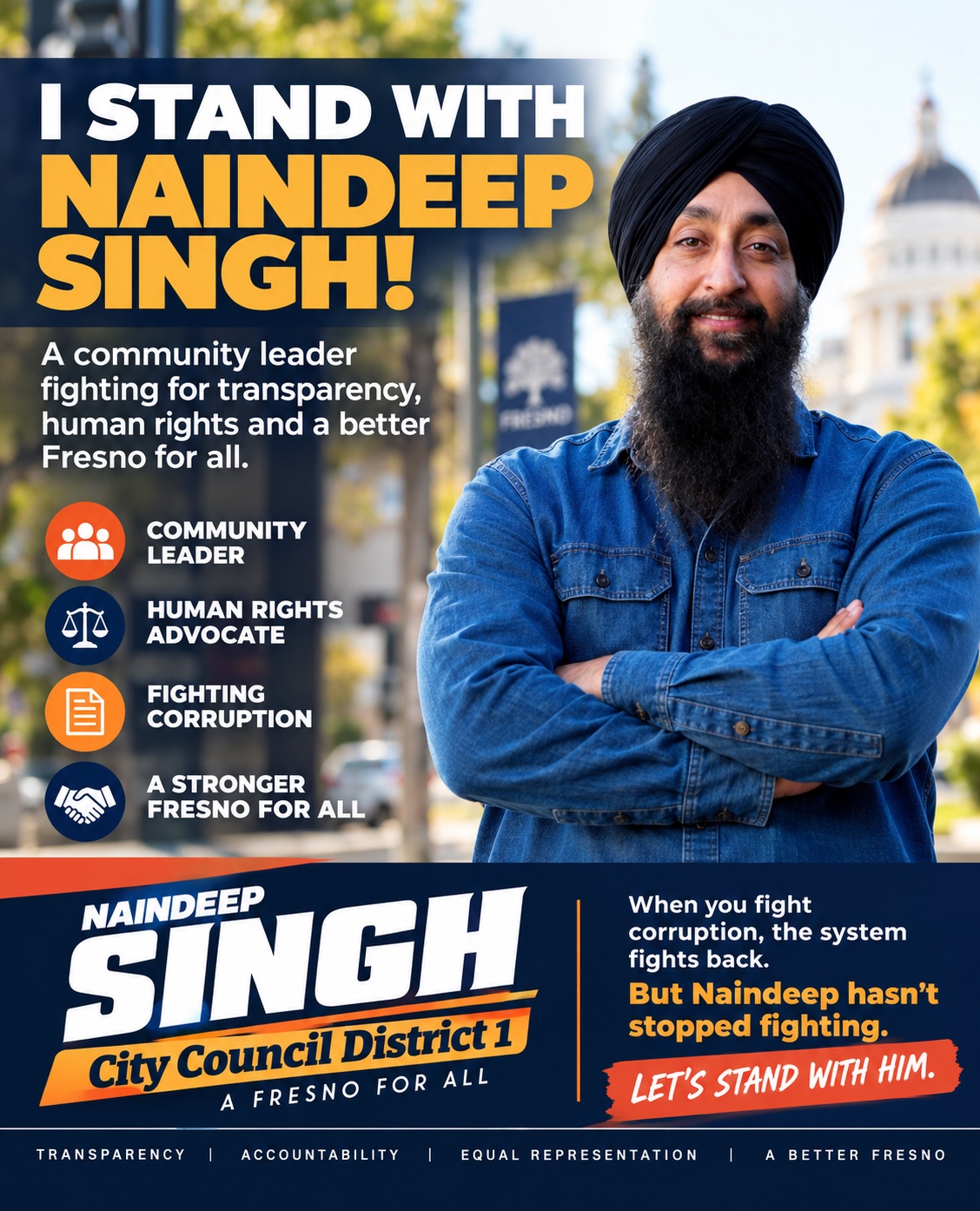
The campaign poster associated with this debate expresses support. Its claim that a system is fighting back against an anti-corruption candidate is advocacy, not proof of why this traffic stop occurred. This article does not adopt that causal allegation as an investigative finding.
20. The bottom line: precision protects both rights and public safety
People can be dangerously impaired by medicines they obtained legally. People can also be accused on evidence that is misinterpreted, incomplete, or insufficient. A legal system that takes road safety seriously must be able to distinguish those situations rather than collapse them into a presumption.
The most defensible public position is therefore demanding but even-handed. Do not confuse a negative alcohol result with a comprehensive drug result. Do not confuse a positive drug result with proven driving impairment. Do not confuse voluntary roadside procedures with required post-arrest testing. Do not confuse a blood-refusal licensing consequence with a statutory criminal enhancement that expressly excludes it. Do not confuse an officer’s probable-cause judgment with a jury’s task.
The proper response to uncertainty is not to choose a conclusion and search for reasons afterward. It is to preserve the record, identify the relevant legal standard, test each inference, and revise the public account when reliable evidence changes it.
For Singh, that means prominently reporting the negative toxicology announcement and apology while examining the actual record rather than inventing either guilt or police motive. For every other driver, it means learning the distinctions before a stressful roadside encounter—not expecting a slogan to substitute for them. U02U03
An arrest authorizes a legal process. It does not supply its verdict.
21. Reader questions, answered without the usual shortcuts
Can I face DUI for an over-the-counter medicine?
Yes. The question is whether the prosecution proves the legally required impairment while driving, not merely whether the medicine was legal to purchase. S18S19
Does a zero breath result require the officer to release me?
Not automatically. Other adequately supported grounds may justify continuing the investigation or arresting for suspected drug impairment. The negative result cannot itself prove the drug hypothesis. S11S19
Can I decline roadside walking and balance exercises?
They are generally voluntary, but refusal is not guaranteed to be consequence-free and does not guarantee no arrest. Preliminary alcohol-screening rules and post-arrest testing rules must be analyzed separately. S12S13S14
Is every roadside breath request optional?
No. Age, probation status, and whether the test is a preliminary screen or required evidentiary testing matter. The physical location of a device does not decide its legal category. S11
Does refusing blood automatically carry the same added criminal punishment as refusing breath?
No. Section 23577(c) excludes blood refusal from that section’s penalties. Administrative and evidentiary consequences may still apply. This is not advice to refuse. S25S26S28
Can the police obtain blood after I agree to a breath test?
Yes, under appropriate statutory and constitutional authority. Drug-related additional-testing provisions and a valid blood warrant are separate considerations. A breath choice is not an absolute veto. S11S29
Is a prescription-only prosecution impossible without alcohol?
No. Mathson is a published California counterexample. The prosecution still must prove its case; the fact that convictions are possible does not establish guilt in a different case. S31
Is an eye test invalid just because I am seated?
Not categorically. The actual protocol, positioning, conditions, and observations require examination. An out-of-state case rejecting a categorical seated objection does not decide a particular California defendant’s facts. S15
Does a negative urine screen establish a negative official blood result?
No. Those are different samples and potentially different tests. Report each result only within its documented scope. S38
What deadline should not be overlooked after a notice is served?
DMV ordinarily requires a hearing request within 10 days of receipt of the suspension or revocation notice. Read the actual notice and obtain prompt advice; do not wait for the criminal court calendar. S27
Supplement A. The national constitutional floor: nine more decisions that shape every DUI stop
The United States Constitution sets a floor that every state must respect; a state may add protections above it. California adds an important twist. Since Proposition 8 (1982), the state constitution's "Truth-in-Evidence" provision (art. I, §28(f)(2)) means California courts exclude evidence for an unlawful search or seizure only when federal law requires exclusion (In re Lance W., 1985). In practice, the federal decisions below decide most California suppression questions. The main article already discusses Berkemer, Navarette, Heien, Rodriguez, Schmerber, McNeely, Birchfield, Mitchell and Smith v. Arizona; these nine complete the map.
| Decision | Court and year | What it held | Why it matters at a DUI stop |
|---|---|---|---|
| Delaware v. Prouse | U.S. Supreme Court, 1979 | Police may not stop a car at random to check licence and registration without reasonable suspicion. | A registration stop needs an articulable basis: an observed violation or a records result. |
| Michigan Dept. of State Police v. Sitz | U.S. Supreme Court, 1990 | A properly run sobriety checkpoint is a reasonable seizure even without individual suspicion. | Checkpoints are a lawful exception to Prouse, within limits. |
| Ingersoll v. Palmer | California Supreme Court, 1987 | Set the guidelines California checkpoints must follow, including supervisory decisions, neutral selection, safety, and advance publicity. | A California checkpoint stop is judged against these factors. |
| South Dakota v. Neville | U.S. Supreme Court, 1983 | Evidence that a driver refused a chemical test may be admitted without violating the privilege against self-incrimination. | Refusal can become evidence; that is why the article treats refusal as a choice with consequences. |
| Pennsylvania v. Muniz | U.S. Supreme Court, 1990 | Slurred speech and performance on sobriety tests are physical, not testimonial, evidence; some questions put to an arrested driver are testimonial. | Field exercises do not require Miranda; certain custodial questions do. |
| Arizona v. Evans | U.S. Supreme Court, 1995 | Evidence need not be suppressed when an officer reasonably relied on a court clerk's record error. | A database mistake does not automatically invalidate a stop. |
| Herring v. United States | U.S. Supreme Court, 2009 | Isolated police negligence in a records system does not trigger exclusion; deliberate, reckless or systemic error may. | If a registration record was wrong, the legal question becomes how the error happened and whether it was systemic. |
| Kansas v. Glover | U.S. Supreme Court, 2020 | An officer who learns from a plate check that the owner's licence is revoked may stop the car, absent information that someone else is driving. | Records-driven stops are lawful, so the accuracy and timing of the record matter. |
| Melendez-Diaz v. Massachusetts and Bullcoming v. New Mexico | U.S. Supreme Court, 2009 and 2011 | Forensic laboratory reports offered to prove a fact are testimonial; a substitute analyst who did not perform or observe the test cannot ordinarily stand in for the one who did. | A toxicology result is only as strong as the analyst who can be cross-examined about it. Smith v. Arizona (2024) extends the point to expert testimony that relays an absent analyst's work. |
What this means for the Singh record. Singh has said he paid his registration on 19 June 2026. If that is correct and a records system still showed the registration as expired, Evans, Herring and Glover frame the question: whether the officer reasonably relied on the record, and whether any error was isolated or systemic. Whether the stop was valid also depends on Vehicle Code §5204 and on what the officer actually observed. None of the records needed to answer those questions are public. This analysis does not decide them.
Sources for Supplement A
- Delaware v. Prouse, 440 U.S. 648 (1979). https://supreme.justia.com/cases/federal/us/440/648/
- Michigan Dept. of State Police v. Sitz, 496 U.S. 444 (1990). https://supreme.justia.com/cases/federal/us/496/444/
- Ingersoll v. Palmer (1987) 43 Cal.3d 1321. https://law.justia.com/cases/california/supreme-court/3d/43/1321.html
- South Dakota v. Neville, 459 U.S. 553 (1983). https://supreme.justia.com/cases/federal/us/459/553/
- Pennsylvania v. Muniz, 496 U.S. 582 (1990). https://supreme.justia.com/cases/federal/us/496/582/
- Arizona v. Evans, 514 U.S. 1 (1995). https://supreme.justia.com/cases/federal/us/514/1/
- Herring v. United States, 555 U.S. 135 (2009). https://supreme.justia.com/cases/federal/us/555/135/
- Kansas v. Glover, 589 U.S. 376 (2020). https://supreme.justia.com/cases/federal/us/589/18-556/
- Melendez-Diaz v. Massachusetts, 557 U.S. 305 (2009). https://supreme.justia.com/cases/federal/us/557/305/
- Bullcoming v. New Mexico, 564 U.S. 647 (2011). https://supreme.justia.com/cases/federal/us/564/647/
- In re Lance W. (1985) 37 Cal.3d 873. https://law.justia.com/cases/california/supreme-court/3d/37/873.html
Supplement B. Beyond California: three ways states define drug-impaired driving
Every state prohibits driving while impaired by drugs, but states prove it in different ways. A reader outside California should read the current statute in their own state; this section explains the models, not every state's text.
- Impairment-based laws. California's Vehicle Code §23152(f) makes it unlawful to drive "under the influence of any drug," and §23152(g) covers the combined influence of alcohol and drugs. The prosecution must prove impairment. A drug's presence in blood is evidence, not the offence. This is the framework the main article analyses.
- Per se laws for listed substances. Some states make it an offence to drive with any detectable amount of certain controlled substances or their metabolites, whether or not impairment is shown. These laws are easier to prosecute and harder to reconcile with the science. Some metabolites stay detectable for days after any effect has ended.
- Numeric thresholds for THC. Washington makes 5.00 nanograms of THC per millilitre of blood a per se limit for drivers 21 and over (RCW 46.61.502). Colorado treats the same level as a permissible inference of impairment that the driver may rebut (C.R.S. §42-4-1301). California has no numeric THC limit.
What federal research says about THC limits. In its 2017 report to Congress, NHTSA concluded that the evidence does not support a THC blood concentration that reliably indicates impairment. Concentrations fall quickly after use, often before a sample can be drawn, and frequent users can carry measurable THC without measurable impairment. That finding is why the main article insists that a cannabinoid result needs a timeline and observed impairment before it can support a conclusion.
Common ground across the country.
- Every state has an implied-consent law for chemical testing after a lawful arrest. Birchfield limits criminal penalties for refusing a blood test, but administrative licence consequences remain.
- Sobriety checkpoints are permitted under the federal Constitution (Sitz). Some states bar them under their own constitutions or statutes.
- The 0.08 adult alcohol limit applies everywhere except Utah, at 0.05. No state treats a zero breath result as proof that a driver was not impaired by drugs.
Sources for Supplement B
- California Vehicle Code §23152. https://leginfo.legislature.ca.gov/faces/codes_displaySection.xhtml?lawCode=VEH§ionNum=23152.
- Revised Code of Washington §46.61.502. https://app.leg.wa.gov/RCW/default.aspx?cite=46.61.502
- Colorado Revised Statutes §42-4-1301 (permissible inference at 5 ng/mL delta-9 THC). https://leg.colorado.gov/colorado-revised-statutes
- National Highway Traffic Safety Administration, Marijuana-Impaired Driving: A Report to Congress, DOT HS 812 440 (July 2017). https://www.nhtsa.gov/sites/nhtsa.gov/files/documents/812440-marijuana-impaired-driving-report-to-congress.pdf
Supplement C. For physicians, pharmacists and patients: medicines, driving and the record
Drug-impaired-driving cases often turn on medicines that were lawfully prescribed or bought over the counter. What a patient was told, and what the label says, can matter in court and at a DMV hearing. This section is general information for clinicians and patients, not advice about any individual.
What clinicians can do when starting or changing a sedating medicine
- Name the risk plainly. Common drug classes include benzodiazepines and other sleep medicines, opioids, gabapentin and pregabalin, muscle relaxants, first-generation (sedating) antihistamines, some antidepressants and antipsychotics, and some anti-seizure medicines.
- Advise the patient not to drive until they know how the medicine affects them, especially after a dose increase or a new combination. Many FDA labels carry this warning. Gabapentin's label, for example, advises patients not to drive until they know whether it affects them.
- Document the counselling in the chart. A record that a patient was warned, and how they responded, helps both safety and later fact-finding.
- Remind patients that tolerance varies, that combinations (including with alcohol or cannabis) can be much more impairing than either alone, and that "next-morning" effects are real. FDA lowered the recommended zolpidem dose for women in 2013 for this reason.
- Never advise a patient to stop a prescribed medicine to avoid a DUI risk without a plan. Stopping some medicines abruptly, including anti-seizure medicines and benzodiazepines, is dangerous.
What pharmacists and patients should know about over-the-counter products
- Read the Drug Facts label every time. Brand families contain many formulas. "Daytime" versions of some cold products leave out the sedating antihistamine in the "nighttime" version, and "non-drowsy" describes the formula, not how a particular person responds.
- Simulator research has found that a sedating antihistamine can impair driving as much as, or more than, alcohol at the legal limit (Weiler and colleagues, Annals of Internal Medicine, 2000).
- Keep a current medicine list on your phone or in your wallet. In an emergency it helps clinicians. At a stop it is your choice whether to discuss it; the main article explains how answers can become evidence.
California reporting is narrower than many people think. Health and Safety Code §103900 requires physicians to report patients with disorders characterised by lapses of consciousness, and Alzheimer's disease and related disorders, to the local health officer, who informs the DMV. Taking a sedating medicine is not, by itself, a reportable condition.
Sources for Supplement C
- U.S. Food and Drug Administration, Drug Safety Communication on zolpidem dosing and next-morning impairment (January and May 2013). https://www.fda.gov/drugs/drug-safety-and-availability
- Weiler JM, Bloomfield JR, Woodworth GG, et al. Effects of fexofenadine, diphenhydramine, and alcohol on driving performance: a randomized, placebo-controlled trial in the Iowa driving simulator. Ann Intern Med. 2000;132(5):354–363.
- California Health and Safety Code §103900. https://leginfo.legislature.ca.gov/faces/codes_displaySection.xhtml?lawCode=HSC§ionNum=103900.
- NHTSA, Older drivers and the Clinician's Guide to Assessing and Counseling Older Drivers (with the American Geriatrics Society). https://www.nhtsa.gov/road-safety/older-drivers
Supplement D. For policymakers, prosecutors and agencies: what would make these cases fairer and safer
The analysis below is KPSGILL's, separated from the factual record above. It applies to every drug-impaired-driving case, not to any one person.
1. Publish outcomes, not just arrests. California's DMV already reports annually on DUI arrests, convictions and sanctions through its DUI Management Information System. That reporting does not show what happens to drug-only cases from arrest to laboratory result to filing decision to outcome. Without that, nobody can tell whether drug-DUI arrests are well founded. Agencies and prosecutors could publish de-identified counts by stage and by laboratory finding.
2. Make laboratory reports answer the questions the case needs. Title 17 of the California Code of Regulations sets detailed rules for alcohol testing. Drug testing relies more on laboratory accreditation and national consensus standards, such as ANSI/ASB Standard 120 on the scope and sensitivity of blood testing in impaired-driving cases. A useful report states the sample type and collection time, every analyte tested, the cutoffs, and whether each result is a screen or a confirmation. It also states what the panel could not detect.
3. Record the drug-recognition evaluation. The Drug Evaluation and Classification Program is run with the International Association of Chiefs of Police and NHTSA; in California it is coordinated through the California Highway Patrol. When an evaluation is recorded from start to finish, both sides can test the officer's conclusions against what happened. The main article explains why that matters.
4. Be honest about body-camera timing. California's mandatory-release rule for police video (Government Code §7923.625) covers incidents involving a firearm discharge or force causing death or great bodily injury. An ordinary DUI arrest is outside it, and agencies may withhold video while an investigation is active. Legislators could consider a narrow, privacy-protective release standard for arrests of public importance. Any such rule would have to weigh fair-trial and privacy interests.
5. Treat vehicle technology as a complement, not a cure. The 2021 Infrastructure Investment and Jobs Act (§24220) directed NHTSA to set a safety standard for advanced impaired-driving prevention technology in new vehicles; NHTSA opened that rulemaking with an advance notice in January 2024. Systems that detect alcohol are far more mature than any that could detect drug impairment. Roadside oral-fluid devices, piloted in some states including Michigan, show recent drug presence, not impairment.
6. Keep the burden where the law puts it. Policy changes should not turn the presence of a drug, a prescription, or a refusal into proof of impairment. They also should not treat a zero breath result as proof of sobriety. Accuracy protects both public safety and the rights of the people who are stopped.
Sources for Supplement D
- California DMV, Annual Report of the California DUI Management Information System (Research and Development Branch). https://www.dmv.ca.gov/portal/
- California Code of Regulations, title 17, §1215 et seq. (alcohol testing). https://www.law.cornell.edu/regulations/california/title-17/division-1/chapter-2/subchapter-1/group-8
- AAFS Standards Board, ANSI/ASB Standard 120, Standard for the Analytical Scope and Sensitivity of Forensic Toxicological Testing of Blood in Impaired Driving Investigations. https://www.aafs.org/academy-standards-board
- International Association of Chiefs of Police, Drug Evaluation and Classification Program. https://www.theiacp.org/dre
- California Government Code §7923.625. https://leginfo.legislature.ca.gov/faces/codes_displaySection.xhtml?lawCode=GOV§ionNum=7923.625.
- Infrastructure Investment and Jobs Act, Pub. L. 117-58, §24220 (2021). https://www.congress.gov/bill/117th-congress/house-bill/3684
Supplement E. How the law got here: a short history of DUI and the 0.08 standard
1910–1938: the first laws and the first numbers. New York passed the first state law against driving while intoxicated in 1910, and California followed in 1911. Those laws had no number. In 1932 the Swedish scientist Erik Widmark published the arithmetic that still links drinks, body weight and blood alcohol. In the 1930s Rolla Harger's "Drunkometer" became the first practical breath device. In 1938, committees of the American Medical Association and the National Safety Council proposed 0.15 percent as the level at which intoxication could be presumed.
1954–1964: the breath machine and the crash study. Robert Borkenstein of Indiana University introduced the Breathalyzer in 1954. A decade later his Grand Rapids study compared thousands of drivers in crashes with drivers at the same places and times who did not crash. It showed crash risk climbing steeply as blood alcohol rose. That study became the scientific spine of every later limit.
1977–1989: standardized roadside tests and drug recognition. NHTSA-funded research at the Southern California Research Institute produced the three standardized field sobriety tests: horizontal gaze nystagmus, walk-and-turn and one-leg stand, standardized by 1981. In the 1970s, Los Angeles Police Department officers developed the evaluation that became the Drug Evaluation and Classification Program. NHTSA validated and expanded it in the 1980s, and the International Association of Chiefs of Police has credentialed drug-recognition experts since 1989.
1980–1984: the public demand. In 1980 Candace Lightner founded Mothers Against Drunk Driving after her 13-year-old daughter Cari was killed by a repeat drunk driver in Fair Oaks, California. Four years later Congress passed the National Minimum Drinking Age Act, which used federal highway money to bring every state to a drinking age of 21.
1983–2004: how 0.08 became national. Utah and Oregon adopted 0.08 in 1983. California followed, effective in 1990. In 1998 the Transportation Equity Act for the 21st Century offered incentive grants to states that adopted 0.08. In 2000 the Department of Transportation appropriations act for fiscal 2001 (Pub. L. 106-346) changed the incentive into a penalty: states without a 0.08 law by October 2003 would lose part of their federal highway funds. By 2004 every state had a 0.08 per se law. The national limit was never a federal criminal statute. It became national because Washington tied highway money to it.
2013–today: lower limits and the drug problem. In 2013 the National Transportation Safety Board recommended that states lower the limit to 0.05. Utah did so, effective 30 December 2018, and remains the only state below 0.08. No comparable national standard exists for drugs, because no drug has alcohol's well-studied relationship between concentration and impairment. California's drug-DUI law (Vehicle Code §23152(f)) therefore requires proof of impairment, not a number. That is the gap this investigation is about.
Sources for Supplement E
- National Highway Traffic Safety Administration, Standardized Field Sobriety Testing history and DWI Detection and SFST participant manual. https://www.nhtsa.gov/
- Borkenstein RF, et al. The Role of the Drinking Driver in Traffic Accidents (the Grand Rapids study), Indiana University, 1964.
- MADD, "History." https://madd.org/our-history/
- Pub. L. 106-346, Department of Transportation and Related Agencies Appropriations Act, 2001, §351. https://www.congress.gov/bill/106th-congress/house-bill/4475
- National Transportation Safety Board, Reaching Zero: Actions to Eliminate Alcohol-Impaired Driving, SR-13/01 (2013). https://www.ntsb.gov/safety/safety-studies/Documents/SR1301.pdf
- Utah Department of Public Safety, Highway Safety Office, 0.05 BAC law (effective 30 December 2018). https://highwaysafety.utah.gov/
Supplement F. Appearance, profiling and local politics: what the record would have to show
Since the arrest, many members of the public have asked two questions. Was Naindeep Singh, a Sikh man who wears a turban and a full beard, treated differently because of how he looks? And did the timing, a week before his City Council runoff, serve someone's political interest? Both are serious questions, and both deserve answers drawn from records, not assumptions. This section explains how such questions are tested. It does not answer them, because the records that would answer them are not public.
Why the question is reasonable to ask. Sikh Americans have documented bias and profiling for decades, and especially since 2001. The 2012 attack on the gurdwara in Oak Creek, Wisconsin, killed six worshippers. In 2015 the FBI began counting anti-Sikh hate crimes as a separate category. A Sikh motorist who asks whether his turban shaped an encounter is asking a question his community has had reason to ask.
What the law says.
- Whren v. United States (1996): if an officer has probable cause to believe a traffic violation occurred, the stop is valid under the Fourth Amendment whatever the officer's private motive. A pretext does not, by itself, invalidate a stop.
- Claims of discriminatory enforcement are decided under the Equal Protection Clause instead. They require proof of both discriminatory effect and discriminatory purpose (United States v. Armstrong, 1996, on selective prosecution).
- California goes further by statute. Penal Code §13519.4 prohibits racial and identity profiling, including profiling based on religion. The Racial and Identity Profiling Act of 2015 (AB 953) requires agencies to report data on every stop, including the officer's perception of the person's identity, the reason for the stop and its result.
The records that would test a profiling or set-up claim.
- The RIPA stop record: the perceived-identity fields, the stated reason, and the actions taken.
- Body-camera video from the first observation, not only from the approach.
- Dispatch and computer-aided-dispatch logs, with times.
- The plate and registration queries, with timestamps showing whether the plate was run before or after the officer could see the driver. Any automated licence-plate-reader alert.
- Registration records: when the fee was paid (Singh says 19 June), when the sticker was issued, and what the officer's terminal showed.
- Any communication about Singh among department personnel before the stop.
- The officer's aggregate stop data, compared with peers on the same shift and beat.
- The drug-recognition paperwork, if a full evaluation was performed, and the laboratory request.
What the public record shows so far. Chief Mindy Casto has said the officer did not know Singh was a candidate. Singh asked for an investigation and said he preferred not to speculate about motive. His opponent's campaign urged him to withdraw after the arrest, as was reported at the time. On 27 October the chief announced that toxicology was negative and apologized. Nothing in the public record establishes that Singh was stopped or arrested because of his appearance, or that the arrest was coordinated with any campaign. Nothing public rules either out. The records above would.
Why local races are especially exposed. City council and school board elections are decided by small electorates, often through mailed ballots cast weeks before Election Day. A personal-conduct accusation can reach voters faster than any correction. KPSGILL analysis: two practical standards would reduce the harm whatever the motive. First, anyone who amplifies an accusation, whether a campaign or the media, should give its correction the same prominence. Second, agencies could adopt a protocol for arrests of candidates in the final weeks of an election. It would cover expedited laboratory work and the prompt, privacy-protective release of the basic record, without any special treatment in the decision to arrest.
Sources for Supplement F
- Whren v. United States, 517 U.S. 806 (1996). https://supreme.justia.com/cases/federal/us/517/806/
- United States v. Armstrong, 517 U.S. 456 (1996). https://supreme.justia.com/cases/federal/us/517/456/
- California Penal Code §13519.4. https://leginfo.legislature.ca.gov/faces/codes_displaySection.xhtml?lawCode=PEN§ionNum=13519.4.
- California Department of Justice, Racial and Identity Profiling Advisory (RIPA) Board, annual reports. https://oag.ca.gov/ab953
- FBI, Hate Crime Statistics (anti-Sikh category collected from 2015). https://ucr.fbi.gov/hate-crime
- Sikh Coalition, documentation of bias and profiling. https://www.sikhcoalition.org/
Supplement G. Five professional readings of one record
The same record looks different depending on who is reading it. The five readings below are analytical perspectives written for this article. They are not statements by, or reviews from, any named prosecutor, defence lawyer, toxicologist, officer or judge.
The prosecutor. Probable cause is judged at the moment of arrest, not with the laboratory in hand. A trained officer's observations, a medication disclosure and a zero breath result can together justify an arrest for drug impairment. But a prosecutor must prove impairment beyond a reasonable doubt. A negative toxicology result removes the corroboration such a case usually needs. A prosecutor must also disclose evidence favourable to the defence (Brady v. Maryland, 1963). On this record, the expected course is a declination, documented with its reasons.
The defence lawyer. Start before the arrest. Was the stop lawful? Vehicle Code §5204 restricts stops for tabs that expired recently, and Singh says his registration was paid in June. Then the roadside. Was horizontal gaze nystagmus done with the driver seated, under what lighting, at what stimulus speed? How was each exercise explained? Was medication raised by the officer or volunteered? Preserve the body-camera video, the DRE face sheet, the laboratory request and the RIPA record now. California's administrative suspension (Vehicle Code §13353.2) is triggered by an alcohol test at or above the limits or by a refusal, so a drug-only arrest with a completed test does not by itself start one. Read any DMV notice anyway.
The forensic toxicologist. "Negative" is a statement about a panel, not about everything. The questions are: what sample was tested (blood or urine), when it was collected relative to driving, which analytes were in the screen, what the cutoffs were, and whether anything was confirmed by a second method. A typical over-the-counter cold product's ingredients are not all in every routine panel. A useful public report names the panel and its scope. Without it, "negative" is strong evidence but not a complete account.
The drug-recognition instructor. The full evaluation is a 12-step protocol, normally done after arrest in a controlled setting. Its steps are:
- Breath test.
- Interview of the arresting officer.
- Preliminary examination and first pulse.
- Eye examinations.
- Divided-attention tests.
- Vital signs and second pulse.
- Dark-room pupil examination.
- Muscle tone.
- Check for injection sites and third pulse.
- Statements.
- The evaluator's opinion.
- Toxicology.
Roadside observations by a DRE-certified officer are not that evaluation. The key questions are whether a full evaluation was performed, which drug category it named, and whether toxicology corroborated it. Here, toxicology did not.
The trial judge. California treats horizontal gaze nystagmus as scientific evidence that needs a proper foundation (People v. Leahy, 1994), and a jury decides impairment under CALCRIM 2110. On this record the case will probably never reach a courtroom. If it did, the judge's first questions would be whether the stop and the arrest were lawful, and whether any expert opinion went beyond what the evidence could support.
Sources for Supplement G
- Brady v. Maryland, 373 U.S. 83 (1963). https://supreme.justia.com/cases/federal/us/373/83/
- People v. Leahy (1994) 8 Cal.4th 587. https://law.justia.com/cases/california/supreme-court/4th/8/587.html
- California Vehicle Code §13353.2. https://leginfo.legislature.ca.gov/faces/codes_displaySection.xhtml?lawCode=VEH§ionNum=13353.2.
- International Association of Chiefs of Police, the 12-step Drug Evaluation and Classification protocol. https://www.theiacp.org/dre
- Judicial Council of California, CALCRIM No. 2110. https://www.courts.ca.gov/partners/calcrim.htm
22. Methodology, limitations, and corrections
This article is a source-based legal and medical analysis anchored to an active public controversy. Event details are attributed to reporting; the author has not independently authenticated the complete case record. Legal propositions are linked to statutes, instructions, and actual opinions. Out-of-state cases are identified as such. Study findings are kept within the population and method actually studied.
The initial sources were reviewed for the October 27, 2026 daytime edition; the passages identified in the evening change log were then updated for the chief’s evening announcement. Some official legislative and court-document endpoints could not be retrieved directly; accessible statute reproductions and published opinion texts were used and identified in the source register. This is not a representation of comprehensive citator review, current docket certification, or attorney approval. The operative law and any later judicial history should be rechecked for an individual matter and before a subsequent publication update.
The article deliberately does not repeat an unverified recent local gabapentin acquittal, infer personal medical facts from social-media discussion, diagnose Singh from video stills, or treat campaign messaging as proof of misconduct. It does not claim that police, the prosecutor, or Singh were contacted for this article. Their publicly reported positions are attributed; no response was invented.
Corrections in this edition’s analysis: The popular formulations “0.08 nationwide,” “prescription-only DUI cannot succeed,” “seated HGN is automatically invalid,” “a negative urine screen excludes all drugs,” and “blood and breath refusal have identical criminal penalties” are rejected or qualified with sources. Readers should use the distinctions in this article rather than those broader formulations.
Production disclosure: This text was prepared with AI-assisted research and drafting. No independent attorney review or new clinical assessment is represented. Publication under the author’s byline requires the author’s editorial approval. Substantive updates should retain an intelligible correction history and the original reporting cutoff rather than silently changing what the article claimed to know.
Source notes
The numbered references below distinguish reporting about the event from the legal and scientific authorities used to analyze it. Statutes, instructions, and opinions should be read in context; a case summary is not a substitute for the decision.
S01. Fresno Police Chief Defends Singh DUI Arrest, Says Officer Had Probable Cause — GV Wire. 2026-10-27. Chief’s attributed position; not an independently reviewed police file.
S02. Chief Mindy Casto stands by DUI arrest of candidate Naindeep Singh — ABC30 / KFSN. 2026-10-27. Search-accessible reporting. Direct endpoint was intermittently unavailable. Terminology and clock/day discrepancy are not silently adopted.
S03. Fresno City Council Candidate Naindeep Singh Speaks Out Over DUI Allegation — KMJ / KFSN report. 2026-10-27. Singh’s attributed position; registration and independent-screen account.
S04. Naindeep Singh addresses arrest, says he will be fully exonerated from drug-related DUI claim — The San Joaquin Valley Sun. 2026-10-26. Reports public statements and urine screen; does not authenticate official forensic blood results.
S05. California Vehicle Code §5204 — California statute, reproduced by Justia. 2025 compilation. Expired-tab restriction, operative period, and verification provisions. Recheck operative text before legal reliance.
S06. Rodriguez v. United States, 575 U.S. 348 (2015) — U.S. Supreme Court opinion via Cornell LII. 2015-04-21. Traffic-stop duration and independent reasonable suspicion.
S07. Navarette v. California, 572 U.S. 393 (2014) — U.S. Supreme Court opinion via Justia. 2014-04-22. Reliability and reasonable suspicion from a contemporaneous dangerous-driving tip.
S08. Maryland v. Pringle, 540 U.S. 366 (2003) — U.S. Supreme Court opinion via Justia. 2003-12-15. Total circumstances and particularized probable cause; not a DUI case.
S09. Berkemer v. McCarty, 468 U.S. 420 (1984) — U.S. Supreme Court opinion via Justia. 1984-07-02. Older foundational authority: ordinary traffic detention versus Miranda custody.
S10. Salinas v. Texas, 570 U.S. 178 (2013) — U.S. Supreme Court opinion via Cornell LII. 2013-06-17. Plurality treatment of express invocation in noncustodial questioning; do not overgeneralize.
S11. California Vehicle Code §23612 — California statute, reproduced by FindLaw. 2026-01-01 reproduction. Read (a)(1), (a)(2)(A)-(C), (a)(4), (h)-(i), and applicable exceptions together. Blood/breath choice and additional blood provision must both be retained.
S12. People v. Jackson, 189 Cal.App.4th 1461 (2010) — California Court of Appeal opinion via Justia. 2010-11-12. PAS-refusal evidentiary error; harmless; conviction affirmed.
S13. Espinoza v. Shiomoto, docket E064252 (2017) — California Court of Appeal opinion on rehearing via Justia. 2017-03-24. Physical FST refusal, probable cause, and administrative refusal. Do not copy obsolete blood-penalty admonitions as current law.
S14. Learning Domain 28: Traffic Enforcement, Version 8.0 — California Commission on Peace Officer Standards and Training. 2025-07. Relevant FST/PAS pages reviewed, including page images. Training is not controlling constitutional authority; do not adopt an overbroad statement that pre-arrest silence is unprotected.
S15. State v. Henson, 2020-Ohio-4019 — Ohio Court of Appeals, Third District. 2020-08-10. Opinion and relevant page image reviewed. Rejects categorical seated-HGN objection on its record; not binding California law.
S16. Evaluation of Field Sobriety Tests for Identifying Drivers Under the Influence of Cannabis: A Randomized Clinical Trial — Marcotte et al., JAMA Psychiatry. 2023-08-02. JAMA Psychiatry 80(9):914–923; doi:10.1001/jamapsychiatry.2023.2345. 184 cannabis users; first evaluation 98/121 versus 31/63; not a real-world false-arrest rate.
S17. Marijuana-Impaired Driving: A Report to Congress — National Highway Traffic Safety Administration. 2017. Report date is 2017, not the 2023 hosting-path date. Relevant page image reviewed. No universal THC concentration-to-impairment equation.
S18. California Vehicle Code §23152 — California statute, reproduced by Justia. 2025 compilation. Separate alcohol-impairment, per-se, drug-only, and combined theories.
S19. CALCRIM No. 2110: Driving Under the Influence — Judicial Council of California instruction via Justia. 2026 edition. Required impairment standard; drug entitlement and driving observations. Court tailors applicable instructions.
S20. CALCRIM No. 2111: Driving With 0.08 Percent Blood Alcohol — Judicial Council of California instruction via Justia. 2026 edition. Elements, timing, foundation, and statutory inference; not automatic conviction from a number.
S21. Utah DUI Laws — Utah Department of Public Safety, Highway Safety Office. Accessed for 2026-10-27 edition. Utah general adult per-se threshold 0.05; disproves 0.08 nationwide shorthand.
S22. Missouri v. McNeely, 569 U.S. 141 (2013) — U.S. Supreme Court opinion via Cornell LII. 2013-04-17. Natural alcohol dissipation is not a per-se exigency.
S23. Birchfield v. North Dakota, 579 U.S. 438 (2016) — U.S. Supreme Court opinion via Cornell LII. 2016-06-23. Breath versus blood; search incident to arrest; criminal warrantless-blood refusal limits.
S24. Mitchell v. Wisconsin (2019) — U.S. Supreme Court opinion via Cornell LII. 2019-06-27. Unconscious-driver plurality and exceptions; no blanket rule for every drug-related emergency.
S25. California Vehicle Code §23577 — California statute, reproduced by FindLaw. 2026-01-01 reproduction. (a)-(b): qualifying breath/urine refusal; (c): blood excluded from these penalties, administrative actions preserved.
S26. California Vehicle Code §13353 — California statute, reproduced by FindLaw. 2026-01-01 reproduction. Qualifying refusal suspension/revocation and specified prior-history rules.
S27. Driving Under the Influence: DMV Safety Guidelines and Actions — California Department of Motor Vehicles. Accessed for 2026-10-27 edition. 10-day hearing-request rule from receipt of notice; separate administrative proceeding; case-specific acquittal effects.
S28. People v. Bolourchi, docket A167289, as modified — California Court of Appeal opinion via Justia. 2024-06-28; modified 2024-07-25. Blood-refusal evidentiary consequence upheld; modified opinion must be used, including chemical-test choice clarification.
S29. People v. Superior Court (Feghhi), docket H053051 — California Court of Appeal opinion via Justia. 2026-05-14. Writ ordering denial of suppression on stated warrant facts; not a verdict of guilt.
S30. Supreme Court minutes: People v. S.C. (Feghhi), S296788 — California Supreme Court. 2026-07-29. Search-indexed official entry reports review/depublication denied. Direct PDF returned 403; full minute text not independently read. Supplemental source, not a substitute for current citator review.
S31. People v. Mathson, 210 Cal.App.4th 1297 (2012) — California Court of Appeal opinion via Justia. 2012-11-07. DUI conviction upheld; zolpidem detected, no alcohol/other drugs in blood; limited probation issue separate. Partially published opinion.
S32. People v. Torres, 173 Cal.App.4th 977 (2009) — California Court of Appeal opinion via Justia. 2009-05-05. Drug-DUI conviction reversed for insufficient impairment evidence; not a categorical rule against drug prosecutions.
S33. Phillips v. State, docket A23A0252 — Georgia Court of Appeals opinion via Justia. 2023-04-28. Opinion documents DUI-related acquittals and other serious convictions affirmed. Gabapentin and cyclobenzaprine; mixed outcome, not full exoneration.
S34. Some Medicines and Driving Don’t Mix — U.S. Food and Drug Administration. Accessed for 2026-10-27 edition. Prescription and OTC driving warnings; individualized effects; no universal safe-time rule.
S35. Vicks DayQuil Cold and Flu product labeling — Manufacturer labeling via NLM DailyMed. Accessed for 2026-10-27 edition. Illustrative formulation: acetaminophen/dextromethorphan/phenylephrine. Not identification of Singh’s product.
S36. Vicks DayQuil Cold and Flu PE-Free product labeling — Manufacturer labeling via NLM DailyMed. Accessed for 2026-10-27 edition. Illustrative formulation difference; not evidence of any individual’s exposure.
S37. Gabapentin prescribing information: effects on driving and operating machinery — Manufacturer labeling via NLM DailyMed. Accessed for 2026-10-27 edition. Driving warning and limits of self-assessment; do not treat prescription or tolerance as immunity.
S38. Drug Testing — National Library of Medicine, MedlinePlus. Accessed for 2026-10-27 edition. Specimen/test scope and interpretation. General lab education, not an assessment of Singh’s actual assay.
S39. The Dangers of Driving After Taking Prescription Drugs or Over-the-Counter Medicines — National Highway Traffic Safety Administration. Accessed for 2026-10-27 edition. Medicine-related driving safety, interactions and public-health context.
S40. California Penal Code §1538.5 — California statute, reproduced by FindLaw. 2026-01-01 reproduction. Suppression grounds and procedure. Do not promise dismissal or invent universal filing deadlines.
S41. California Penal Code §1054.1 — California statute, reproduced by FindLaw. 2026-01-01 reproduction. Prosecutorial discovery duties within statutory possession/knowledge scope.
S42. Smith v. Arizona (2024) — U.S. Supreme Court opinion via Cornell LII. 2024-06-21. Expert-basis statements and confrontation; testimonial inquiry remains; not every technician must automatically testify.
S43. State v. Olenowski (2023) — New Jersey Supreme Court opinion via Justia. 2023-11-15. DRE reliability with safeguards and limitations; persuasive discussion, not California evidentiary standard.
S44. Heien v. North Carolina, 574 U.S. 54 (2014) — U.S. Supreme Court opinion via Cornell LII. 2014-12-15. Objectively reasonable legal mistake; not a blanket excuse for misunderstanding traffic law.
S45. California Penal Code §1054.5 — California statute, reproduced by FindLaw. 2026-01-01 reproduction. Discovery enforcement and statutory procedures.
S46. CALCRIM No. 220: Reasonable Doubt — Judicial Council of California instruction via Justia. 2026 edition. Presumption of innocence; burden on People; charge is not proof. No numerical probability scale.
S47. DWI Detection and Standardized Field Sobriety Test resources — National Highway Traffic Safety Administration. Accessed for 2026-10-27 edition. Supplemental index to official training; large linked manuals could not all be fetched through web tool. Do not claim every manual was reviewed.
S48. California Vehicle Code §12951 — California statute, reproduced by Justia. 2025 compilation. Driver’s duty to present license on proper demand; distinct from answering investigative questions.
Negative Toxicology. A Public Apology. Questions That Remain.
The Naindeep Singh reversal—and what every driver should understand about roadside certainty, drug-recognition evidence, constitutional rights, and an election that was already underway
By Kanwar Partap Singh Gill, MD · Editor, KPSGill.com
Evening supplement · October 27, 2026 · Pacific time
Public-interest reporting and analysis · California law · Driver education
Disclosure: The author has publicly supported Naindeep Singh. That support is not evidence of police misconduct or a substitute for examining the record. This supplement draws on attributed reporting, legal and training authorities, research, and two separate reader-supplied screen recordings of selected comments: an earlier FOX26-associated clip and a subsequent ABC30-branded Facebook thread. It does not claim an independent clinical examination, access to the complete police file, or review of the original laboratory report. It provides general information, not individualized legal or medical advice.
The material update: On Tuesday evening, October 27, Fresno Police Chief Mindy Casto announced negative toxicology results, said she had called Singh to apologize, and said towing and impound charges would be refunded. This supersedes the earlier article’s description of the police laboratory result as pending. The announcement is verified through current reporting; the original laboratory report and its complete analytical scope have not been independently inspected. U02U03
An accusation can become public before the evidence capable of testing it becomes available. An apology can follow before the public has seen the evidence that produced the accusation. Between those moments sits a person’s reputation—and, in this case, a campaign approaching Election Day.
That is the central problem exposed by the Singh controversy. It is not resolved by saying police must never investigate a sober-looking driver. It is not resolved by saying a trained officer must always be right. And it is not resolved by treating the word negative as either meaningless or a judicial ruling on every part of the encounter.
The evening development demands two changes in the public conversation. First, reporting must prominently reflect the evidence favorable to Singh rather than leave him indefinitely under a headline written before the result. Second, the department’s investigative reasoning must remain open to examination. Correcting a result and auditing a method are different responsibilities.
This supplement follows those responsibilities through the chronology, the science, the law, the campaign, and the public response. Its conclusions are deliberately unequal: the negative-result announcement and apology are established developments; improper testing is an issue to investigate; an unlawful arrest has not been adjudicated here; a politically coordinated setup has not been demonstrated.
1. What changed during the day—and what did not
FOX26’s article provides a useful documentary sequence: published at 3:09 p.m. and updated at 6:49 p.m., it now reports a second conference, negative expedited blood testing, and an apology. It also reproduces an explicitly labeled statement from the first conference. In that earlier statement, Casto defended the arrest and made an apology conditional on negative results. These page times establish publication chronology, not the precise starting times of either conference. U01
Fresnoland adds an important detail: Casto described receiving verbal advice from the laboratory and contacting Singh before the evening conference. That supports reporting an official announcement of negative testing. It does not give this publication an authenticated copy of the assay, its targets, or its reporting thresholds. U03
| Point in the public record | What can responsibly be said | What must not be added |
|---|---|---|
| Tuesday morning coverage | Singh’s challenge and the campaign controversy were already public. U05 | An exact count of voters who encountered or acted on the allegation. |
| Tuesday afternoon | The chief defended the investigative decision while laboratory results were outstanding. U04 | A finding of guilt by a court or jury. |
| Tuesday evening | The chief announced a negative result and apologized. U01U02U03 | A reviewed written report, a documented court dismissal, or a verdict that this review has not obtained. |
| Reader-supplied evening recording | Selected comments reveal competing reactions. U39 | A complete transcript of the conference, every comment, or representative public opinion. |
There is a reporting trap here. An updated page may preserve the original account below a breaking-news paragraph. A search result or alternate mirror may still display an older headline. Those are versioning problems, not necessarily new statements by the speaker. An editor who reads the old section as the latest account can accidentally keep the outdated suspicion alive after the publisher has corrected its lead.
The precise change is from unresolved laboratory corroboration to an officially announced negative result, and from a conditional apology to an actual apology. Whether the chief reiterated every aspect of her earlier defense at the second conference requires the complete evening recording or transcript. The short uploaded clip does not establish that dialogue.
The reader who supplied the recording also reports that Casto expected no electoral impact and would not have wanted the officer to act differently. Those additional remarks are not independently authenticated here. They should not be turned into quotation marks or used as the premise of a factual accusation. The broader questions they raise can be examined without manufacturing a transcript.
2. Three questions—not one verdict about the whole event
Do not collapse three questions into one
The first question is whether the officer had an adequate legal basis at the time of arrest. Probable cause is evaluated through the contemporaneous circumstances; it is not the same standard as proof beyond a reasonable doubt. A laboratory result obtained afterward does not automatically decide that earlier constitutional question. U08
The second is whether subsequent evidence supported the drug hypothesis. An announced negative result matters. The public account should not proceed as if the anticipated corroboration arrived. Equally, an analyst should describe the actual scope of a negative test rather than claim that an unseen panel excluded every conceivable substance. U20
The third is whether the department’s public communication was appropriately calibrated. This is an accountability question as well as a legal one. Even a defensible decision to investigate can be described with excessive certainty. An agency can communicate that it had grounds to act without encouraging the audience to treat suspicion as an established diagnosis.
These questions permit different answers. An arrest might prove legally defensible while an investigation exposes training weaknesses. A procedure might be correctly performed yet insufficiently specific to support the inference placed on it. A later review might uncover an original defect that was not apparent from the chief’s summary. None of those possibilities should be ruled out by a slogan.
Nor should “we assess probable cause at the time” become a prohibition on later scrutiny. Later video analysis, a corrected chronology, or an expert’s explanation can illuminate what actually happened earlier. The point is to reconstruct the original grounds accurately—not to pretend the negative result itself was already known at the roadside.
The right to investigate is not a right to be publicly certain. A fair audit asks what was observed, how it was measured, what alternative explanations were considered, and how much confidence the record justified at each stage.
3. A negative result is consequential without becoming an unlimited certificate
The scientifically appropriate question is not whether a laboratory can certify every aspect of someone’s lifetime conduct. It is whether the actual testing bears on the substances and explanations advanced in this encounter.
Drug-testing methods differ by sample, target, cutoff, and collection time. A negative result generally concerns the substances covered by that analysis at its reporting thresholds. A clinical urine screen and a forensic blood examination are not interchangeable merely because both are called drug tests. U20
That qualification must not become a rhetorical escape hatch. “Some substances might not be on a panel” identifies a possible limitation. It is not affirmative evidence that an untested substance caused impairment. A new drug hypothesis needs its own factual and scientific basis; it should not be invented simply to preserve the original accusation from contrary evidence.
For this case, the publication should seek the authorized report, collection and accession times, analytical scope, relevant limits, and the laboratory’s own interpretation. Unnecessary medical details should remain private. The goal is to explain the evidence, not to expose a person’s complete medical history because a traffic stop occurred.
Several outcomes must remain distinct: a negative-result announcement, a prosecutor’s decision not to file, dismissal of an existing charge, suppression of evidence, and a jury acquittal. One is not a substitute document for another. This review has not obtained a charging instrument or court disposition and therefore does not invent a dismissal or verdict.
The fair present-tense formulation is that police announced negative toxicology and apologized. That is substantial favorable news for Singh. It should receive prominence comparable to the accusation—not disappear into a technical footnote about hypothetical tests.
4. A drug-recognition credential is not a completed examination
California Highway Patrol describes DRE training as 72 classroom hours followed by 32 field-training hours, with prior SFST and ARIDE training and patrol experience among the prerequisites. Maintaining certification includes additional training and evaluations. This is a specialized law-enforcement qualification, not a casual title. It is also not a medical degree or a clinical license. This review has not inspected the particular officer’s certification history. U11
The International Association of Chiefs of Police describes a full drug evaluation as usually conducted in a controlled setting after arrest, rather than at roadside, and typically taking about an hour. It includes inquiry into whether impairment is caused by injury or illness rather than drugs. U12
That creates an important distinction:
DRE-certified officer → roadside observations → documented full DRE evaluation → independently supported conclusion
Those are not four names for the same thing. A credential tells the audience something about training. It does not establish which examination was actually performed, how completely it was performed, or whether its findings support a particular conclusion.
The useful question is therefore not simply, “Was the officer an expert?” It is, “What did this expert do here?” Was there a complete evaluation? Which portions occurred before arrest, which afterward, and where? Are there contemporaneous worksheets? Was a drug category identified before toxicology? What findings supported it? Were missing steps explained rather than silently assumed?
An agency should answer those questions without requiring the public to choose between unquestioning deference and wholesale rejection of the profession. Expertise makes a method worth examining; it does not make examination unnecessary.
5. Medical look-alikes are part of the training—not an outside objection to it
It would be inaccurate to say DREs receive no instruction about medical conditions. The IACP’s published protocol explicitly calls for health questions, observation of eye tracking and pupils, repeated pulse measurements, additional vital signs, and medical assistance when a significant medical condition is suspected. It ends with toxicological examination as an additional evidentiary step. U13
California POST’s traffic-enforcement workbook likewise identifies conditions that can resemble drug impairment, including fatigue, diabetes, head injury, stroke, and a mental-health crisis. The training itself recognizes the danger of confusing a medical problem with criminal intoxication. U15
The stronger criticism is operational: was that differential assessment actually performed, recorded, and interpreted competently? A question asking whether someone is sick or injured is relevant, but an answer does not by itself establish that every medical explanation has been excluded. Nor does a police credential establish proficiency in every neurological, psychiatric, ophthalmological, or pharmacological question that might arise.
That point applies to physicians too. A physician commenting from outside the case should not diagnose a driver from a news image, assume a medical condition because it would be a helpful defense, or suggest that professional status makes missing records unnecessary.
The proper standard is symmetrical. The officer should identify the basis for a drug inference. A clinician challenging that inference should identify the basis for the alternative explanation. Each should distinguish a possibility from a supported conclusion.
The reported pulse of 128 beats per minute deserves the same discipline. The American Heart Association identifies anxiety, fright, emotional distress, exertion, fever, pain and medications among possible causes of an elevated sinus rate. A pulse number alone does not identify its cause or diagnose a rhythm. Nothing here establishes which explanation applied to Singh; the timing, repeated measurements, accompanying findings and clinical record would matter. U04U46
A medical mimic is also not a certificate of safe driving. Someone who is profoundly fatigued or acutely ill may need help and should not continue driving merely because the cause is not alcohol or a recreational drug. Public safety and accurate classification should reinforce each other.
6. What should be audited in the eye and balance examinations?
The first requirement is to identify the actual test and scoring system. The standardized alcohol-oriented field battery commonly refers to HGN, walk-and-turn, and one-leg stand. A broader drug investigation can include additional procedures. “Six of eight” should not be treated as a self-explanatory scientific result without the worksheet, the named procedure, and the specific observations being counted. U15U16
For the eye examination, the reader describes an in-car test with an angled face and lights. Those are allegations requiring the original recording and the examiner’s account. Seated administration alone does not establish invalidity. A NHTSA research report found no statistically significant position effect in its comparisons of standing, sitting, and lying examinations. That finding does not validate every constrained seating position or every roadside technique. U17
Lighting criticism also needs precision. NHTSA’s 2015 manual discusses optokinetic effects from moving visual patterns but says properly administered HGN should not be influenced by that mechanism; it also advises reducing distractions when practical. Thus, “there were flashing lights” is a question to investigate, not an automatic scientific verdict. U16
For balance exercises, the same historical manual discusses surfaces, back or leg problems, inner-ear conditions, age, weight considerations, and footwear. It allows opportunities to remove certain difficult footwear. These are reasons to document actual conditions, not to declare that every heavier or less athletic person necessarily fails. U16
A useful independent review would examine the stimulus path, distance and timing, head position, visibility of both eyes, instructions, demonstrations, testing surface, shoes, and contemporaneously disclosed limitations. It would compare recorded conduct with recorded scoring. It would also identify what the camera cannot resolve; a wide body-camera image may not show fine eye movement well enough for a conclusive independent clinical judgment.
The strongest question is particular: “Which claimed clue does this recording support, and under what conditions?” The weakest is categorical: “He was seated, therefore everything was invalid.” The latter can be defeated without answering the former.
7. Medication, fatigue, and psychiatric history are not interchangeable explanations
Prescription and over-the-counter medicines can affect driving. FDA advises that both categories may impair performance and that effects differ across products and people. Legal purchase, a prescription, or ordinary therapeutic use does not guarantee fitness to drive. U21
But admitting to a medicine is not the same as admitting to the offense. The California impairment instruction concerns whether the person’s abilities were affected to the required degree while driving. It does not make every medication user a DUI offender. U22
The name DayQuil, by itself, cannot supply an ingredient list, dose, time of ingestion, interaction history, or functional assessment. This supplement does not authenticate Singh’s exact product or what he told the officer. A later interview cannot silently become a roadside admission that the officer heard before arrest.
Similarly, there is no sound universal claim that all medicines cease to affect driving after eight or twelve hours. Readers should follow actual product instructions and individualized clinical advice, not a generic countdown. They should not abruptly stop necessary treatment or withhold essential emergency-care information out of fear of this controversy. U21
Psychiatric conditions must not become a convenient explanation for any unusual behavior. A diagnosis does not automatically establish poor coordination, visible nystagmus, or impaired driving. Conversely, the absence of a previously recorded diagnosis does not prove that a physical sign was drug-induced. The record must connect the proposed explanation to the observed phenomenon.
The same applies to lack of exercise. Not attending a gym is not a clinical diagnosis. A real mobility limitation deserves documentation; a stereotype about body size or fitness does not. Respectful, specific assessment protects people better than replacing one unsupported label with another.
8. What the research does—and does not—say about errors
A randomized 2023 study in JAMA Psychiatry examined field sobriety testing in 184 cannabis users. At the first assessment, approximately 70 minutes after smoking, officers classified 98 of 121 THC recipients as impaired and 31 of 63 placebo recipients as impaired: 81.0% and 49.2%, respectively. U18
| Experimental group | Classified impaired at first assessment | Percentage |
|---|---|---|
| THC | 98 of 121 | 81.0% |
| Placebo | 31 of 63 | 49.2% |
Interpretation limit: These are findings from a particular experiment, not a national wrongful-arrest rate, not a study of DayQuil, and not a measurement of the full DRE process or of Singh’s examination. The useful lesson is that observed test performance and a substance-specific conclusion are not interchangeable. U18
The 2023 New Jersey Supreme Court decision in State v. Olenowski is another important caution against overclaiming. The majority admitted DRE evidence with safeguards, including restricting the opinion to consistency with drug use rather than allowing it to establish actual drug causation by itself. A dissent questioned the reliability analysis more fundamentally. The court did not accept the competing sweeping error-rate claims as established. This is New Jersey authority, not a California admissibility rule. U19
These sources justify rigorous scrutiny. They do not justify announcing that all DREs are unreliable, that most DUI arrests are wrong, or that this type of error is rare. A frequency claim needs a defined denominator, a representative population, a defensible reference standard, and a consistent definition of error. None has been assembled for this case review.
IACP certification includes supervised evaluations and a toxicology-corroboration requirement. A training threshold is not a measured real-world false-positive rate. It must not be converted into a claim that a specified percentage of innocent drivers are arrested. U14
A defensible reform agenda would collect and evaluate those outcomes properly. An indefensible one would invent the percentage first and use a prominent case to decorate it.
9. The registration question: missing sticker, DMV status, and motive are separate
Singh has disputed the registration account and said he believed a current sticker had been removed. Police have described a different underlying DMV status. These are competing accounts to be tested against records—not a demonstrated act of sabotage. U05U04
California Vehicle Code §5204 restricts enforcement based solely on expired tabs before the second month after the registration-expiration month, subject to its terms and exceptions. It also addresses verification before a citation when current registration is on file. If the actual expiration month was August, October is the second month afterward. That calendar point does not authenticate the underlying DMV entry or establish every aspect of this stop. U10
The evidence questions are concrete. What did the rear plate display? What renewal was requested, paid, and completed? What did DMV record at the time? What did dispatch transmit before the stop? Is there a contemporaneous photograph showing a different sticker earlier? Is there evidence of removal, and if so, when and by whom?
A missing sticker would not, without more, prove who removed it. A renewal payment would not, without the full record, answer every question about completed registration. An outdated sticker would not, without the applicable law and facts, settle every enforcement issue.
The best account should preserve those distinctions even if they complicate a preferred narrative. A credible inquiry gains force by identifying the evidence that could disprove its own theory.
10. From the first question to arrest: a map for drivers
Different decisions. Different questions.
A traffic stop is not a single legal event with one burden of proof. The officer needs an adequate objective basis to initiate it. Extending the detention beyond the traffic mission requires its own justification; Rodriguez does not make every brief unrelated question unlawful, but it limits unsupported prolongation. Arrest requires probable cause. Conviction requires proof of the charged elements beyond a reasonable doubt. U08U09U34
For the driver, the practical first steps are safety, calm communication, required identification, and compliance with lawful commands. California’s license-presentation duty is separate from answering investigative questions about drinking, medications, or recent activities. U29
Ordinary roadside questioning is not automatically custodial interrogation requiring Miranda warnings. Berkemer explains that distinction. Salinas illustrates why relying on unexplained silence rather than express invocation can create problems in a noncustodial setting. Neither decision is a reason to lie or obstruct. U27U28
A clear statement of invocation can be brief: “I am exercising my right to remain silent. I will comply with lawful instructions.” That is an illustration, not a guarantee against arrest or a substitute for required identification. A genuine medical emergency should be identified immediately, and clinicians should receive information needed for treatment.
In reviewing an encounter afterward, build the sequence rather than argue from its endpoint: first observation; stop; records check; first claimed impairment sign; questioning; each examination; arrest; chemical-test advisement; collection; release. For each transition, identify what facts were known then. A later event should not silently fill a gap in an earlier justification.
11. Field exercises, preliminary breath testing, and evidentiary testing are different
Physical field sobriety exercises are generally voluntary. That does not mean declining them necessarily has no evidentiary consequence or prevents an arrest. Espinoza v. Shiomoto illustrates how refusal can be considered within a probable-cause assessment in the relevant circumstances. U25
For an ordinary California driver age 21 or older who is not on DUI probation, the preliminary alcohol screening test is ordinarily optional, with statutory advisement protections. Underage and probation rules are important exceptions. A PAS is not automatically the same as required chemical testing following arrest. U23
People v. Jackson demonstrates a meaningful protection: the court found error in using a protected PAS refusal as consciousness-of-guilt evidence. But it affirmed the conviction because the error was harmless. A legal protection is real even when it does not make every case disappear. U26
| Request | General distinction | Essential caution |
|---|---|---|
| Investigative questions | Different from required identification. | Invocation is not permission to lie, obstruct, or refuse lawful safety commands. |
| Physical coordination exercises | Generally voluntary. | Declining is not a shield against other evidence or every inference. |
| Preliminary alcohol screening | Ordinarily optional for a qualifying adult. | Underage/probation exceptions and the test’s actual purpose matter. |
| Required post-arrest chemical test | A different legal category. | Refusal can trigger serious administrative and other consequences. |
The operational question is not merely, “Is this a breathalyzer?” It is, “Is this a voluntary preliminary screening or a required chemical test?” The location of the machine does not determine its legal function.
A driver who refuses voluntary tests has not created a legal vacuum. The officer may still have driving observations, witness statements, speech, movements, admissions, or other evidence. A rights guide should help people understand their options—not promise that withholding routine evidence makes probable cause impossible.
12. After arrest: why “refuse everything” is dangerous advice
California’s chemical-testing provisions include particular test choices and circumstances permitting additional blood testing. Choosing breath is not an unconditional veto on a lawful blood request or a valid warrant. The statutory provisions must be read together. U23
The Fourth Amendment remains a separate issue. Birchfield distinguishes breath and blood searches; McNeely rejects automatic exigency based solely on natural alcohol dissipation. A blood draw may nevertheless be supported by a warrant, actual voluntary consent, or an applicable exception. A hospital setting establishes neither consent nor constitutional authority by itself. U30U31
The refusal consequences also divide into different tracks. Vehicle Code §23577 imposes specified consequences for qualifying breath or urine refusals after conviction, with the refusal pleaded and proved. Subsection (c) expressly excludes blood refusal from that section’s penalties while preserving administrative action. U24
That exclusion is not blanket immunity. People v. Bolourchi, in its modified 2024 opinion, upheld a refusal-related evidentiary instruction in the circumstances before it. Licensing consequences, criminal refusal penalties, and trial inferences must not be treated as one identical rule. U32
Do not physically resist collection, destroy evidence, or assume a request for counsel automatically postpones required testing. State a genuine medical inability truthfully. Preserve the exact advisement and circumstances for legal review rather than attempting to decide a contested search issue through physical resistance.
After release, read every notice. California DMV generally requires a hearing request within ten days of receipt of the relevant suspension or revocation notice. That deadline is not automatically measured from a news report or laboratory announcement. A drug-only encounter also should not be assumed to create precisely the same administrative action as a qualifying alcohol concentration; the actual notice and ground matter. U33
13. From laboratory evidence to a jury verdict
California has separate alcohol-per-se and drug-impairment theories. Its ordinary adult 0.08 alcohol provision can remove the need to prove visible impairment under that particular theory, but the prosecution still needs the other elements and a reliable connection to driving. There is no universal equivalent drug concentration in California’s drug-only provision. And “0.08 nationwide” is inaccurate: Utah’s general adult threshold is 0.05. U43U44U45
For drug impairment, the evidence must bridge detection and functional effect at the relevant time. That bridge may include observations, driving, properly interpreted testing, and qualified opinion. A prescription is not a defense by itself, and an abnormal observation is not a substitute for the statutory elements. U22
Two California cases expose the danger of absolute claims. In People v. Torres, a drug-DUI conviction was reversed because the evidence did not establish the required impairment. In People v. Mathson, a DUI conviction involving zolpidem was upheld despite no alcohol or other drugs detected in the blood. Neither result decides Singh’s facts. Together they refute both “drug presence always proves DUI” and “prescription-only DUI cannot succeed.” U35U36
If charges are brought in an individual case, counsel may assess suppression under Penal Code §1538.5, statutory discovery obligations, expert foundations, and the weight of the observations. A search challenge asks how evidence was obtained. A scientific challenge asks what it proves. A jury asks whether admissible evidence proves each element beyond a reasonable doubt. U40U41U34
The defense need not establish a perfect alternative diagnosis to insist on reasonable doubt about an element. Still, a supported explanation is more persuasive than a list of every imaginable condition. The same discipline that demands precision from police should govern physicians, experts, advocates, and publishers.
This is why a negative laboratory announcement can change a case dramatically without becoming a universal legal ruling. Its consequences depend on the actual evidence and procedural posture, not on how forcefully either side describes it online.
14. What the visible FOX26 comments actually show
The first supplied MP4 is 44.25 seconds long. It shows scrolling comments and the end of a video player whose displayed total length is 13 minutes 30 seconds. It is not a complete recording of the conference. The separate screenshot shows 131 comments; the recording shows a different snapshot count. Neither count establishes that every comment or reply was visible or reviewed. U39
The visible material contains several distinct themes: demands for body-camera footage; skepticism about expertise; anger over reputational harm; allegations of a setup or bias; support for police; and continued confusion about whether alcohol was involved. Some commenters say the controversy strengthens their support for Singh. Others defend the officer’s decision or the chief’s service. U39
This is a qualitative observation about the supplied material—not a poll. Repeated comments by the same account are not independent voters. A public profile is not verified residency or eligibility. Platform sorting, truncated comments, hidden replies, and the recorder’s scrolling choices affect what is visible.
The most instructive disagreement is not simply pro-Singh versus pro-police. It is about the appropriate standard. Some viewers appear to judge the arrest by the negative result alone. Others judge the entire episode by the officer’s authority. The legal and scientific discussion above explains why neither shortcut is sufficient.
The requests for video identify a shared accountability question: what would the underlying evidence show? The comments cannot answer it. Nor can allegations of editing, corruption, or hidden arrangements be promoted from comments into findings merely because they are forcefully stated.
The accompanying editorial logs preserve 53 selected observations from the first clip and 76 distinct readable remarks or replies in the second clip; neither number identifies unique people or a representative sample. It does not identify private commenters, assign sentiment percentages, or claim comprehensive coverage of the live thread. A complete thread review would require an accessible export or full capture, with replies and sorting documented.
14A. A second comment record: what seventy-six readable responses reveal—and what they cannot prove
What visible commenters asked about
Additional evidence reviewed: a 107.09-second screen recording supplied October 27, 2026, showing an ABC30-branded Facebook comment interface during coverage of Chief Casto's apology. This is separate from the earlier, shorter FOX26-associated recording discussed above. The 76 entries in the accompanying review inventory are distinct readable comments or replies, not 76 verified voters, unique people, or a random sample. U47
The first public question was not who would win. It was: where is the complete video?
Near the opening of the recording, one commenter makes a direct demand: “Release the body cams.” Others return to essentially the same question later, asking to see the examination that an officer identified as deficient or failed. That is an instructive response to a controversy in which the public has heard several confident descriptions of what happened but has not been given the complete native record. Requests for evidence should not be interpreted automatically as an accusation that anyone fabricated it. They are a request to replace descriptions with material that can be checked.
A video release would not, by itself, settle every medical or constitutional question. Body-worn cameras can capture spoken instructions, chronology, visible balance performance, the position of the vehicle, the driver's footwear, and some environmental conditions. But the camera angle may not resolve subtle horizontal eye movements; a field officer's view, a body camera's lens, and a forensic expert's later interpretation are not interchangeable. The original testing worksheet, contemporaneous notes, any vehicle recording, and certification/training records may be necessary alongside the footage. Nor should a publisher present the absence of public footage, without more, as proof that it is being concealed for an improper reason.
The chief reportedly stated that the footage would not be released before the district attorney's filing decision. That departmental position is a fact to report and evaluate, not an automatic resolution of California public-records, privacy, or criminal-discovery law. A targeted request can ask for the retention status, asserted legal basis for withholding, expected decision point, preservation of native metadata, and whether a legally appropriate redacted release can be made. U04
From a traffic tag to a medical accusation: where commenters focused
An exchange in the supplied record asks why Singh was stopped. A different commenter challenges critics by asking whether motorists can now ignore expired tags. Others dispute whether the displayed sticker was stolen, whether a payment receipt proved current registration, and whether the DMV record remained incomplete until after the encounter. The important feature of that exchange is not which commenter spoke most confidently. It is that they were discussing different facts under the same word, registration.
The legal analysis begins by separating a displayed sticker, the DMV's electronic registration status, proof of a payment, a completed renewal, and an allegedly removed tab. Under California Vehicle Code §5204, the expiration month and the statute's timing provision can matter. If the actual underlying expiration was August, October 24 falls within the second month after August, which makes a blanket claim that the stop violated the timing restriction especially unsafe. The exact current registration record, the officer's dispatch return, the plate photographs, and the relevant section of the Vehicle Code control. A payment receipt may be important evidence without automatically proving that the renewal was complete. A missing sticker does not reveal who removed it. U10U04
This dispute also explains why an arrest on an alleged drug impairment must not be evaluated solely through the registration argument. Even a legally supported equipment or registration stop does not provide a perpetual license for a drug investigation. Continued detention requires its own justification under Rodriguez v. United States; arrest requires probable cause under the facts actually known; chemical testing must comply with statutory and constitutional requirements; and conviction demands proof of every charged element beyond a reasonable doubt. A lawful first step cannot substitute for proof at the fifth. U09U08U34
Several viewers asked exactly which field sobriety tests were administered. That is a better question than repeating an unexplained phrase such as “six of eight tests.” There are three commonly standardized alcohol-oriented physical examinations; a broader drug investigation may include additional observations, timing exercises, and pulse measurements. A statement about six of eight indicators does not identify the eight as individual standardized tests. Any public assessment should name the test, the actual instructions, the alleged clue, the proper scoring framework, and what the preserved record reveals. U15U16
The testing criticism contains two opposite traps
One visible comment maintains that everyone should always refuse field sobriety tests because even sober people are allegedly designed to fail. That statement is understandable as an expression of mistrust, but it should not become unqualified public legal advice. Physical exercises are generally voluntary for ordinary drivers; California's preliminary roadside alcohol screening is ordinarily voluntary for adults 21 or older who are not subject to applicable exceptions. Those are not the same procedure as required post-arrest chemical testing. Declining voluntary procedures does not guarantee no arrest and can become relevant to the surrounding evidentiary circumstances. Post-arrest breath, blood, urine, warrant, administrative, and evidentiary rules have distinct consequences. U23U26U25U24U32
An opposite trap appears in comments praising the chief or officer merely because a trained expert reached a conclusion. A DRE credential is relevant training evidence, but it does not convert every eye observation or coordination exercise into a medical diagnosis. Professional qualifications make the method worth investigating and documenting; they do not make error scientifically impossible. The appropriate question is not whether police officers have any relevant training. They do. It is what portion of that training was applied during this encounter, whether the specific steps were properly administered and scored, and whether a drug interpretation was justified once reasonable medical alternatives and the negative laboratory announcement are considered. U11U12U13
A long visible comment raises nystagmus, neurological conditions, ear problems, medications, tachycardia, and registration questions. Another mentions an emergency medical condition as a potential field-test confounder. These comments identify legitimate categories for evaluation, but they are not diagnoses of Singh. The same caution applies to the suggested role of physical fitness, body weight, lower-extremity strength, fatigue, shoes, or lights. An actual limitation must be tied to a particular task, observation, and contemporaneous evidence. A claim that every overweight or non-athletic person will fail is unsound. Likewise, seated horizontal-gaze testing is not automatically invalid merely because it occurred in a vehicle. The method, stimulus angle, visual field, timing, lighting, head movement, and recorded results are what must be evaluated. U16U17
The announced negative toxicology result is therefore consequential. The publicly described drug hypothesis did not receive the anticipated forensic corroboration. That matters to public confidence and any contemplated prosecution. But a negative result is not retroactive proof that the initial officer invented observations, and the phrase “blood negative” should not be expanded beyond the actual substances, cutoffs, and methods in the laboratory report that this publication has not authenticated. U03U20
Three forms of accountability emerged from the comments
First: accountability for the investigation. Viewers asked whether the officer should receive remedial training, whether DRE credentials should be reconsidered, and whether internal affairs should review the case. Those are proposals—not findings of disciplinary guilt. An appropriate review would compare the original worksheets and full recordings against the actual training standard, identify the test sequence, and determine whether an examiner made a correct observation but an unwarranted inference, misapplied a procedure, or had adequate grounds even though the hypothesis ultimately lacked corroboration. Every possible outcome, including a substantiated procedure, should be reportable.
Second: accountability for communication. One viewer juxtaposed the chief's afternoon confidence with her later apology. Another argued that the chief fulfilled her promise and deserved respect. Both observations point to a question that does not depend on presumed motives: how should an agency communicate probable cause without inviting the public to equate it with proven impairment? A well-calibrated statement can explain that officers believed there were grounds for arrest, that laboratory confirmation is pending, that a legal decision belongs to the prosecutor and court, and that the department will correct the account as evidence develops. The integrity of a correction also depends on its prominence, speed, and consistency across the sites that carried the original accusation.
Third: accountability for equal treatment. Multiple users asked whether ordinary residents would receive equally fast toxicology, apology calls, and refunded towing charges if an investigation did not support an impairment accusation. Others framed the refund as insufficient compensation for time, stress, and reputation. Some predicted civil litigation. Those comments are requests or predictions, not evidence that litigation has been filed, that every charge would be compensable, or that Singh received a legally unusual remedy. Nevertheless, the parity question is legitimate: what policy governs expedited testing, official corrections, towing refunds, disciplinary review, and release of records for people without public profiles? A trustworthy answer would provide policy and relevant aggregate data, respecting privacy, rather than an assurance based solely on this high-profile case.
The legal remedies require separate consideration. An unproved DUI accusation, an invalid arrest, a civil-rights violation, a defamatory publication, and a politically motivated seizure have different elements, defendants, burdens, potential immunities, and proof requirements. A negative laboratory result does not automatically establish every one of them. Counsel considering a Fourth Amendment claim or First Amendment retaliation theory would have to identify actionable conduct, causation, the relevant constitutional standard, and any applicable defenses. Predictions that the city must pay a particular settlement amount have no evidentiary foundation in these comments.
What the responses say about the election—and what they cannot measure
The recording contains at least one person saying the incident solidified a vote for Singh, and others predicting that the reversal would improve his electoral position. Some commenters suspect political design, and one lengthy post urges investigation of named political figures and alleged relationships with police. Those accusations are attributable opinions and theories, not documented coordination. An allegation of a political setup requires evidence connecting an actor, decision, or communication to the stop or its publicity—not merely the fact that a rival benefited from the initial headline.
Other commenters still ask about the tags, question the amount of attention given to a candidate, or praise Casto for honoring her conditional promise. That distinction is important. A visible comment thread can contain both support for Singh and support for honest police conduct. It is not analytically legitimate to turn the selected comments into “Fresno has decided,” much less a verified change in vote share. The recording used Facebook's Most relevant sorting, and the user did not supply a complete export, unique-account denominator, residency validation, ballot records, or a representative sampling method. Electoral impact is plausible, but neither its magnitude nor direction is established here.
The campaign comparison developed elsewhere in this article retains the same evidentiary discipline. Opponents may turn an authentic recorded statement, an accurate arrest report, or an unsupported allegation into a political argument. Those are not interchangeable source categories. For example, the 2016 Access Hollywood recording was an authentic disclosure discussed in an actual debate; the Singh controversy involved a drug-DUI suspicion followed by an official negative-toxicology announcement and apology. The general campaign dynamic is comparable; the underlying evidence is not. U38
A few comments describe the matter in ethnic or citizenship terms. One asks about Singh's citizenship, and another uses a blanket generalization about Punjabi people and alcohol or drugs. Neither establishes facts about his conduct or the propriety of the arrest. A community member's account of knowing Singh is meaningful character testimony and can explain public reaction, but ethnic or religious identity is not a forensic test. Claims of racial discrimination must be examined with evidence of unequal treatment, statements, selection patterns, or other relevant facts—not assumed from identity or dismissed because the officer denied knowing of the campaign.
The most constructive disagreement was about journalism
A visible commenter urged journalists to distinguish suspicions from established facts and warned that a person's reputation can be damaged before a case is tested. This response reaches beyond any single candidate. An accurately sourced report that police arrested a person on suspicion of DUI is not the same assertion as declaring the person guilty of DUI. A news organization should preserve that distinction in headlines, captions, social excerpts, push notifications, search summaries, and later corrections. If an outlet reported the official negative result, its updated story should not leave older, unqualified summaries circulating as though they remained the latest evidence.
The same standard binds advocates and editors who support Singh. Statements that the officer committed fraud, that a named rival ordered the stop, or that every adverse assessment was intentionally false are new factual accusations. They demand their own verification. A publication cannot credibly insist on proof beyond reasonable doubt for a DUI conviction while treating speculation as verified when directed at police or an opposing campaign. The standard differs between civil assertions and criminal conviction, but the ethical duty not to present an allegation as established fact remains.
A prosecutor's and defense lawyer's joint checklist, stated as opposing arguments
| Disputed issue | Strongest prosecution or department position | Strongest defense or independent-review question |
|---|---|---|
| Initial traffic stop | An officer saw old registration tabs and received a DMV status report suggesting expiration. | What exactly did the visible tabs show, what did dispatch return, which statute applied on that date, and what did contemporaneous renewal records establish? |
| Continuing investigation | Physical and eye observations supplied independent suspicion beyond the registration task. | Which observations first appeared when, were they documented before the stop's traffic mission ended, and did they justify the actual extension? |
| Arrest probable cause | A trained evaluator saw several indicators and no detected alcohol, making a drug hypothesis reasonable under the totality. | What specific clues were scored, with what technique and contextual limitations, and were medical/non-drug causes reasonably considered? |
| Laboratory result | A later negative result does not automatically invalidate probable cause that existed at arrest. | The state cannot present an uncorroborated drug hypothesis as proven; what did the actual forensic analysis cover, and what independent evidence remains? |
| Public correction | The chief followed through on an explicitly conditional pledge to apologize. | Was the original public certainty proportionate, was the correction equally prominent, and is an impartial review warranted? |
| Political interference | The officer reportedly did not know of Singh's candidacy when the arrest occurred. | Can dispatch, messages, camera footage, and decision records independently confirm or disconfirm advance knowledge or coordination? |
| Civil liability | An unsuccessful investigation is not automatically unconstitutional, defamatory, or malicious. | If a concrete procedural defect or intentional targeting is substantiated, which legal theory and remedy actually fit the admissible record? |
These are the arguments that deserve to meet one another. Each side carries the burden applicable to the proceeding; an officer need not prove guilt at the roadside, and an accused driver need not diagnose himself to insist that a criminal charge be proved. A defender who treats all field testing as fraudulent makes an unsupported claim. A prosecutor who treats field-test clues as conclusive diagnostic proof likewise exceeds the evidence. U22U34U08
Ten records that could answer more than ten thousand comments
The practical next step is a disciplined record request and retention protocol: (1) full native body-camera footage and metadata; (2) any patrol-vehicle recording; (3) dispatch, CAD, and DMV-query logs; (4) photographs and records bearing on registration and tabs; (5) original contemporaneous field-test and DRE worksheets; (6) the officer's applicable certification and procedure version; (7) any medically relevant observations lawfully available for review; (8) the complete laboratory report, sample and assay information; (9) relevant warrant, consent, chemical-test admonition, and charging-decision materials; and (10) the sequence and drafts of official statements, including who knew what before each conference. Not all records will necessarily exist or be publicly disclosable; privacy, investigation, privilege, and discovery law must be respected.
Independent review should identify both discrepancies and corroboration. A private reviewer should not silently assume that a news clip contains the entire test. The department should not substitute its training title for the documentary record. Campaign actors should not convert a question into an accusation. And the public should not be asked to choose between an unsupported drug allegation and an unsupported political conspiracy.
What these comments demonstrate is a demand for explanation that persists after the apology. What they do not demonstrate is a verdict, a representative election forecast, or proof of a setup. That separation is the intellectual foundation of this investigation.
15. Two clocks were running: evidence and voting
The evidence clock and the voting clock
The election calendar makes timing a legitimate public-interest concern without proving political intent. California’s Secretary of State lists November 3 as Election Day and required counties to begin mailing vote-by-mail ballots no later than October 5. Voting opportunities therefore preceded this controversy. That is different from proving which District 1 voters had voted or what influenced them. U37
The two clocks create a structural problem. The evidence clock asks when a sample was collected, analyzed, interpreted, and announced. The voting clock asks when a person encountered an allegation, formed a judgment, and cast a ballot. The clocks do not necessarily pause for each other.
One possible effect is reputational harm among people who see the accusation but not the correction. Another is sympathy or increased support among people who view the encounter as unfair. A third is no change in a voter’s choice. These are plausible mechanisms, not measured outcomes in this review.
It would therefore be unjustified to announce either that the arrest changed the election or that it could have no effect. A comment claiming a changed vote is a self-report, not a verified ballot or a causal estimate. Even the final election margin would not tell us what the result would have been without the incident.
The appropriate institutional response is not a prediction about electoral impact. It is an effort to make the correction as discoverable and prominent as the accusation: updated headlines, dated explanations, accurate social posts, and clear statements of what remains unresolved.
An apology cannot guarantee that every person who saw the first headline sees the second. That is a reason for better correction practice—not a basis to invent a number of lost votes or a hidden electoral plan.
16. The opponent’s use of an allegation is a separate question from police motive
Earlier coverage documented the Fuentes campaign’s call for Singh to withdraw. Reporting on campaign messaging also shows the allegation becoming part of the political contest before the official negative-result announcement. That is a documented example of campaign amplification. It is not, without more, evidence that the campaign caused or coordinated the stop. U06U07
Singh and supporters have publicly described him as someone who does not drink or use drugs. That history is relevant context, not an independently verified lifetime toxicology record. His community service and the author’s support also do not need to become scientific evidence to matter personally. Constitutional protections are not earned by being a respected community figure, and they apply equally to someone without public supporters. U04
An opponent is free to criticize conduct and judgment. The fairness question is whether a campaign distinguishes allegation from established fact and corrects its own message when important contrary evidence arrives. That standard should apply regardless of party or personal preference.
This review has not authenticated a new Fuentes response to the evening result. A commenter’s assertion that an opponent was retreating or changing position is not a substitute for an actual statement. The next update should quote or accurately paraphrase the response if one is obtained, with its publication time.
For readers, the distinction is useful beyond this contest. Political benefit from an event does not establish responsibility for producing it. A campaign’s aggressive exploitation of an allegation may deserve criticism on its own terms without proving a conspiracy behind the original event.
17. The 2016 Trump comparison: useful only if the evidence is distinguished
The Access Hollywood episode provides a familiar example of a late-campaign personal-conduct controversy becoming an argument about fitness for office. At the October 9, 2016 debate, Donald Trump acknowledged and apologized for his recorded statements while characterizing them as locker-room talk and denying that he had performed the acts described. Hillary Clinton used the recording in arguing that he was unfit to serve. The Commission on Presidential Debates transcript documents that exchange. U38
The comparison has a firm limit. The tape contained Trump’s own recorded words, which he acknowledged. It was not a drug test, not an uncorroborated police inference, and not a false recording manufactured by Clinton. The acknowledgment of words also was not a judicial determination of every underlying act discussed. U38
The transferable lesson is about political framing: an opponent can turn a contested personal episode into a broader character claim. The evidentiary lesson is that the underlying material still must be evaluated on its own terms. Authentic words, a police accusation, a laboratory result, and a court finding have different meanings.
For the Singh article, the analogy should illuminate how quickly an allegation becomes a fitness-for-office argument. It should not imply that all personal-conduct reporting is illegitimate, that the two men’s circumstances are equivalent, or that an unfavorable campaign narrative proves fabrication.
A publication strengthens its argument by preserving that difference. Calling every damaging revelation “character assassination” would erase the distinction between reporting real evidence, drawing an excessive inference from it, and inventing an accusation. The article’s concern is precisely that those are not the same activity.
18. The setup hypothesis: what would turn suspicion into evidence?
Political timing warrants questions. It does not supply their answers. The afternoon account attributes to Casto the position that the arresting officer did not learn Singh was a candidate until after arrest. That assertion is relevant to a targeting theory, but it is not independently verified simply because the chief made it. U04
The right approach is a falsifiable inquiry—one that identifies records capable of strengthening or weakening the theory.
| Hypothesis to examine | Records that could meaningfully test it | What would remain insufficient |
|---|---|---|
| Someone deliberately removed a registration sticker | Earlier photographs, credible witnesses, relevant surveillance and authenticated timing | A missing sticker alone, without an identified actor or chronology |
| The candidate was selected for political reasons | Documented prior recognition, communications, dispatch history and comparable enforcement patterns | Proximity to Election Day by itself |
| Tests were misadministered or inaccurately scored | Complete recordings, worksheets, instructions, training records and independent review | A credential alone, or a claim that seated testing always fails |
| Campaign actors coordinated with police | Authenticated contacts, direction, transmission or planning tied to the encounter | An opponent’s later political benefit |
| Public presentation overstated the evidence | Complete statements compared with what was known when each was made | Quoting the afternoon statement as though it was repeated at night |
These are proposed investigative avenues, not allegations that any listed record exists or establishes misconduct. Requests should be lawful, targeted, privacy-conscious, and evaluated in context.
The institutional-interest argument also needs an evidentiary bridge. A candidate’s possible future influence over government policy does not establish that a particular officer, supervisor, or campaign actor engineered a traffic encounter. A serious account would identify the specific policy disagreement, actual institutional interest, relevant decision-maker, and documented connection to the event. This review has not established that chain.
There is an equally important disconfirmation obligation. Evidence of ordinary enforcement, lack of advance recognition, contemporaneously documented observations, or communications inconsistent with targeting must not be suppressed because it weakens the theory. An inquiry designed so that every possible result proves a setup is not an inquiry.
Neither an apology nor a negative test demonstrates deliberate fabrication. Conversely, a denial of political motive does not make independent examination improper. The public can demand a record without first declaring the conclusion.
19. An apology is the beginning of accountability, not its entire content
A constructive response should address evidence, communication, and learning separately.
On evidence, preserve the complete recordings and original records, identify what can lawfully be released, explain redactions, and distinguish unavailable material from material withheld under a stated legal basis. Preserve native files and relevant metadata; an edited highlight reel is not an adequate substitute for the original encounter.
On communication, correct the current status wherever the original allegation was amplified. Retain an intelligible history so readers can see what changed. Do not leave old “pending result” language in a homepage card while the article says the result is negative. Do not silently convert an apology into an adjudicated finding of unlawful arrest.
On learning, examine how specific observations led to the suspected drug explanation and what the later result does to confidence in that inference. Review the actual protocol used, not just the officer’s certificate. Ask whether the circumstances justified a medical referral, a modified examination, a different interpretation, or a more cautious public statement.
An independent reviewer should receive enough of the record to assess both supportive and contrary evidence. A physician, toxicologist, or testing specialist should state the limits of expertise and avoid claiming that video alone answers every scientific question. A lawyer should distinguish constitutional sufficiency from scientific reliability and public-information policy.
These recommendations do not assert an automatic public entitlement to every investigative or medical record. Criminal discovery, public-record access, privacy, and an agency’s discretionary release practices are different processes. Penal Code §1054.1 addresses specified prosecution discovery duties; it is not a general public-access statute. U41
The question should not be whether this case is embarrassing enough to discourage review. It is whether review can identify a reproducible lesson: a scoring problem, an inference that was too strong, a documentation gap, a missed alternative explanation, or a procedure that was sound despite an ultimately uncorroborated suspicion.
20. A practical evidence-preservation framework
For a driver and counsel, the most useful immediate product is a reliable chronology. Preserve documents and recollections without rewriting them to agree. Record which clock each timestamp came from; a phone, dispatch system, camera and laboratory may not be synchronized.
The observation record should include complete available video, dispatch events, original notes, worksheets and the testing location. The laboratory record should identify sample collection, transfers, methods, scope, reporting thresholds and any authorized retained-sample procedure. The legal-authority record should include advisements, consent documentation or warrant materials where applicable.
The person’s own relevant records may include medication packaging, actual directions, contemporaneous illness information, photographs of footwear or the area, registration documents and witness contacts. Preserve originals. Do not alter dates, create a contemporaneous-looking document later, or coach witnesses into a common narrative.
A technical challenge is strongest when it identifies a concrete issue. Which instruction was omitted? Which recorded clue lacks support? Which analyst inference exceeds the assay? Which timing discrepancy changes the interpretation? Which portion of the detention lacked justification? General declarations that police or laboratories can err are not substitutes for answers.
For a publisher, the parallel discipline is an evidence ledger. Record the claim, who made it, when it was made, what source supports it, what remains unknown, and what later evidence changes it. A correction should update the claim’s status without erasing the earlier reporting history.
This structure protects everyone involved. It prevents a favorable result from being inflated into proof of unrelated wrongdoing, and it prevents an official title from insulating an unsupported inference from examination.
21. What a new driver should take from this case
The most important preparation happens before a stop: do not drive while impaired, seriously fatigued, or medically unsafe; understand medication warnings; keep registration and required documents current; and learn the distinctions between voluntary screening and required chemical testing. U21U23U29
During a stop, calm behavior and legal knowledge serve different functions. Cooperation may reduce confusion, but it does not turn every answer into favorable evidence. Exercising a right may be lawful, but it does not guarantee release. Neither politeness nor refusal should be sold as a magic outcome.
After an encounter, do not wait for an internet debate to decide whether a notice has a deadline. Obtain timely legal advice, preserve records, and avoid making a public explanation more certain than the evidence permits. A reassuring headline is not a substitute for the actual legal disposition; an alarming headline is not proof of guilt. U33U34
For everyone else watching, the discipline is equally simple: ask what the evidence establishes now. Do not require a candidate to prove innocence beyond any imaginable doubt. Do not accuse an officer of deliberate wrongdoing merely because an investigation did not yield the expected result. Demand an explanation of the reasoning, not allegiance to a side.
22. The conclusion: public confidence requires a record that can be examined
The evening announcement changes the Singh story materially. The earlier publication’s laboratory-pending language is obsolete as a description of the current announcement. The public should see the favorable development plainly and promptly.
What remains is not a license for endless suspicion about Singh. It is a focused question about the pathway from observations to accusation, and about the safeguards that keep that pathway proportionate. The appropriate next step is not to substitute a new certainty—whether “nothing went wrong” or “a setup is proved”—for the uncertainty that the records can resolve.
A person can support rigorous impaired-driving enforcement and insist that its methods be examined. A person can support Singh and refuse to invent evidence against the officer. A department can acknowledge the significance of a negative result without abandoning road safety. A campaign can criticize judgment without treating an arrest as a verdict.
The apology matters. The negative result matters. The complete record matters too.
For Fresno, this is an opportunity to demand a better public explanation. For other communities, it is a useful case study in how medicine, police judgment, laboratory evidence, constitutional standards and political timing can diverge. No claim that the entire country is watching is needed to explain why the lesson is worth learning.
Methodology and reporting limits
This supplement reviews the accessible October 27 morning-to-evening reporting window, with earlier coverage used for context. It does not claim minute-by-minute access to every statement during the preceding 12–16 hours. The three evening news accounts corroborate what the chief announced; they are not three independent laboratory examinations.
Two uploaded screen recordings were visually inspected: the 44.25-second earlier FOX26-associated clip and the 107.09-second ABC30-branded second clip. Neither supplies the full press conference audio or the complete comment thread. For the second clip, frames were sampled every two seconds; comments visible only between frames may have been missed. Comments were not treated as verified identity, residency, votes, or evidence of criminal conduct. The full original police body-camera record, authenticated laboratory report, complete evening conference transcript, and a prosecutor or court disposition were not obtained.
No outreach to police, the candidate, the opponent, the laboratory, or the district attorney is represented. The source register distinguishes reporting, primary authorities, historical training materials, and user-supplied material. Legal text reproductions were used where official endpoints were unavailable; no comprehensive professional citator review or independent attorney approval is claimed.
The publication should retain the original article as an archival version, correct its current-status passages, and add this dated supplement. Any later charging decision, laboratory document, body-camera release, campaign response, or court ruling should receive its own specifically dated update. The article must not infer such a development from silence.
Production disclosure: Prepared with AI-assisted research and drafting for the author’s editorial approval. No new clinical assessment or independent attorney review is represented.
Source notes
U01. FOX26: Evening negative-result update and reproduced afternoon statement — FOX26 News Staff. 2026-10-27; published 3:09 p.m., updated 6:49 p.m. as displayed. Evening apology and negative blood result. Material below the explicit first-conference label is historical. Publication times are not verified conference start times.
U02. ABC30: Candidate cleared by toxicology report; chief apologizes — KFSN / Marc Anthony Lopez and Jason Oliveira. 2026-10-27 evening; page timestamp displayed Oct 28 1:46 AM without timezone. Announcement, telephone apology and promised towing/impound reimbursement. Earlier story retained below an explicit label. Do not use the stale latency mirror as the latest account.
U03. Fresnoland: Police chief apologizes after negative test — Julianna Morano / Fresnoland. 2026-10-27. Chief described verbal advice from laboratory. Original authenticated laboratory report not obtained. Story is not reproduced.
U04. GV Wire: Afternoon defense of arrest — Edward Smith / GV Wire. 2026-10-27. Afternoon position; no observed erratic driving; candidate awareness and registration assertions. Not the latest laboratory status.
U05. KMJ/KFSN: Singh disputes DUI allegation — KMJ / KFSN. 2026-10-27, 7:34 a.m. as displayed. Candidate registration account; opponent position. Claims remain attributed.
U06. ABC30: Original arrest coverage and campaign withdrawal demand — KFSN. 2026-10-26. Opponent campaign urged withdrawal before official negative-result announcement. No new response to evening result authenticated here.
U07. Fresnoland: Supporters question timing and campaign messages — Fresnoland. 2026-10-26. Public controversy and campaign amplification. Not proof of coordinated police misconduct.
U08. Maryland v. Pringle, 540 U.S. 366 — U.S. Supreme Court; opinion via Justia. 2003. Totality of circumstances and particularized probable cause. Not a DUI fact pattern.
U09. Rodriguez v. United States, 575 U.S. 348 — U.S. Supreme Court; opinion via Cornell LII. 2015. Unrelated extension of completed traffic mission requires independent reasonable suspicion.
U10. California Vehicle Code §5204 — California statute via Justia. 2025 compilation; operative period stated in text. Expired-tab timing and registration-verification provisions; verify operative law for litigation.
U11. DRE classroom and field certification course — California Highway Patrol. Accessed for October 27, 2026 update. 72 classroom plus 32 field hours, prerequisites and recertification. Not verification of individual officer credentials.
U12. What drug recognition evaluators do — International Association of Chiefs of Police. Accessed for October 27, 2026 update. Full evaluation typically controlled-site, post-arrest, about one hour; medical-versus-drug inquiry.
U13. The 12-step drug evaluation process — International Association of Chiefs of Police. Accessed for October 27, 2026 update. Medical screening, examinations, repeated pulse, toxicology. Program description, not proof steps were performed here.
U14. How to become a drug recognition expert — International Association of Chiefs of Police. Accessed for October 27, 2026 update. Supervised evaluations and toxicological corroboration threshold; not a real-world error-rate study.
U15. Learning Domain 28: Traffic Enforcement, Version 8.0 — California POST. July 2025. Medical mimics at PDF page index 164, printed 5-21, visually reviewed. Training is not controlling constitutional law.
U16. DWI Detection and Standardized Field Sobriety Testing instructor manual — NHTSA. October 2015. PDF indices 269, 306, 316 visually reviewed: optokinetic caveat, test surfaces, footwear, physical limitations. Historical guidance, not proof of officer-specific current instruction.
U17. Robustness of the Horizontal Gaze Nystagmus Test — NHTSA, DOT HS 810 831. 2007. PDF index 38, printed p.29, visually reviewed: position experiment. Does not validate every seated roadside technique.
U18. Evaluation of Field Sobriety Tests for Identifying Drivers Under the Influence of Cannabis — Marcotte et al., JAMA Psychiatry. 2023; 80(9):914–923; doi:10.1001/jamapsychiatry.2023.2345. 184 participants; first assessment 98/121 THC and 31/63 placebo classified impaired. Not population false-arrest frequency.
U19. State v. Olenowski — Supreme Court of New Jersey; opinion via Justia. November 15, 2023. Majority admitted DRE evidence with limits; dissent challenged reliability. Not binding California law. Neither competing claimed error rate accepted as established.
U20. Drug Testing — National Library of Medicine, MedlinePlus. Accessed for October 27, 2026 update. Scope, specimens and negative-result limitations. No case-specific panel obtained.
U21. Some Medicines and Driving Don’t Mix — U.S. Food and Drug Administration. Accessed for October 27, 2026 update. Prescription/OTC effects; not automatic immunity for therapeutic use.
U22. CALCRIM No. 2110: Driving Under the Influence — Judicial Council instruction via Justia. 2026 edition. Driving impairment standard; lawful drug use not categorical defense; driving manner relevant but not indispensable.
U23. California Vehicle Code §23612 — California statute via FindLaw. January 1, 2026 reproduction. PAS advisement, exceptions, chemical choices/additional testing, refusal obligations. Read provisions together.
U24. California Vehicle Code §23577 — California statute via FindLaw. January 1, 2026 reproduction. Subsection (c) excludes blood refusal from this section’s penalties; administrative consequences remain.
U25. Espinoza v. Shiomoto, E064252 — California Court of Appeal opinion on rehearing via Justia. March 24, 2017. Physical FST refusal and probable cause; administrative proceeding. Do not copy outdated blood-penalty admonition.
U26. People v. Jackson, 189 Cal.App.4th 1461 — California Court of Appeal via Justia. 2010. Protected PAS refusal wrongly used as guilt evidence; error harmless, conviction affirmed.
U27. Berkemer v. McCarty, 468 U.S. 420 — U.S. Supreme Court via Justia. 1984. Ordinary traffic detention is not automatically Miranda custody.
U28. Salinas v. Texas, 570 U.S. 178 — U.S. Supreme Court via Cornell LII. 2013. Express invocation/noncustodial questioning; do not overgeneralize plurality.
U29. California Vehicle Code §12951 — California statute via Justia. 2025 compilation. License presentation distinct from investigative questions.
U30. Birchfield v. North Dakota — U.S. Supreme Court via Cornell LII. 2016. Breath/blood distinction; lawful warrant/exception analysis remains.
U31. Missouri v. McNeely — U.S. Supreme Court via Cornell LII. 2013. Alcohol dissipation does not automatically establish exigency.
U32. People v. Bolourchi, A167289, as modified — California Court of Appeal via Justia. June 28, 2024; modified July 25, 2024. Refusal evidentiary instruction upheld; no automatic blood-refusal immunity.
U33. Driving Under the Influence: Administrative procedures — California DMV. Accessed for October 27, 2026 update. Ordinary hearing request within ten days of receipt of suspension/revocation notice; separate administrative track.
U34. CALCRIM No. 220: Reasonable Doubt — Judicial Council instruction via Justia. 2026 edition. Presumption and prosecution burden; accusation not evidence.
U35. People v. Torres, 173 Cal.App.4th 977 — California Court of Appeal via Justia. 2009. Drug use versus required impairment; insufficiency reversal.
U36. People v. Mathson, 210 Cal.App.4th 1297 — California Court of Appeal via Justia. 2012. Zolpidem-only evidence; DUI conviction upheld; distinguishes lawful medicine from safe driving.
U37. Key dates: November 3, 2026 General Election — California Secretary of State. 2026. Counties must BEGIN ballot mailing no later than October 5, not necessarily finish mailing all ballots by that date. Election November 3.
U38. October 9, 2016 presidential debate transcript — Commission on Presidential Debates. October 9, 2016. Trump acknowledged/apologized for tape statements while denying acts; Clinton argued they showed unfitness. Does not establish fabricated tape or equivalence with Singh.
U39. Reader-supplied FOX26 comment screen recording — User-provided MP4 and screenshot. October 27, 2026; capture filename 19-43-25. 44.25-second recording visually reviewed. Shows scrolling selected comments and end of a 13:30 player; not full press conference. Public comments anonymized; no representative sentiment claim.
U40. California Penal Code §1538.5 — California statute via FindLaw. January 1, 2026 reproduction. Suppression procedure distinct from weight of evidence; case-specific requirements.
U41. California Penal Code §1054.1 — California statute via FindLaw. January 1, 2026 reproduction. Specified prosecutorial discovery obligations, not automatic general-public access.
U42. KVPR: Initial arrest and supporters’ questions — KVPR. October 26, 2026. An unnamed-source driving allegation is not an authenticated earlier police position; distinguish source attribution.
U43. California Vehicle Code §23152 — California statute via Justia. 2025 compilation. Alcohol per-se and drug impairment are different theories; no universal drug number in California provision.
U44. Utah DUI laws — Utah Department of Public Safety. Accessed for October 27, 2026 update. Utah general adult per-se BAC threshold 0.05, not 0.08 nationwide.
U45. CALCRIM No. 2111: Driving With 0.08 Percent Blood Alcohol — Judicial Council instruction via Justia. 2026 edition. Number does not substitute for driving identity, timing and evidentiary foundation.
U46. Tachycardia: Fast Heart Rate — American Heart Association. Reviewed September 24, 2024; accessed for this update. Sinus-rate causes include anxiety, fright, exertion, fever, pain and medications. No diagnosis or causal attribution to Singh made.
U47. Second reader-supplied Facebook comment recording, ABC30-branded interface — ScreenRecording_10-27-2026 20-00-54_1.mp4, captured October 27, 2026; duration 107.09 seconds, 512 × 1112 pixels, SHA-256 693bb702593eaa0f13b1afb48def48806323af2fcdb98ca5ed57ff699902da53. Manually inspected through 54 frame samples spanning 0–106 seconds, without OCR; 76 distinct readable substantive comments/replies catalogued, deduplicated across repeated frames. Facebook sorting displays “Most relevant”; collapsed replies, obscured content, and unseen portions were not reconstructed. Source identifies opinions and questions, not independent facts, vote totals, or proof of political coordination. Public article does not reproduce display names.