Published · fiction
about 8 min read
The fax came on the Thursday of the ninth week, at 2:17 in the afternoon, into the shared folder that the referral desk’s fax line fed. Tomas saw it at 2:40, when he went through the folder as he did twice a day.
It was a single page from Seaview Specialty Group, with a cover sheet stamped in a hurry. Referral returned. Not accepting patients from this organization under current contract terms. Please redirect. Behind it was Calder Bay’s own referral, the one that had gone out a little over two weeks earlier: Ellison, Mara. Rheumatology. Possible inflammatory arthritis. The referring clinician was Dr. Rowan.
He did what he had always done with a returned referral. He went to the task to attach the fax and work it.
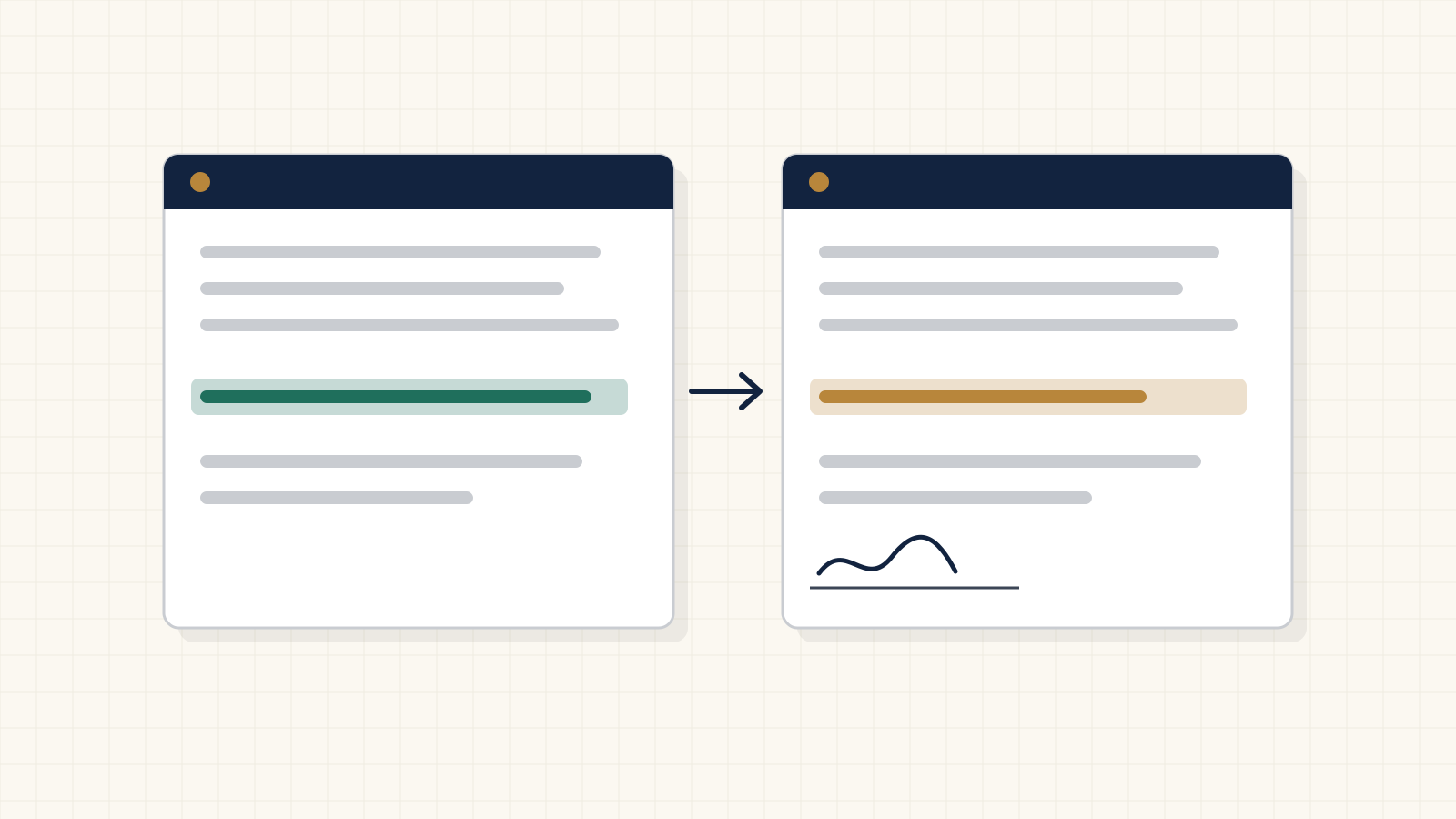
The task was closed. It had closed at 5:52 on a Tuesday afternoon two weeks earlier, the second the order transmitted. It had a green mark beside it. There was no button on a closed task to attach anything, and no way to reopen it from his screen, and no amber state for it to go back to, because the amber state had gone away seven weeks ago with a box on page nine.
Tomas sat with the fax in his hand.
He knew how to fix this. He would call the county rheumatology clinic at Calder General, which was taking Calder Bay patients, and he would ask them to see Ms. Ellison, and he would call Ms. Ellison and tell her who would be calling. He had done it a thousand times. What he did not know was where to put the piece of paper while he did it, so that the next person who looked at Ms. Ellison’s record would know what had happened. The only place in the system that described her referral said it was complete.
He thought, too, with a cold feeling in his stomach, about how many other green marks there were.
He called the county clinic. The scheduler there was new and said someone would call him back about availability. He left a message. He wrote ELLISON — SEAVIEW RETURNED — COUNTY PENDING in red on the cheat sheet on his monitor, under SEAVIEW — NO. He put the fax in a folder on his desk that he labelled, for want of anywhere better, Returned, nowhere to put it.
On Friday morning, because it was the only other thing he could think of, he filed a safety report.
The form asked what had happened. He wrote: Referral sent to Seaview, which no longer accepts our patients. Seaview returned it. Task had already closed on transmission, so the return had nowhere to go. Patient has not been redirected yet. I am working on it. The form asked who was involved. There was a field for the clinician, and it was required, and he typed Dr. Rowan’s name into it because it was on the referral, though he did not think she was the problem. The form asked whether there had been harm. He wrote don’t know.
He sent it at 9:14 and went back to his queue, which was short and green and which he no longer trusted.
Arturo Reyes was on his second trip on the Isabel since he had seen the doctor, nine days out, when he woke at two in the morning in his bunk with his heart going like a diesel with a bad injector.
They were tied up at the north harbor by then, home a day early because the weather was turning. He lay in the dark and counted, because his brother had taught him how, and could not count, because it was too fast and it would not hold a rhythm. He was not short of breath. He was not in pain. He was frightened in a way he had not been frightened at sea in twenty-six years, because at sea you knew what the danger was.
His deckhand drove him to the emergency department at Calder General.
The tracing there showed atrial fibrillation with a fast ventricular rate. They gave him medicine through an IV and the rate came down and, by morning, his heart had gone back to its ordinary rhythm on its own. A cardiologist came and talked to him about his brother, and his coffee, and the blood thinner they wanted him to start, and a monitor they wanted him to wear for two weeks now that he was ashore. He was discharged at noon with a bag of prescriptions and an appointment and a printed summary, and he sat in the truck in the hospital parking lot for a long time before he let the deckhand drive him home.
The hospital sent the clinic an electronic notice that afternoon: Your patient was seen in the emergency department. It went into the emergency-follow-up list, which several clinicians worked through when they had time, Dr. Sam Okoye at Marsh Road among them.
Nobody opened it until the following Monday.
On Friday afternoon, the last day of the ninth week, Julian Vale sat in Noor Haddad’s office and helped her put the quality packet together.
It was due to go to the clinicians on Monday and to the review conference the Friday after. There were fourteen clinicians in it this month: the ones whose quarterly reviews had come in, plus any with a current safety item. For each there was a section A, the historical reviews, and a section B, any current items. Noor had built the packet the same way for four years, from a template that had been built by someone before her, and she knew where every field came from except the ones she had never needed to wonder about.
Julian’s daughters had both had fevers since Wednesday. Theo had been up with one of them for most of the night and Julian with the other. He had run the breakwater that morning anyway, in a wet wind, because if he did not run it he would not be able to think, and he was not sure he could think now.
At three, Dr. Amari had stopped by his office on his way to Marsh Road and asked how the reconciliation numbers looked. The board’s quality committee met in a month. Joan wanted the number above eighty for that meeting. Amari had not pushed. He had only asked. But Julian had heard what he was asking.
Noor put Rowan’s section on the screen.
Section A had two lines. Julian’s own review from week four, and Sam Okoye’s from week six. Both found the same thing: the reconciliation acknowledgment missing, five times each. Julian’s had also found the thin add-on note; so had Sam’s.
Beside each line was the column the template had always had, headed Prior intervention. Beside Julian’s review it said No. Beside Sam’s it said Yes, and below the two lines the template had printed its summary sentence:
In the story
Similar deficiencies persisted after feedback.
Julian read it.
It sounded right. It sounded like exactly what he already thought. He had talked to Rowan; there had been a second review; the second review had found the same thing. Two reviews, same problem. That was what persistence looked like.
He did not look at what the column was comparing. It did not occur to him to. It was the same template it had always been, and he had read the sentence beside forty other clinicians’ names over two years, and it had always seemed to mean what it said.
He looked at the add-on note again instead—the two-line history—and frowned at it, because it was genuinely thin.
“Section B?” Noor said.
“Anything?”
“One. A safety report from Tomas this morning.” She read it out. Returned referral, task closed, patient not yet redirected. Clinician: Rowan.
“What’s the current item say?”
Noor showed him. She had written it the way she wrote them all, from the report and the note, in the short neutral style the template asked for:
In the story
Current item 1. Signed note states: “Referral to rheumatology was placed.” Receiving practice declined the referral. No open task. No accepted referral found. Clinician: Rowan.
Julian read it twice. He was tired, and it was Friday, and one of his daughters had a temperature of thirty-nine.
“That’s fine,” he said. “Put it in. I’ll tell her it’s coming so she doesn’t read it cold.”
He meant to call Rowan that afternoon to warn her. He was called away at four by a fall in the waiting room at Marsh Road, a man who had fainted and hit his head, and then by Theo, and then by a long weekend of fevers, and he did not call.
Noor set the packets to send at seven on Monday morning, and turned her badge the right way round, and went home.
On Monday of the tenth week, at six in the morning, Sam Okoye opened the emergency-follow-up list at Marsh Road with his first coffee and began to work through it.
The fourth notice was for Arturo Reyes. Atrial fibrillation with rapid ventricular response, converted spontaneously, started on anticoagulation, monitor and cardiology follow-up arranged. His primary clinician was listed as Dr. Rowan, at Pier Street.
Sam opened the chart to make sure the follow-up was booked. It was. He scrolled back through the recent history out of habit, the way he did with any patient who had come through an emergency department, looking for the visit before.
There was one, at Pier Street, three and a half weeks earlier. Palpitations. He opened the note and read the assessment: Palpitations, brief, caffeine-associated. ECG today sinus rhythm. Family history of atrial fibrillation (brother). Reduce caffeine. Return if recurs.
In the activity record beside the note, a line said that a suggested diagnosis had been dismissed by the clinician at the time of signing. He clicked on it. The suggestion had been atrial fibrillation.
Sam sat back.
He knew how this looked. He had been a doctor for twenty-eight years and he knew exactly how it looked: the machine had said atrial fibrillation; the clinician had removed it; three weeks later the man had come into the emergency department in atrial fibrillation at two in the morning.
He knew, too, somewhere at the back of his mind, that he had not yet opened the tracing from the earlier visit, or read the rest of the note closely, or thought about what was known on that particular Friday afternoon rather than on this particular Monday morning. He meant to. He made a note to raise it at the conference, and to write it up properly before then.
He did not write it up properly. He wrote it up on Thursday afternoon at 4:52, between patients, in four lines, from the suggestion and the outcome.
Behind this chapter
A task that closes on transmission has no place to receive a rejection. A packet template that compares the wrong two dates prints a conclusion about improvement that the record cannot support. Both are configuration, and both are invisible until a person is holding the paper.
The story is invented. The episode notes and the reporting below are where the real questions are examined, with sources and limits.
In the serial and its notes
- Episode 6: The Patient’s Version, with notes on The Patient Who Inherits the ErrorThe referral that exists only on paper
- Episode 2: The Sentence, with notes on Examining the Witness: How an AI-Assisted Note Becomes EvidenceA rejection event is not a clinical opinion
- Episode 1: An Informal Matter, with notes on The Meeting Before the WarningSix clocks, laid side by side
Reporting on this site
About this page. This is Chapter 6 of Record of Care: A Novel, in Part Two · The Sentence. The novel is fiction: its characters, clinic, software, documents, law and events are constructed. It retells and extends Record of Care, a seven-episode medical drama with clinical and governance notes, which itself grew from a series of physician essays first published on 19 November 2026 and now kept in the site’s editorial archive. Drafted with AI assistance and published on 20 November 2026. General information, not individualized medical or legal advice. Corrections: editorial standards · methodology.