Published · revised as medical fiction
7 min story · 17 min notes · sources in the notes checked through (Pacific)
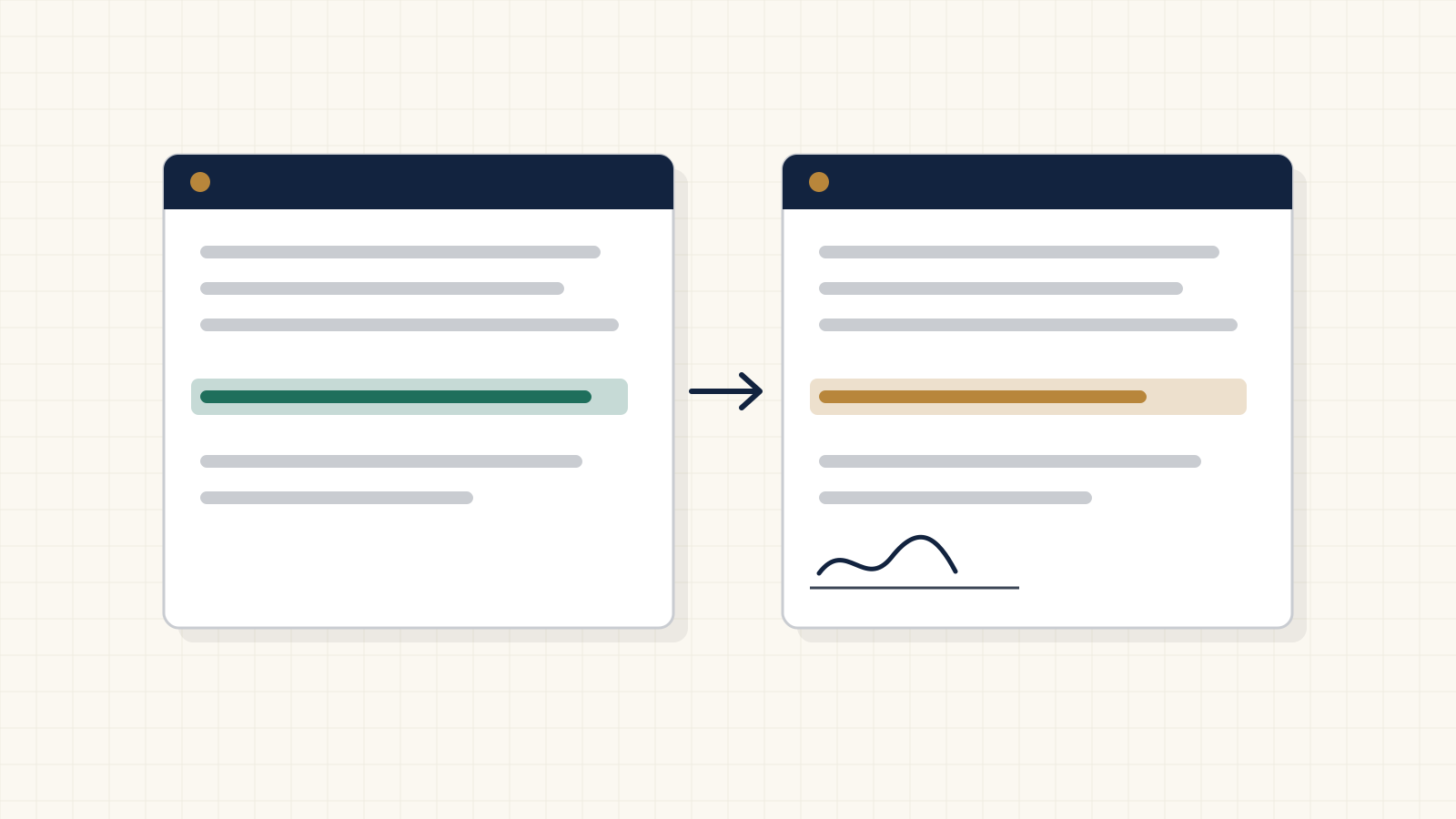
Inez Park kept her office colder than the rest of the building and offered everyone who came into it the same gray cardigan from the back of the door. Lena declined it and sat down.
“Before I show you anything,” Inez said, “I’m going to tell you what I can see and what I can’t. Otherwise you’ll look at the screen and think it’s the whole visit.”
“Go ahead.”
“I can see the versions of the draft the tool generated for a session, as long as the session’s inside the window where the application still shows it to us. Your visit with Ms. Ellison was two weeks ago, so it’s there. I can see when each version was generated, and the text. I can see events. Suggestion shown, suggestion accepted, suggestion dismissed. I can see when the note was signed.” She counted the rest on her other hand. “I can’t see the audio. I can’t see the transcript of what was said. Those sit with the vendor, and getting them is a request through privacy that takes longer than Friday. And I can’t see what was on your screen when you signed, or how long you looked at it.”
“That last one is what I’m here for.”
“I know. I’m sorry.”
She turned the monitor.
There were two versions. The first had been generated at 5:38 on the afternoon of the visit. Lena read its plan and felt the particular discomfort of recognizing a sentence she had not written.
In the story
Rheumatoid arthritis. Referral to rheumatology was placed. Patient declines imaging at this time.
“That’s the draft,” she said. “That’s what it gave me. And none of that is what happened. I told her it could be several things. Early inflammatory arthritis was one. I said I wanted rheumatology to see her and I’d send a new referral, because she’d been referred once before and never gone. We talked about the old one for a while. And she didn’t decline anything. She runs the overnight bake at Tern Street. She asked for two weeks to sort out her shifts.”
“So you changed it.”
“I changed it.”
Inez scrolled. Under the first version sat a short run of events between 5:41 and 5:49. Two suggestions dismissed. A block of manual edits. She opened the edited text.
In the story
Possible inflammatory arthritis; other causes not excluded. Labs today. New rheumatology referral to be placed. Patient requests two weeks to arrange hand imaging around work; agrees to labs today.
Lena let out a breath she had been holding since Monday.
“There it is.”
“There it is at 5:49,” Inez said. She did not say it unkindly. “What happened at 6:31?”
Lena looked at the line. Recording resumed.
It came back to her in pieces. Mara Ellison in the doorway with her jacket already on, asking whether she could have something in writing for her manager about lifting the forty-pound flour tubs. Lena tapping the microphone back on without thinking, because that was what one did when a patient started talking again. Two minutes, perhaps three. A letter printed. The waiting room emptying.
“She came back with a question about a work note.”
“And you resumed the same session.”
“Yes.”
Inez opened the second version. Generated at 6:34. Signed at 6:40.
In the story
Rheumatoid arthritis. Referral to rheumatology was placed. Patient refused further evaluation. Work note provided regarding lifting.
Lena read it and then read the 5:49 text again, as though the two might reconcile if she gave them time.
“It threw my edits away.”
“It built a new version from the whole conversation. It doesn’t carry your typing forward when it does that. That’s how it works. It’s in the instructions, and it was in the training in the spring.” Inez paused. “Which nobody remembers, because the training was forty minutes and it was mostly about the microphone.”
“I’d have seen this. I read my notes before I sign them.”
Inez said nothing.
Lena looked at the two timestamps. Six minutes between the new version and her signature. In those six minutes she had also printed a letter and answered a question about ice. She tried to find, anywhere in her memory of that evening, the act of reading the plan a second time. What she found was the top of the note. The history, which was right. The feeling of a thing already checked.
“I read the top,” she said. “It looked like the note I’d already fixed.”
“It was the note you’d already fixed. Down to about the middle.”
Neither of them spoke for a moment. Down the corridor a printer ran and stopped.
“So that’s mine,” Lena said.
“The signing is yours. The regenerating without telling you your edits were gone isn’t, especially.” Inez pulled the cardigan off the door after all and put it on herself. “I’d write it down as both. I don’t get to decide what the conference writes.”
Julian joined them at four, and Lena made herself say it before he could find it.
“I corrected the draft. A second recording made a new version without the corrections. I signed the new version without rereading the plan.”
He looked at the screen for a long time.
“Sam’s going to ask about the referral sentence,” he said. “It says placed. Was it?”
“I put in a referral order. I remember doing it.”
“When?”
Inez was already in the order history. She was allowed to look; she said so aloud, for the record of the room. The order had been entered at 5:52.
Julian got there a second before Lena did.
“The draft said the referral was placed at 5:38.”
“I hadn’t placed anything at 5:38,” Lena said. “We’d talked about a referral. The old one, and the one I was going to make.”
“So the sentence was wrong when it was written, and then you made it true fourteen minutes later.”
“I made part of it true. The order went to Seaview.” She heard how that sounded. “The list still had Seaview at the top. I picked rheumatology and it filled in the rest.”
“And Seaview isn’t taking our patients.”
“Not since the contract changed.”
Julian sat back. It was the look he wore over an abnormal lab that did not fit the patient.
“Then I have three questions on one sentence,” he said. “Did the note describe what you’d decided? It didn’t, it said rheumatoid arthritis and you’d said possible. Did the thing it says happened actually happen? An order was sent. It wasn’t accepted. Those are different. And how did the sentence get there? Which I now know more about than I usually do.” He glanced at Inez. “More than I ever have, to be honest. I’ve been scoring notes for two years without asking how they were made.”
“Most of the time it doesn’t matter,” Inez said.
“No. Most of the time it doesn’t.”
Lena asked the question she had been turning over since morning. “Why did the second version say refused? The first one said declines imaging at this time. That was wrong too, but it wasn’t that.”
“I don’t know,” Inez said.
“Something she said when she came back?”
“It might be. She might have said she wasn’t doing the X-ray that day, and it wrote what it wrote. Or it might have nothing to do with the second recording. I can show you the two versions are different. I can’t show you why.” She opened a form on her other monitor. “I can ask for the transcript. Privacy has to approve it, then the vendor has to pull it. They keep those for a limited time, and I’d rather ask now than find out the window closed. It won’t be here by Friday.”
“Ask,” Julian said.
“I’m asking. I want it noted I’m not promising.”
There was one more thing on her screen, and she turned it toward Julian because it concerned him more than Lena.
“While I’m in here. The dismissed-suggestion events. There are a lot of them across the clinic since the spring update, and somebody’s going to want to count them. All the line tells you is that a clinician dismissed something. It doesn’t say what the suggestion was wrong about, or whether it was wrong.” She pointed. “This one’s Dr. Rowan, three weeks back. A Mr. Reyes. Dismissed a suggested diagnosis. That’s the entire record. I’d be careful what anybody concludes from a line like that.”
Julian wrote the name down. Lena noticed that he did.
She wrote the addendum that evening, with Inez’s screen still vivid in her mind and the door of her office shut.
She did not rewrite the note. The note had said what it said for two weeks, and someone had already faxed it to Seaview. She added, under her name and that day’s date, what the plan had actually been: a possible inflammatory arthritis, not an established one; labs drawn; a new referral intended, entered after the draft was generated, sent to a practice that had since declined it; a patient who had asked for two weeks and had refused nothing. She wrote that the signed note had contained a regenerated draft and that she had not reviewed its plan before signing.
That sentence took her longer than the rest together.
Then she opened the chart the way the next clinician would, from the front, and looked at what her addendum had changed.
The paragraph was corrected. Above it, in the encounter’s diagnosis list, a line she had never typed still read Rheumatoid arthritis, unspecified. It was a separate field. Her addendum had not touched it.
She opened the after-visit summary, the page Mara Ellison could see from her phone.
In the story
You declined further evaluation.
And in the referral queue, where an hour’s work by Tomas had not yet produced an appointment, the original task sat exactly as it had since the evening of the visit, with a small green mark beside it and one word.
Complete.
End of Episode 2
Continue to Episode 3: The Setting →
Or read the clinical and governance notes behind this episode ↓
The questions behind this episode
Clinical and governance notesExamining the Witness: How an AI-Assisted Note Becomes EvidenceThe medical record can be evidence about the physician. The review must also examine the evidence about the record.
Everything below is commentary on real clinical, technical and legal questions. It refers to the story only as an illustration. Characters named here are fictional.
Evidence at a glance
- Established by the cited sources
- Microsoft’s public documentation describes ambient generation of diagnoses and plans, note versions that do not carry forward manual edits after additional recordings, audit events for suggested edits, and separate session-access and retention windows. A 2026 pilot study rated 5.3% of evaluated drafts as containing errors posing serious or imminent risk if left uncorrected.
- Not established, and not claimed
- That any particular organization enabled these features, that any real chart was generated by AI, or that any patient was harmed. The pilot result is not a patient-injury rate or a current error estimate for any product.
- The analysis in these notes
- A signature identifies an accountable signer; it does not by itself explain how a sentence entered the record. Review conclusions should rest on evidence proportionate to the dispute and state plainly what remains unknown.
This episode is a companion to the earlier physician essay When the AI Scribe Becomes the Witness, which sets out the core argument without the story. Here the same questions are followed through one fictional sentence: Referral to rheumatology was placed.
In the story the sentence could have arisen in several ways. Perhaps the physician wrote it. Perhaps she recommended a referral and never placed it. Perhaps the order existed somewhere the reviewer had not looked. Perhaps the drafting tool turned a conversation about an old referral into a statement about a new one. Perhaps a correction disappeared when a draft was regenerated and was missed before signature. These are alternative explanations to investigate. They are not interchangeable excuses, and the episode gives its physician an unwelcome answer to one of them.
A signed note has a second life once it is used to judge the person who signed it. Before it can tell a reliable story about the clinician, someone has to examine how it was made.
A scribe can produce more than a transcript
The familiar word “scribe” can conceal a complicated sequence.
A conversation becomes recognized speech. Recognized speech becomes a transcript. Selected information becomes a summary. The summary acquires diagnostic wording and a plan. Existing EHR information may enter the process. A clinician edits or adopts content. Data move into different record fields. A note is authenticated. Later additions or corrections may follow.
Microsoft’s documentation describes Dragon Copilot and DAX Copilot generating assessment-and-plan diagnoses from ambient recordings and comparing them with diagnoses retrieved from Epic. Its transparency material identifies the product as an assistive system and requires clinician review and validation before generated material becomes part of the medical record.[1, 2]
Those descriptions establish why provenance can matter. They do not prove that a particular error was generated by AI or that a particular institution enabled every described function.
The distinction matters in the story. Older charts can be reviewed during a newer disagreement about AI. Their coexistence does not establish that the older charts were AI-generated. The documentation method for each relevant encounter must be determined from evidence.
Nor can writing style establish authorship. A concise note may have been dictated. A fluent note may have been carefully written by a human. An unchanged AI draft may have been reviewed and found accurate. Extensive editing may improve a draft—or introduce a new error.
The inquiry should begin with the disputed content and available records, not a guess about who sounds like a computer.
What the signature establishes—and what remains to investigate
A physician’s signature is consequential. It is part of the record of professional accountability. The obligation to verify the authenticated note does not disappear because software helped produce it.
But a signature does not answer every causal question.
It does not identify which wording began in the conversation, which came from another authorized source, which was generated, which was changed, or which version the clinician reviewed before final authentication. It does not establish that a sentence describing an order corresponds to an actual signed order. It does not show whether a changed structured diagnosis propagated elsewhere.
An investigation needs those distinctions when they could change the finding or the remedy.
Suppose a clinician knowingly documents an intervention that was not performed. That is one problem. Suppose a clinician fails to notice that an AI draft added an intervention. That is another. Suppose a verified correction is later overwritten by an integration process. That presents an additional technical question. Several responsibilities may coexist.
Identifying a software contribution does not absolve the clinician. Identifying a verification failure does not make the software contribution irrelevant.
The patient needs the organization to understand the failure well enough to prevent recurrence. A conclusion that stops at the last signature may leave a reproducible system defect intact. A conclusion that blames the system for everything may leave unsafe clinical practice intact.
An accountable signer is the beginning of an inquiry into responsibility, not its entire evidentiary foundation.
The correction that vanished
In a fictional encounter, Rowan notices that an uncertain diagnosis has become definite in the draft. The physician corrects it. A later segment of the visit is recorded. The software generates another version. The earlier wording returns, and the final check fails to catch it.
The signed record is wrong. That finding does not change because the physician once made a correct edit.
What changes is the explanation.
Without the earlier version, a reviewer might conclude that Rowan never recognized the diagnostic uncertainty. With it, the reviewer can examine a different sequence: recognition, correction, regeneration, and missed reverification.
Microsoft’s current note-version instructions make this a concrete workflow worth testing. Additional ambient recordings generate a new version from the combined transcript and do not carry forward prior manual edits or style updates. The same instructions describe version comparison and restoration. These are product instructions, not proof that this sequence occurred in any real disputed chart.[3]
A useful review asks which version was checked, what changed afterward, what the interface disclosed, and what reached the EHR. The resulting improvement may include both renewed final verification by the clinician and clearer institutional training about regeneration.
The question “Did you review the note?” is too broad to resolve this sequence. A yes-or-no answer can hide several different review moments.
The better inquiry follows the actual transformations.
The grammar of an invented past
Documentation software can make an unperformed action sound completed with a single verb.
Testing was considered. Testing was recommended. Testing was ordered. Testing was completed. The result was reviewed. The patient was informed.
Each statement describes a different event.
A good documentation assistant can help a clinician express the event clearly. It cannot legitimately supply the event because a checklist would be easier to satisfy if it had happened.
This is particularly important when a physician asks for a finished note written in the past tense. The grammatical request can be entirely reasonable. The note should describe the recommendation actually made during the visit. It should not sound like a set of instructions telling the physician what to do later.
The factual limit is equally clear. “Follow-up was recommended” can describe an actual recommendation about a future visit. “Follow-up was scheduled” requires a scheduling event. “The patient understood” requires support beyond the model’s preference for a reassuring ending.
A new clinical idea generated during later review can be useful. Its chronology must remain visible. If the clinician then adopts the idea, places an order, or contacts the patient, those are later actions. They should not be silently inserted into the history of the original encounter.
The same principle applies to consent, medication reconciliation, examination findings, chaperones, precautions, and consultation. A complete-looking paragraph cannot establish an absent fact.
The peer-review form should operate as a prompt to examine evidence. It should never become a script for retrospectively inventing the encounter the form would have preferred.
The record is larger than the recording
The opposite mistake is to treat audio as the exclusive source of truth.
A clinician may review prior results before entering the room. A consultant may give advice through a secure message. The patient may demonstrate a physical finding that is not verbally described. A medication administration record may establish an event the microphone never captured.
An accurate note can incorporate these authorized sources. Absence from the recording does not automatically make a statement fabricated.
Audio also has limits of its own. Speech may overlap. A speaker may be misidentified. A phrase may be recognized incorrectly. A recording may begin late or end early. A patient may describe an event that requires corroboration. Microsoft’s transparency documentation acknowledges limitations related to speech recognition, generated content, context, and human oversight.[2]
The aim is therefore a proportionate collection of evidence suited to the question.
If the question is whether an order was signed, inspect the order history. If it is whether a medication was administered, inspect the relevant administration record and supporting information. If it is whether software changed diagnostic certainty, compare the available sources and versions.
Listening to audio may help. It cannot substitute for every other part of the record.
Four questions inside one quality score
A review asking whether the assessment and plan was “appropriate” may be asking several questions at once.
| Dimension | What the review should establish |
|---|---|
| Fidelity | Whether the record accurately represents supported facts, the clinician’s actual decisions, and the uncertainty present at the encounter. |
| Clinical appropriateness | Whether the actual decisions and management were reasonable in the circumstances. |
| Action status | Whether recommendations, orders, communications, procedures, and follow-up reached the stage the record claims. |
| Provenance and verification | What can be established about generation, editing, review, transfer, authentication, and later changes. |
These are proposed analytical dimensions, not a claim that every institution must use this exact form.
A faithful note may document a poor decision. A clinically sound plan may be described inaccurately. A signed note may contain a definite contradiction while the source of the contradiction remains unknown.
Return to the missing referral. If the complete relevant order record establishes that no referral was placed, the documentation discrepancy can be identified. The review can separately consider whether referral was clinically indicated and whether appropriate follow-up occurred by another route.
If the reviewer has only an incomplete export, the conclusion must be narrower. “No order was present in the material reviewed” is different from “no order existed.”
An unresolved question should receive an evidence plan. Identify what is missing, who can retrieve it, and how the finding will be revisited. A confirmed omission should still be addressed. Uncertainty should neither be converted into guilt nor used to hide an established error.
A rejection event is not a clinical opinion
In the story it is the nurse informaticist who raises what a dismissed-suggestion event can and cannot show.
It is a technical question with clinical implications.
Imagine a log showing that a clinician rejected a suggested diagnosis. A later reader might infer that the clinician considered and dismissed the disease. Yet the clinician may have rejected unsupported severity, incorrect laterality, a duplicate, an inappropriate certainty level, or a suggestion attached to the wrong problem.
The event may identify an interaction with a screen. It does not necessarily capture the clinician’s reasoning.
Microsoft’s Purview documentation lists Dragon Copilot Web events for note generation, note updates, and AI-suggested edits presented, accepted, and rejected. These descriptions identify potential evidence sources. They do not establish that a specific local diagnosis workflow uses those events, retains the full candidate text, or records the reason for the action.[4]
Microsoft’s diagnosis-specificity instructions also permit acceptance, dismissal, or no action, with the note unchanged when no action is taken. Another feature or integration may behave differently and must be examined on its own terms. A user’s report of a mandatory local choice cannot be generalized into a universal product requirement.[5]
The same distinction would matter if a user reported that removing a diagnostic label appeared to remove associated plan text. A proper investigation identifies the precise feature, release, configuration, warning, affected fields, and actual result. A warning alone does not establish that a signed note was permanently deleted.
The clinician needs a safe way to preserve accurate content while correcting unsupported content. That is a sound design objective. The path to achieving it begins with reproducing the actual behavior rather than assigning fault by assumption.
When the evidence expires before the question arrives
The signed note may remain accessible long after some of its source material is no longer readily available.
Microsoft’s session instructions describe a 30-day application-access window for individual sessions. Its FAQ separately describes retention of audio, recognized text, transcripts, and flowsheet-value data for up to 90 days. Application access and backend retention are different questions; neither statement establishes the exact availability of a particular organization’s artifacts.[6, 7]
An institution using quarterly quality reports should ask whether its investigation process can reach relevant evidence in time. It need not wait for the end of a quarter to examine a material discrepancy.
This does not justify retaining every recording indefinitely. Recordings can contain highly sensitive material, including information irrelevant to the final clinical note. Retention must consider legitimate purpose, privacy, security, applicable duties, and the ability to act when a material problem is identified.
The useful policy distinguishes ordinary expiration from preservation for an identified concern. It identifies authorized custodians, access routes, the categories retained, and what happens when a preservation obligation or approved preservation request applies. It does not encourage clinicians to build private archives on personal devices.
Nor should routine expiration be casually called destruction of evidence in the legal sense. The relevant duties depend on the facts and legal context. Conversely, the existence of a routine schedule does not answer whether a specific preservation obligation applies.
For the reviewer, the consequence of missing material is a limit on particular conclusions. Other records may still establish what happened. When they do not, the uncertainty should remain visible.
The absence of a source cannot fairly become automatic proof of the most unfavorable version of events. It also does not establish that the signed record was accurate or that the clinician fulfilled the relevant duties.
The problem that survives correction of the prose
A physician corrects the sentence. The problem is solved—or appears to be.
But the unsupported diagnosis may also exist in the encounter-diagnosis list, active problem list, referral, patient instructions, or another destination. Whether propagation actually occurred must be checked; it should not be assumed from a narrative example.
Epic’s public export specification describes information about ambient diagnosis choices, their sources and links, and whether a diagnosis was marked for transfer to the problem list. A marked-for-transfer field is not proof that transfer succeeded. It is a reason to examine the actual downstream record.[8]
This is why a correction process needs a defined scope. Fixing the visible paragraph may leave the clinically consequential structured information unchanged. A later clinician could rely on that information without ever seeing the corrected prose.
The review should ask what reached each relevant destination, what was corrected, and how the correction was verified. The answer may be simple. It may require clinical, informatics, health-information-management, or coding participation.
The physician should not be asked to certify an entire information chain that the physician cannot inspect. The organization should identify the work each responsible participant can actually perform.
A sentence’s chain of custody
Lawyers speak of chain of custody when a physical object passes through several hands before it reaches a courtroom. The phrase fits a medical record imperfectly: a chart is a clinical tool, not an exhibit, and ordinary care should not treat it as one. But the idea is useful. A sentence in an AI-assisted note may pass through several stages, and each stage may leave a different artifact, or none.
| Stage | Possible artifact | What it can show | What it cannot show by itself |
|---|---|---|---|
| Conversation | Audio recording, where retained | What was audible, subject to recognition limits | Unspoken reasoning, examination findings, information reviewed silently |
| Recognition | Transcript | Words as the system recognized them | Correct speaker attribution, or words it misheard |
| Generation | Draft versions | What the system proposed at a particular time | Whether the clinician saw that version before signing |
| Editing | Version comparison; suggestion events | That content changed, and sometimes when | Why it changed, or what the clinician concluded |
| Authentication | Signature and time | That the clinician adopted the final note | Which statements were independently verified |
| Structured transfer | Diagnosis, problem-list, order and instruction fields | What reached each destination | Whether the narrative and the fields agree |
| Correction | Addendum or amendment | The sequence of correction | The reasoning behind the original entry |
Whether a given deployment creates or retains any of these artifacts is a local fact. Product documentation can describe what a system is capable of recording. It cannot tell a reviewer what a particular clinic configured, retained or can now retrieve.
The table also shows why a single artifact rarely settles a contested question. A transcript can establish that a phrase was spoken without establishing that the resulting diagnosis was adopted. A version history can establish that a correction disappeared without establishing that the clinician noticed. An order record can establish that an order exists without establishing that the narrative describing it is accurate. Reliable conclusions usually come from the agreement, or the documented disagreement, of several sources.
Where the chain cannot be reconstructed, the finding should say so in a sentence and state what remains established regardless. That sentence is not a weakness in the review. It is the review declining to claim more than its evidence contains.
A draft error, a signed error, and an injury are different outcomes
The evidence on ambient notes should be read with the same care as the notes themselves.
A 2026 prospective pilot report described 31 physicians using an ambient tool during a two-month 2024 pilot. They evaluated 356 drafts from 7,545 generated notes. Nineteen evaluated drafts, 5.3%, contained errors physicians rated as posing serious or imminent risk if left uncorrected. The result concerned selected, physician-rated drafts at one institution. It was not a measured patient-injury rate or a current error estimate for all products.[9]
That distinction should shape organizational measurement.
Finding and correcting an error before authentication can demonstrate an effective safeguard. An error remaining in the signed record calls for a different inquiry. An error that changes patient care adds another question. Actual injury requires its own evidence.
An institution that counts every detected draft defect as a physician failure may discourage careful reporting. An institution that counts every corrected defect as proof the system is harmless may overlook an excessive verification burden or a recurring dangerous pattern.
The useful measures follow the error through its actual stages. What was generated? Was it detected? Was it corrected? What reached the record or care? What response followed?
The arithmetic should reflect the outcome being measured.
What if another AI evaluates the note?
Consider an additional hypothetical design: one model drafts the record and another scores its completeness.
The first model inserts an unsupported statement that counseling occurred. The second sees the statement and awards credit. The result looks like independent quality confirmation, but both conclusions depend on the same unsupported sentence.
This is a risk to test, not an assertion that the fictional clinic or any identified employer used automated peer-review scoring.
A reviewing model cannot create independent corroboration by restating the source. Neither can a human reviewer. The review must understand whether a conclusion rests on the original record, a later summary, the clinician’s account, or evidence from another source.
AI may assist with organizing discrepancies or locating relevant entries. Its proposed findings still require validation, especially when they could affect clinical privileges, employment, or licensing.
The review system deserves a version history and a correction process of its own. An inaccurate summary about the physician can acquire institutional authority through the same process that gives an inaccurate clinical sentence authority: repetition, formatting, and an approving signature.
A method proportionate to the dispute
Most charts do not require a forensic reconstruction. A routine review can remain efficient. The depth should increase when a material discrepancy cannot be resolved from ordinary records.
Start with the specific concern. Identify the final note, the relevant encounter, and the proposition being tested. Gather the records that can answer that question. Add source audio, transcripts, draft versions, or logs when they are available and necessary. Record what each artifact can and cannot establish.
Then separate the findings. Was the clinical decision reasonable? Was the signed description accurate? Did the claimed action occur? Was the relevant verification performed? Did a software or workflow problem contribute? More than one finding may be justified.
Hear the clinician’s explanation and test it. A detailed account may identify missing evidence. It may also reveal a mistake. Neither automatic deference nor automatic suspicion is an adequate method.
Assign the correction according to the problem. A patient-care action may be urgent. A configuration defect may require technical remediation. A review error may require correction of the quality or performance record. Each should have a responsible owner and a way to confirm completion.
Federal SAFER guidance supports this broader view of AI safety through shared organizational and vendor responsibilities, inventories, monitoring, transaction records, and incident-response processes. The guide is a recommended safety framework, not a declaration that these notes’ exact review method is universally required by law.[10]
The standard is practical: can the organization explain how it reached its conclusion, and can its response prevent the relevant failure from happening again?
Before an AI-assisted note is used against its signer
When a reviewer intends to rely on an AI-assisted note to support an adverse conclusion about a clinician, whether a deduction, a performance concern or a supervisory finding, a short set of questions can prevent most of the errors this essay describes. They are proposed review practices, not a statement of any existing legal requirement.
- Which specific statement is in question, and what proposition is the reviewer relying on it to prove?
- How was this encounter documented: ambient generation, dictation, template, direct typing or a combination? How is that known?
- What other records bear on the proposition, such as orders, results, messages, administration records or scheduling, and were they examined in full or in an extract?
- Are draft versions, transcripts or audit events available through the organization’s authorized processes, and are they necessary to resolve this question?
- Has the clinician been asked to explain the discrepancy, and has the explanation been tested against the record rather than simply accepted or dismissed?
- Does the finding distinguish clinical appropriateness, documentation fidelity, action status and verification?
- Is the conclusion phrased at the level the evidence supports, for example “not present in the material reviewed” rather than “never occurred”?
- If a software or workflow behavior contributed, has it been reported to the people who can reproduce and correct it?
- Does any patient need follow-up now, regardless of how responsibility is eventually allocated?
A review that can answer these questions may still reach an adverse conclusion. When it does, the conclusion will be better founded, more useful to the clinician and more likely to prevent the next occurrence.
The witness must be examined
For the patient, the stakes are not confined to the review meeting. A mistaken sentence can affect later care. An unsupported diagnosis can shape how the next clinician interprets symptoms. A false account of refusal can shift responsibility for a delay onto the patient.
For the physician, the same sentence can become evidence about judgment, diligence, or competence.
For the organization, it can conceal a defect that will appear again in another chart.
These interests converge around a trustworthy record. That requires faithful documentation, meaningful clinical verification, proportionate investigation, and a willingness to correct institutional conclusions as carefully as clinical ones.
The metaphor of AI as a witness does not give software a person’s memory or credibility. It asks us to notice the authority its output can acquire.
When the AI scribe becomes the witness, the review must be prepared to examine how its account was written.
Sources and scope
Sources checked through 19 November 2026 (Pacific). Each source establishes only what its own scope supports; vendor documentation describes product capabilities, not any organization’s configuration. Source numbering restarts in each essay of the series.
- Microsoft Learn. Intelligent diagnoses retrieval from Epic.learn.microsoft.com
- Microsoft Learn. Transparency white paper. Review duties, limitations, and implementation considerations.learn.microsoft.com
- Microsoft Support. Work with note versions in Dragon Copilot.support.microsoft.com
- Microsoft Learn. Audit log activities: Dragon Copilot Web activities.learn.microsoft.com
- Microsoft Support. Diagnosis specificity suggestions. The described options apply to that named feature.support.microsoft.com
- Microsoft Support. Create and manage your sessions.support.microsoft.com
- Microsoft Learn. Frequently asked questions about Dragon Copilot.learn.microsoft.com
- Epic. EHI Export Specification: HOLOGRAM_AMBIENT_DX_INFO.open.epic.com
- Taylor SL and colleagues. Quality of Clinical Notes Created by Ambient Listening Generative AI: Pragmatic Prospective Pilot Study. JMIR Medical Informatics. 2026;14:e86474. Pilot conducted July–August 2024.medinform.jmir.org
- ASTP/ONC. SAFER High Priority Practices, recommended practice 1.5, printed pages 14–15.healthit.gov
Related reporting and resources on this site
About this page. This is Episode 2 of Record of Care, a fictional medical drama in seven episodes, followed by its clinical and governance notes. The story is fiction: its characters, clinic, documents and events are constructed, and nothing in it is evidence about a real person, organization, product or deployment. The notes cite real sources with their limits and label their proposals as proposals. First published 19 November 2026 as part of the essay series Clinical AI, Physician Autonomy, and the Record of Care; revised as a serialized work of medical fiction on 19 November 2026. The earlier edition is retained in the site’s editorial archive. Drafted with AI assistance and published on the author’s instruction. Sources were carried over from the first edition, checked through 19 November 2026 (Pacific). General information, not individualized medical or legal advice. Corrections: editorial standards · methodology.