Published · revised as medical fiction
7 min story · 14 min notes · sources in the notes checked through (Pacific)
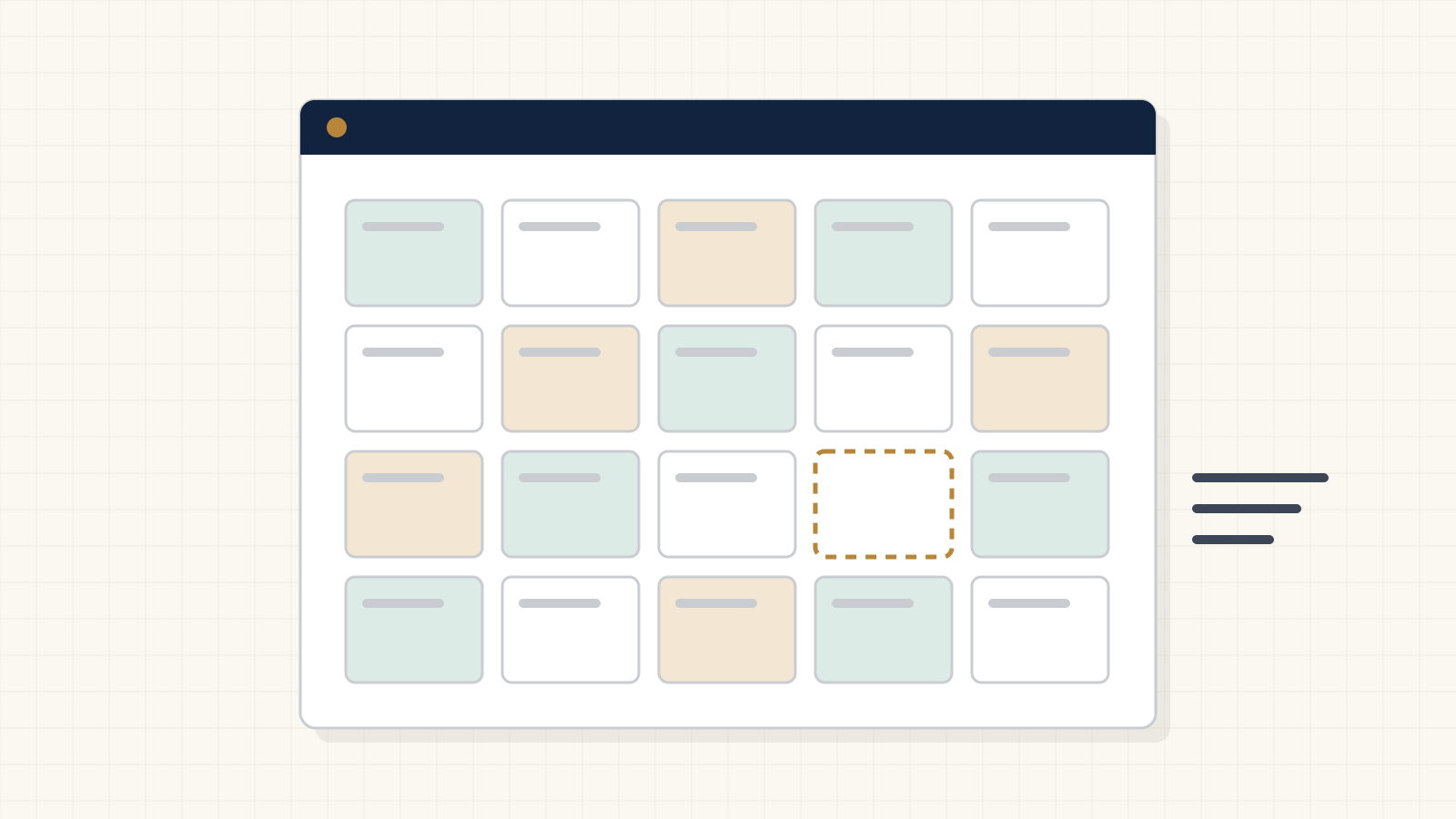
At 5:10 on Wednesday the last name dropped off Lena Rowan’s schedule and the screen showed her a clean white column.
She had learned not to trust it. She took a pad from the drawer, which she was faintly embarrassed to still be using, and wrote down what the column did not show.
A potassium of 5.6 on a man who had started a new blood pressure pill nine days ago. A discharge summary from Calder General that had arrived at 3:50 for a woman she was seeing Friday, listing a blood thinner at a dose that did not match the one in the clinic’s record. A disability form with a deadline. Eleven portal messages, of which perhaps three were what they said they were. Two notes from the afternoon whose drafts she had not yet read to the bottom. She underlined that item twice, because of Tuesday.
And Mara Ellison, for whom the county clinic had still not called Tomas back.
It was forty minutes of work if nothing in it turned out to be something else. She called the man with the potassium first. Something in that one did.
She left at 7:05. The lot was nearly empty and the fog had come in off the harbor, as it did most evenings in June. She sat in the car for a minute with the engine off and thought about Tomas asking when. She had not had an answer for him. She was not sure she had one for herself.
Celia Ward’s day began at 6:30 on Thursday with the same number it had begun with every day that month.
Four hundred and twelve.
That was how many people in the Calder Bay district had asked for a first appointment with a primary care clinician and did not have one. She knew some of the names. She did not need to; the list was sorted by days waiting. A man discharged from the hospital with a new diagnosis of heart failure and nobody to manage it. A woman who had called three times and on the third had asked the scheduler, politely, whether there was another clinic she should try. The scheduler had written that down. Celia had read it and had not been able to put it out of her mind.
The next open new-patient slot was forty-seven days away.
She had a proposal in draft for the finance committee. It was not complicated. Every clinician’s Tuesday and Thursday ended with a forty-minute block marked documentation close. The drafting tool had been live for a year. The vendor’s summary, on a slide she had looked at often enough to recite, said clinicians using it finished their notes sooner. If the notes were finishing sooner, the block was partly air. Two twenty-minute visits in that block, twice a week, across forty-one clinicians, came to more than six thousand visits a year without hiring anyone.
She could not hire anyone. She had tried. The posting for a second internist at Marsh Road had been open since October.
She had not sent the proposal. Wednesday’s meeting was the reason. She had sat in a conference room and learned that she had approved a setting without knowing what it removed. She did not intend to do that twice in one year. So at noon she walked down to Pier Street with her tablet. She found Lena Rowan eating crackers over a keyboard and asked for something she had never asked a clinician.
“Show me Tuesday’s block. Not the schedule. What you did in it.”
Lena was wary. Celia could see it, and thought it reasonable.
“Is this for the finance committee?”
“It’s for me. There’s a proposal. It isn’t submitted. I’d rather you heard that from me than found the draft.” Celia pulled the stool over. “I’m going to tell you what I think, and then you’re going to tell me where I’m wrong, and I would like you to keep it to the places where I’m actually wrong.”
It surprised a laugh out of Lena. “All right.”
“I think the tool saves you time on notes. I think that time is sitting in the block at the end of the day. I think four hundred people would like it.”
“How much time does it save me?”
“The vendor says—”
“Me. Here.”
Celia stopped. “I don’t know. Inez has a number for how fast notes get signed after the visit ends. It’s better than last year. That’s the number I have.”
“Signed isn’t read,” Lena said, and then, more quietly, “I can tell you that from experience this week.”
She opened Tuesday. Celia had expected an argument. What she got was a list, gone through without drama, the way a resident presents overnight events. Lena took her through it the way she had taken herself through it the night before. The block had begun at 4:00. A patient roomed at 3:40 had needed an interpreter who was on another call; that visit ended at 4:25. Then a result. Then two drafts, each of which she had corrected, one of them twice. Then a call to a pharmacy. Then a form.
“How long on the drafts?”
“I don’t know. Ten minutes? Nobody’s measured it. The tool writes faster than I do. I’m not sure it writes faster than I check.” She said it plainly. “It’s good, Celia. I’m not giving it back. I listen better when I’m not typing. But what I got from it is that I look at people. I didn’t get forty minutes.”
Celia wrote that down more or less word for word.
“The messages,” she said. “Eleven yesterday. How many needed you?”
Lena scrolled. “Three. Four.”
“And the others?”
“Refills that are on the protocol. A form that needs demographics filled in before I see it. Someone asking what time the lab opens.”
“Why are those coming to you?”
“Because—” Lena stopped. Celia waited. “Because they’re addressed to me and I answer them.”
“There’s a routing rule. Protocol refills go to the pharmacy tech. Forms go to the medical assistants to pre-fill. We built it two years ago.” Celia kept her voice level. She was not going to enjoy this, and she was not going to skip it. “The report says you’re one of nine clinicians who never turned it on. You have a pad in that drawer, don’t you.”
Lena looked at the drawer.
“I didn’t trust it.”
“Did you try it?”
“No.”
“Then I’d like you to try it. Not as a favor. Seven of those eleven aren’t your work, and you’re doing them at seven at night and then telling me the block is full.” She let that sit and then, because it was only fair, gave the rest. “The other four are. And the potassium, and the discharge summary. Those don’t fit into six-minute pieces between patients, and I’ve been counting them as if they did. I looked at an empty square and saw a visit. That’s on me.”
Neither of them spoke for a few seconds. It was not a comfortable silence, but it was honest.
“If you put two visits there,” Lena said, “the potassium still comes back. It comes back at five-ten instead of four-fifteen, and I call him from the car.”
“I know. Or you don’t, and somebody finds it Monday.” Celia turned the tablet face down. “And if I don’t put visits somewhere, the man with heart failure waits forty-seven days. I need you to keep that one in your head the way I’m going to keep the potassium in mine.”
“That’s fair.”
“So here’s what I’m going to do instead of sending it.” She had worked it out on the walk over, and it came in order. “Four weeks. Six clinicians who volunteer, and I want at least two who hate the tool and one at Marsh Road, where the interpreter line is worse. Inez measures what happens in the block. Corrections included, and whatever lands on the nurses because of it. We write down beforehand what would make us stop. Results sitting longer. Messages backing up. People charting at nine at night. If there’s real time in there, I’ll take it, and I’ll want your help taking it. If there isn’t, I’ll go back to the committee for a position and I’ll have something better than a vendor slide to ask with.”
“And Tomas?”
Celia had been waiting for that.
“Tomas answers the referral phone line four hours a day. I’m moving two of those hours to the front-desk float starting Monday. It’s not a new position. It’s two hours someone else was half using.” She stood. “He asked you when. I heard about it. That’s when.”
Lena turned the routing rule on while Celia was still in the room. It took four clicks. Seven messages left her inbox and went where they had been supposed to go for two years. She watched them go, and it stung a little.
“You’ll tell me if they come back wrong,” Celia said.
“I’ll tell you.”
That afternoon the documentation block began at 4:00 and, for once, began on time.
Lena read both drafts to the bottom. She read each plan against the orders, one line at a time, the way she had once checked a medication list at a hospital bedside. It took eleven minutes for two notes. She wrote the number on the pad. Somebody ought to have it.
At 4:14 the county rheumatology clinic called Tomas back. They had an opening in three weeks, on a Monday.
At 4:19 she had the discharge summary open beside the clinic’s medication list. She was halfway down the column of doses when someone knocked on the frame of her door.
Eli Navarro had been a physician assistant at Pier Street for nine years. He did not knock on doors about small things. He had his laptop under his arm and the careful expression of a man who has already been waiting.
“There’s one in your queue from me,” he said. “It routed this morning. It needs your signature before it’ll close, and the patient’s pharmacy has called twice.” He glanced at her screen, at the block on her schedule with its pale label. “I saw you had the time.”
End of Episode 4
Continue to Episode 5: The Second Signature →
Or read the clinical and governance notes behind this episode ↓
The questions behind this episode
Clinical and governance notesThe Schedule Is a Clinical DecisionAn AI note can finish before the care does.
Everything below is commentary on real clinical, technical and legal questions. It refers to the story only as an illustration. Characters named here are fictional.
Evidence at a glance
- Established by the cited sources
- HRSA’s staffing and continuity requirements are contextual and set no universal daily visit limit; a randomized trial found that one of two ambient AI applications significantly reduced time spent writing notes; CMS directs E/M level selection by medical decision-making or time rather than documentation volume.
- Not established, and not claimed
- That any real clinic increased appointment volume because of AI, or that any particular schedule is unlawful.
- The analysis in these notes
- A finished note is one kind of completion. Before documentation savings become appointments, a clinic should measure the work that remains after the note and give it an owner and time.
Two people look at the same clinic day in this episode. One sees a finished appointment list and unfinished care. The other sees four hundred people waiting for a first appointment. Neither screen is wrong. Each leaves something out.
The question joining them is larger than whether a drafting tool writes a note faster. It is whether the organization knows what work remains after the note is written, and whether its schedule gives that work somewhere to happen. In the story the scheduling change is a proposal that has not been submitted. Nothing in it establishes that any real organization increased visit volume because of AI.
The work outside the appointment
A schedule is a set of assumptions about how care happens. It estimates how long a conversation will take, how much preparation it requires, which tasks another team member will perform, and what can safely wait. Even when software builds the template, people have made those assumptions.
The appointment is the most visible unit because it has a start, a patient, and a place on the calendar. Clinical responsibility has less convenient edges. A result may arrive later. A pharmacy may need clarification. A family may disclose that the proposed plan is unaffordable. A referral may return because the receiving practice is closed to new patients.
These are not automatically failures. They are part of delivering care in a world where a plan must pass through several people and systems before it becomes useful to a patient.
Calling the work administrative does not determine whether clinical judgment is required. Booking transportation and interpreting a new symptom may arrive through the same inbox. One can be routed through an established process; the other may require reassessment. A responsible workload model distinguishes them.
Rowan does not need to perform every task personally. A well-designed team can distribute work according to competence, authority, and available information. But delegation requires a destination. If everyone assumes someone else owns the next step, the task has been moved into uncertainty.
AI can help draft a message or summarize a referral history. It cannot make an unassigned responsibility disappear merely by describing it in the past tense.
An inventory of the work outside the square
A clinic cannot schedule work it has not named. The following inventory is illustrative; every practice will add categories and assign them differently.
| Kind of work | Example | Ordinarily needs clinical judgment? | What failure looks like |
|---|---|---|---|
| Results management | An abnormal value arriving after the visit | Often | A result acknowledged but not acted on |
| Medication reconciliation | Conflicting instructions after a hospital stay | Usually | A patient taking two versions of the same medicine |
| Referral closure | Confirming that the receiving clinic accepted the patient | Sometimes | A referral marked sent, with no appointment and no interim plan |
| Transitions of care | A discharge summary that arrives late | Often | Follow-up that depends on someone noticing an inbox item |
| Patient messages | A new symptom reported through the portal | Variable; requires triage | A clinical question queued behind routine requests |
| Forms and certifications | Work, school or disability paperwork | Sometimes | Delays that cost the patient income or eligibility |
| Correcting generated documentation | Reconciling an AI draft with what occurred | Yes | A signed note that describes care that did not happen |
| Supervisory and consultative review | Reviewing a colleague’s plan or answering a question | Yes | A signature that records review without time to perform it |
| Coordination across languages | Confirming instructions with an interpreter | Often | Instructions the patient cannot use |
Several of these categories can be delegated, standardized or supported by technology. None disappears because the note was finished quickly. A workload model that counts only appointments will treat every row of this table as free time.
The inventory also helps the operations director. A request for “more administrative time” is difficult to evaluate. A request to protect time for result follow-up, with evidence of how often results arrive after the visit and how long they take to resolve, is a proposal that can be tested and funded.
A finished note is one kind of completion
Imagine that a note states that specialty follow-up was arranged. That sentence could correspond to several different events: the clinician recommended a referral; an order was entered; a referral team transmitted documents; the receiving office accepted the patient; or an appointment was actually booked.
Those events require different amounts of work. They also leave the patient in different positions.
In the story’s clinic, the referral has been transmitted but not accepted. The note requires correction, and the care process requires a next step. Fixing the sentence solves the first problem. It does not solve the second.
This distinction matters when organizations estimate an AI return. A shorter documentation interval can be a meaningful benefit. It may allow the clinician to listen more carefully, finish earlier, or address a backlog. But a completed document is not a substitute for completed medication reconciliation, appropriate follow-up, or a patient who understands what happens next.
An encounter can generate future work even when the AI performs perfectly. That future work should not be counted as an AI error. It should be counted as work.
The same principle applies to care transitions. A notice can be sent without being understood. A discharge summary can be received without its medication changes being reconciled. A referral can be marked sent while the patient remains uncertain about who will manage treatment in the meantime.
The practical question is where the clinic records that unfinished responsibility and who has time to act on it.
What the existing obligations actually ask
For health centers within the federal Health Center Program, HRSA’s staffing framework connects the number and mix of clinical staff with the population’s size, demographics, and health needs. It also addresses prompt access, continuity, and qualified staff. It does not supply a universal daily physician visit limit. The staffing decision remains contextual.[1]
HRSA’s continuity chapter makes another useful distinction. For hospital and emergency-department transitions, the center needs procedures for receiving relevant information and taking appropriate follow-up action, with evidence that those procedures are implemented. Possessing a procedure is different from carrying it out.[2]
Those requirements should not be stretched into a claim that every proposed referral-tracking step is expressly mandated by that chapter. They do, however, support a serious operational question: can the organization demonstrate that the necessary next action occurred?
A clinic need not discover a statute prescribing a particular appointment length before examining whether its own template supports its patients’ needs. Equally, a clinician’s preference for more time does not by itself establish that a schedule is unlawful.
The appropriate discussion concerns the actual work, the resources available, the population served, and the consequences of delay. Those are clinical and operational facts that can be investigated.
Measure the benefit the technology actually delivers
There is credible reason to take ambient AI’s benefits seriously. A randomized trial involving outpatient physicians compared two ambient documentation applications with usual care. One application significantly reduced time spent writing notes; the other did not show a significant reduction on that measure. Secondary measures suggested potential improvements in clinician experience, with the authors calling for confirmation in larger, multicenter studies.[3]
That is a more useful finding than a universal promise that AI gives every clinician the same amount of time back. It suggests that the benefit depends on what is being measured and how the technology is used.
It also leaves an important question unanswered: how much additional clinical capacity can safely be created in a particular clinic? A trial’s note-writing endpoint does not establish that every minute saved can become another appointment.
Before changing a template, Rowan’s clinic could measure the work from preparation through the final necessary action. It could compare documentation time, correction time, inbox backlog, time spent after scheduled work, referral follow-up, and the patient’s ability to obtain timely care. The measures would need to account for differences in patient complexity and staffing.
No single metric should be asked to represent all those outcomes. Faster note closure might coexist with slower responses to results. Better patient attention might be a valuable improvement even if appointment capacity remains unchanged. Reduced evening work might be the intended benefit rather than an unclaimed surplus.
The clinic should decide what success means before interpreting the data. Otherwise, any improvement can be retroactively redefined as evidence that the schedule should have been busier.
This is not a reason to avoid productivity gains. It is a reason to establish them. If a particular workflow produces sustained, usable capacity without worsening care or shifting work to others, access can benefit. The claim should follow the observed result.
The evaluation should also include the people for whom the system is less convenient. A pilot made up entirely of enthusiastic, experienced users may answer a different question from an implementation across every clinic. A clinician working with unfamiliar patients, an interpreter, or incomplete outside records may have a different pattern of work. Those differences deserve description before one average becomes everyone’s expectation.
Other changes need to remain visible. If rooming support improves while the software is introduced, the clinic should not automatically attribute the entire improvement to AI. If staffing deteriorates during the same period, the technology should not automatically receive the blame. The purpose of measuring is to understand the contribution of the change, including the conditions on which it depends.
Finally, the organization should ask whether recovered time arrives in a usable form. Brief intervals scattered through a session may help with small tasks. They may not provide an uninterrupted opportunity to resolve a complex result, discuss a difficult case, or complete a transition of care. Converting every recovered fragment into appointment capacity can assume a flexibility that the work does not have.
This is why a local evaluation benefits from clinical and operational interpretation together. The data can show where time moved. The team must still determine what that movement permits.
Before saved minutes become appointments
If a clinic intends to convert documentation savings into additional visits, a short set of conditions can keep the decision honest. They are proposed governance practices, not regulatory requirements.
- The saving has been measured locally, across the clinicians and patient populations to whom the change will apply, rather than inferred from a vendor estimate or a different study population.
- The measurement includes correction and verification time, not only the interval between the end of the visit and the signature.
- The work in the inventory above has an owner and a measured volume, and the change does not silently transfer it to staff who lack time to perform it.
- The recovered time arrives in a form that can absorb a visit. Scattered minutes are not an appointment.
- Indicators that would reverse the change, such as unresolved results, referral failures, message backlogs and after-hours work, have been chosen in advance and will be reviewed on a stated date.
- Clinicians and staff can report effects the dashboard does not capture, and those reports reach someone with authority to act.
A clinic that meets these conditions may well find that it can safely add capacity, and the patients waiting for appointments will benefit. A clinic that cannot meet them has not yet established that the minutes it saved are minutes it can spend.
The pale rectangle on the calendar
Protected time is often discussed as though its existence can be established by pointing to the template.
Rowan’s rectangle exists. On some days, it is consumed by a visit that needed longer, a delayed interpreter, an urgent question, or a discharge document that arrived late. The label remains unchanged while its contents change completely.
A useful review would ask what actually occupied the period. This should be a practical sampling exercise, not a new requirement that clinicians narrate every minute of their day. The purpose is to test an assumption: does scheduled non-visit time remain available for its intended work?
The same scrutiny should apply across roles. If a physician finishes earlier because a nurse spends longer reconciling AI-generated instructions, the organization has redistributed work. That may still be a sensible arrangement, but it is not the same result as eliminating the work.
An operations director also needs reliable information. A vague statement that every day is impossible offers little guidance about which constraint to change. Examples tied to recurring tasks can reveal whether the problem is appointment design, staffing, task routing, software behavior, or an unusual temporary surge.
The most useful conversation is specific enough to permit a response. Which work cannot safely wait? Which work can be delegated? Which task is being repeated? Who can authorize an adjustment? When should an unresolved capacity problem reach clinical leadership?
Those questions turn frustration into a system the clinic can examine.
Access includes what happens after access
The strongest argument for a fuller schedule comes from the patient who cannot get an appointment. That patient should remain present in this discussion.
A clinic that protects unlimited time for its current workload while ignoring people waiting outside has not solved the access problem. Longer visits are not automatically better visits. Some work can be standardized, some can be handled by another qualified team member, and some can be completed without a visit at all.
But appointment availability is only one part of access. The patient who gets in quickly and then cannot obtain the prescribed treatment still faces an access problem. So does the patient whose referral circulates between offices without an identified interim plan.
For Rowan’s clinic, a sensible access review would therefore consider both the front door and the next steps. How long does it take to obtain an appropriate encounter? How long does it take to resolve an important message? What happens when the planned service is unavailable? Who notices when an expected follow-up never occurs?
These measures will not always move together. Adding visits may improve one and strain another. That is precisely why the decision should be visible and reviewable.
Clinical urgency also matters. A routine administrative delay and an unresolved safety concern should not compete in one undifferentiated queue. Clear escalation routes allow staff to act on the difference without having to invent authority during a difficult afternoon.
What the operations director gets right
It would be easy to write this story with a thoughtful physician and an indifferent administrator. That would make the article simpler and the analysis weaker.
The operations director is balancing obligations that do not disappear when a clinician’s day runs late. She must maintain access, staff multiple sites, respond to absence, and keep services financially viable. She is entitled to ask whether a workflow can be improved and whether an expensive tool is producing value.
She is also entitled to expect clinicians to use agreed processes consistently. A missing acknowledgment or incomplete routing step can create work for colleagues. Clinical complexity should not become an explanation that cannot be examined.
Rowan, in turn, is entitled to ask that the assessment include tasks beyond appointments and notes. If the clinic expects consultation, results management, correction of generated documentation, and continuity work, it must decide how those responsibilities fit together.
The disagreement becomes more productive when both sides are willing to revise an assumption. Rowan may discover that a task can be safely routed elsewhere. Operations may discover that supposedly free time is already occupied by work the clinic requires.
Financial and clinical expertise should meet at that point. A budget identifies constraints; clinical judgment helps determine which responses remain appropriate. Neither a spreadsheet nor an individual preference should stand in for the whole decision.
Treat a schedule change as a clinical change
A proposed template change deserves a clear purpose. Is the clinic seeking faster urgent access, fewer unfinished notes, more reliable follow-up, less work after hours, or some combination? Different goals call for different designs.
The proposal should identify whose workflow changes and what supporting resources must be present. Shortening a visit after a well-functioning pilot is a different decision from shortening it before staff have learned the software. A plan that depends on immediate rooming or prompt consultation should say so.
The clinic should also decide what would trigger reassessment. A growing backlog of important messages, repeated inability to obtain needed consultation, or an increase in unresolved referral problems might require a different response from a temporary increase in note-writing time during training.
These are suggested governance practices, not a universal legal checklist. Their value is that they make a consequential decision testable and reversible.
Rowan’s clinic could begin with a limited change in a suitable workflow, retain a comparison with its prior performance, and invite staff to describe effects that dashboards miss. Patients should have a way to report whether faster access translated into understandable and usable care.
HRSA’s quality framework already expects an ongoing program, systematic assessments, and action when change is indicated, while leaving health centers discretion over methodology. Reviewing the effects of a scheduling intervention fits that improvement logic.[4]
The review should be willing to keep a change that works, modify one that partly works, and stop one that fails its stated purpose. Buying a technology should not make its initial operating assumptions permanent.
Morale is part of the operating picture
There is a particular kind of frustration that comes from completing work no one has counted.
In this fictional clinic, Rowan is not asking for an award for staying late. Rowan wants the organization to understand why the day extends beyond the final appointment. A colleague may experience the same problem differently: feeling rushed when asking for consultation, or having to choose between closing a note and returning an important call.
A staff survey alone cannot diagnose the source. Nor should dissatisfaction be dismissed because it lacks a billing code. Accounts of recurring pressure can direct attention to a process that deserves closer examination.
If AI genuinely reduces that pressure, the improvement should be recognized. Preserving some recovered time for careful review, team support, or a sustainable end to the day is a concrete use of the investment. The organization can choose that use deliberately and evaluate whether it helps.
Conversely, if the technology creates extra correction or reconciliation work in a particular setting, that should be visible without turning every report into a referendum on the entire product. A useful implementation can have a faulty component. A capable clinician can need training. A local integration can create work that a demonstration did not reveal.
The objective is to discover which explanation fits, then respond proportionately.
More prose cannot supply missing capacity
One misleading sign of improvement is a longer note.
For most E/M visit families, CMS directs clinicians to select the service level using medical decision-making or qualifying time, with relevant exceptions. It expressly cautions against letting documentation volume drive the level. Medically appropriate documentation and medical necessity remain necessary.[5]
That guidance is not a scheduling formula. It is a reminder that the amount of text is a poor substitute for the work it describes.
A clinic can produce fuller notes while leaving patients with the same unanswered questions. It can also produce concise, accurate notes within a much better process. The useful measure is whether the record supports the care actually delivered and whether the remaining care has an owner.
Rowan finally corrects the referral sentence. Then Rowan contacts the team responsible for the next step. The first action improves the record. The second moves the patient’s care forward.
The schedule should have room for both.
An AI investment becomes clinically valuable when the organization understands which burdens it has reduced, which responsibilities remain, and how to use the recovered capacity. That decision belongs in the same conversation as access, staffing, continuity, and professional judgment.
The pale rectangle on the screen is not proof that those questions have been answered. It is an invitation to answer them.
Sources and scope
Sources checked through 19 November 2026 (Pacific). Each source establishes only what its own scope supports; vendor documentation describes product capabilities, not any organization’s configuration. Source numbering restarts in each essay of the series.
- Health Resources and Services Administration. Health Center Program Compliance Manual, Chapter 5: Clinical Staffing.bphc.hrsa.gov
- Health Resources and Services Administration. Chapter 8: Continuity of Care and Hospital Admitting.bphc.hrsa.gov
- Lukac PJ, et al. Ambient AI Scribes in Clinical Practice: A Randomized Trial. NEJM AI. DOI:10.1056/aioa2501000. Original-study abstract and publication information:pubmed.ncbi.nlm.nih.gov
- Health Resources and Services Administration. Chapter 10: Quality Improvement/Assurance.bphc.hrsa.gov
- Centers for Medicare & Medicaid Services. Evaluation & Management Services.www.cms.gov
Related reporting and resources on this site
About this page. This is Episode 4 of Record of Care, a fictional medical drama in seven episodes, followed by its clinical and governance notes. The story is fiction: its characters, clinic, documents and events are constructed, and nothing in it is evidence about a real person, organization, product or deployment. The notes cite real sources with their limits and label their proposals as proposals. First published 19 November 2026 as part of the essay series Clinical AI, Physician Autonomy, and the Record of Care; revised as a serialized work of medical fiction on 19 November 2026. The earlier edition is retained in the site’s editorial archive. Drafted with AI assistance and published on the author’s instruction. Sources were carried over from the first edition, checked through 19 November 2026 (Pacific). General information, not individualized medical or legal advice. Corrections: editorial standards · methodology.